No products in the cart.
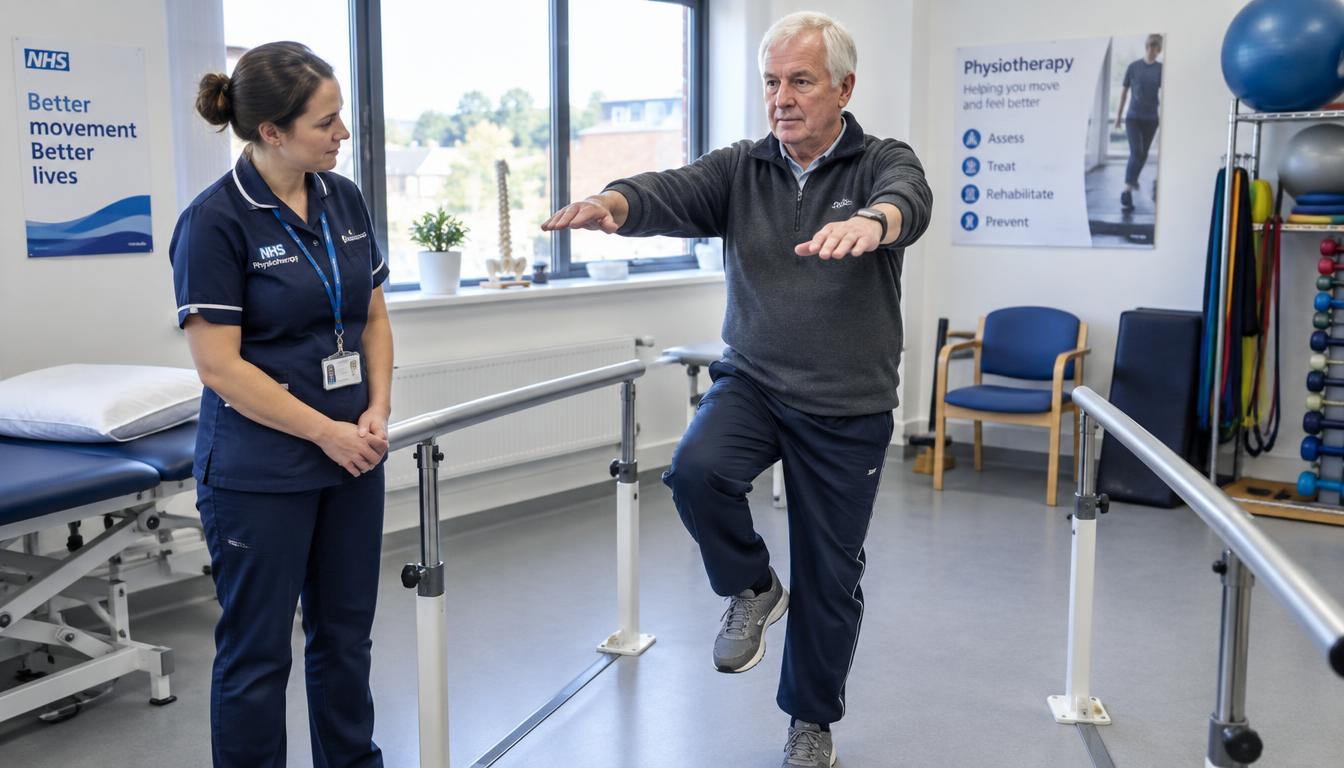

Developed by Canadian physiotherapist Katherine Berg in the late 1980s, the Berg Balance Scale is a clinical measurement used in adult rehabilitation. This balance scale assesses how well a person maintains stability during specific, graded functional tasks. It does not require complex laboratory equipment, making the test practical in a range of clinical settings. The Berg Balance Scale is one way for clinicians to review a person’s functional balance using a consistent set of activities.
The tasks reflect movements people commonly make at home. Stepping onto a low stool, reaching forward for an item on a shelf and sitting down safely all involve subtle postural adjustments. Greater understanding balance can help patients and families recognise how these everyday responses support independence. The assessment offers practical information about performance on the day; it is not a complete account of a person’s mobility or safety in every situation.
The Berg Balance Scale requires minimal equipment and is used in settings including hospital wards, outpatient clinics, care homes and community rehabilitation services in the UK. Standardised instructions help different members of a multidisciplinary team carry out the test in a consistent way. This supports clear communication among therapists, doctors and nursing staff as care progresses. Consistency is important when considering reliability, although results still need to be interpreted in the context of the individual and the assessment.
The Berg Balance Scale provides a standardised baseline of functional stability. Clinical teams can use this measurement to review changes and track rehabilitation milestones over weeks and months of therapeutic exercise.
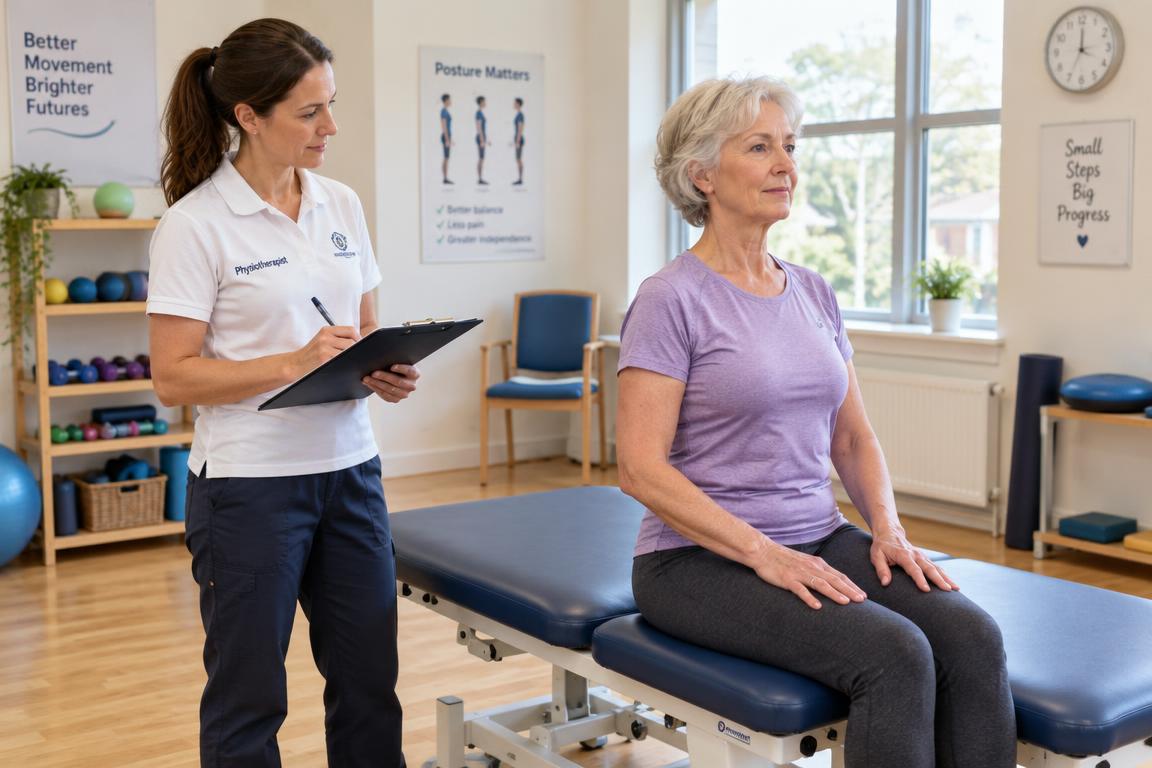
Balance involves several systems working together, with the demands changing as a person stays still, shifts weight or moves. The Berg Balance Scale assesses three important aspects of everyday postural control: static balance, dynamic balance and the ability to transfer between positions. Together, these tasks give clinicians a practical picture of how someone manages common movements.
Static balance is the ability to maintain a steady posture while still. Standing with feet together or standing unsupported with eyes closed challenges stability by narrowing the base of support or removing visual cues. Performance reflects how a person manages these demands; a difficulty on one task alone does not identify its cause.
Dynamic balance is the ability to remain stable while moving or shifting weight. In the Berg Balance test, this includes reaching forward with outstretched arms, picking up an object from the floor and stepping on and off a low step. These movements require the body to adjust its posture as the centre of mass shifts, helping maintain balance and reduce the chance of tipping or losing footing.
Assesses the ability to maintain a steady standing or sitting position against gravity under different sensory conditions.
Evaluates control during reaching, torso rotation and stepping, as the body’s centre of mass moves.
Examines transitions between surfaces or positions, which involve coordinated leg strength and controlled movement.
Transfer ability concerns moving from one position or surface to another. Sitting down, rising to standing, or moving between a chair and a bed involves lower-limb strength, joint movement and coordination. Difficulty or hesitation during transfers can affect everyday mobility, including for older adults and people recovering from neurological illness. The Berg Balance Scale records performance on these functional tasks, while clinical interpretation considers the person’s wider circumstances.
The Berg Balance Test includes 14 functional activities, progressing from seated tasks and transfers to more challenging standing positions. Together, they assess balance during movements people commonly perform at home and in the community, including standing on one leg.
The test moves from sitting and transfers to upright tasks that challenge balance in different ways. The therapist gives clear instructions and demonstrates each activity so the person understands what is required before attempting it. Performance is observed across all 14 tasks.
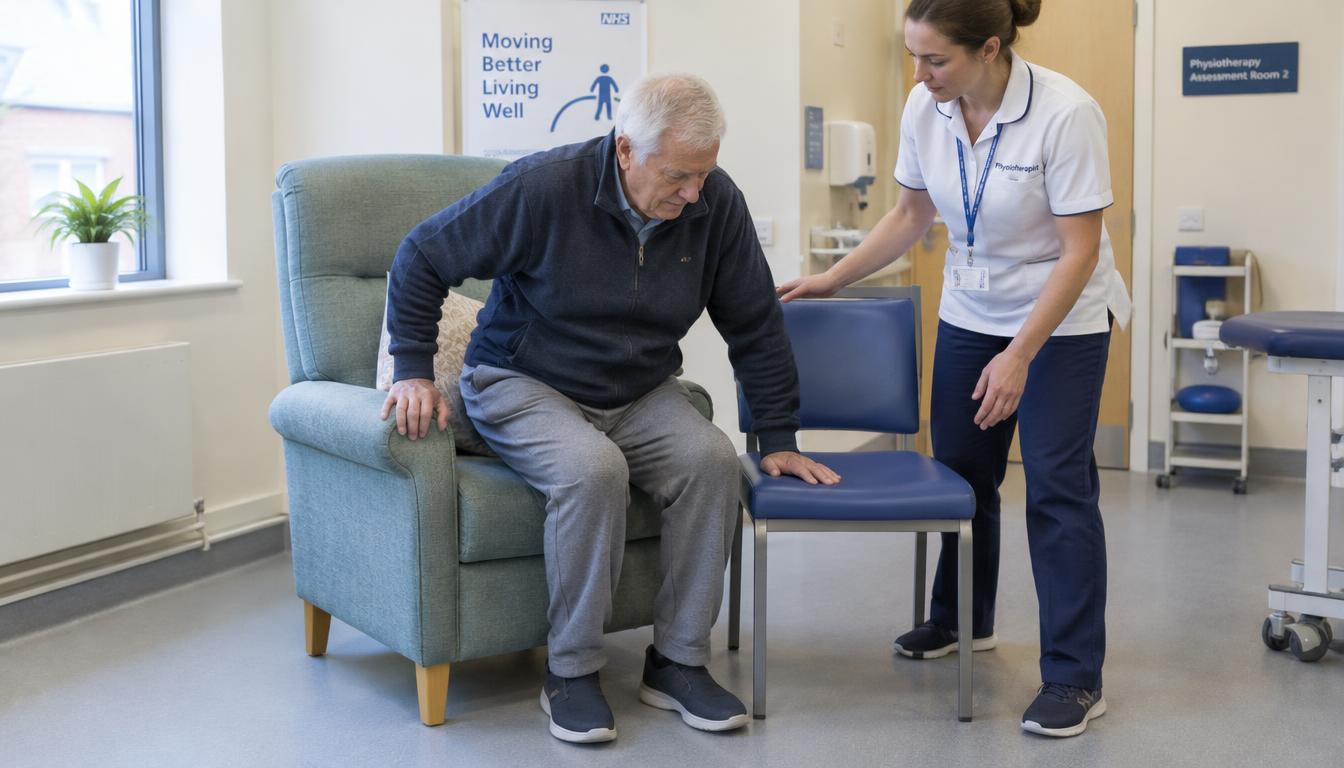
For each activity, therapists record the level of assistance needed and relevant details such as the time maintained or distance reached:
The Berg Balance assessment uses only a small amount of equipment, but the room must be prepared with safety in mind. Choose a well-lit, uncluttered space with firm, non-slip flooring and enough room to move freely. This helps the patient complete the balance tasks in a calm, suitable environment.
Prepare two standard-height chairs, one with armrests and one without, for the transfer task. The equipment also includes a stable low step stool, a stopwatch or digital timer, a ruler or measuring tape fixed horizontally at shoulder height, and a small object such as an empty shoe box or slipper. Setting everything out beforehand avoids interruptions during the test.
The therapist stays close enough to guard the patient throughout the assessment. This supports safety if the patient becomes unsteady, while avoiding contact or physical assistance unless needed. Assistance can affect the task score, so the clinician records performance in line with the assessment instructions. If the patient feels unsteady or becomes tired, brief pauses between tasks help maintain comfort and allow the assessment to continue safely.
Close clinical guarding supports safety without providing physical assistance that could affect the task score.
Each of the 14 items on the Berg Balance Scale is scored from 0 to 4, using a five-point ordinal scale. A score of 0 indicates that the person cannot attempt the task safely or needs moderate to maximum physical assistance. A score of 4 indicates that they complete it independently within the specified time, distance or posture criteria. The scoring scale gives clinicians a consistent way to record performance on each balance task.
The scores for all 14 items are added to give a total score out of 56. Higher totals generally indicate better postural control and greater functional independence, but the total score does not describe every aspect of mobility. Therapists also observe how each person completes the test, noting movement strategies such as using the arms, trunk sway or hesitation. Consistent use of the instructions supports reliable scoring, while clinical interpretation takes account of the person and the task.
| Score Level | Independence Category | Clinical Description |
| Score 4 | Fully independent | Completes task safely within designated time or distance parameters. |
| Score 3 | Mild adaptation | Requires slight extra time, supervision, or minor compensatory movement. |
| Score 2 | Moderate limitation | Maintains balance for reduced duration or needs constant close supervision. |
| Score 1 | Severe limitation | Requires minimal physical assistance or multiple attempts to achieve task. |
| Score 0 | Unable to perform | Needs moderate to maximum physical support or cannot attempt safely. |
Each item has its own scoring criteria, so the Berg Balance Scale is not scored by applying one rule to every task. For example, the score for standing on one leg depends on how long the person maintains balance without support. A shorter hold or touching the floor affects the score according to the test instructions. Therapists record each item score using the specified criteria, alongside observations of the person’s balance and movement. These details help explain the total score and support appropriate clinical interpretation.

Interpreting a Berg Balance Scale score calls for clinical judgement rather than reliance on a fixed cut-off. Research has linked some scores with a higher risk of falling, but no single score predicts whether an individual will fall. The result is one part of the overall picture of a person’s balance and function.
A thorough fall risk assessment considers the person’s test scores alongside how they manage in their usual environment. Loose rugs, dim stairwells, footwear and medication can all contribute to risk, particularly when combined with physical limitations. The information in fall prevention for older adults offers wider context for considering physical ability as part of home safety planning.
The scale also has ceiling and floor effects in some clinical groups. Active older adults can score close to the maximum of 56 and still have difficulty walking quickly in the community or on uneven ground. At the other end, someone with severe neurological impairment can score very low despite having useful seated trunk control. In such cases, therapists use other assessment tools to build a fuller understanding of balance and mobility.
A Berg Balance score is not an absolute predictor of falls. It reflects a person’s physical capacity on the day and should be considered alongside environmental, medical and cognitive factors when assessing fall risk.
Physiotherapists use the Berg Balance Scale with a range of people who have balance difficulties. In suitable patients, it can provide a baseline and help the care team monitor functional changes during hospital or outpatient rehabilitation. Its usefulness depends on the person’s abilities and the clinical question, so it is not automatically appropriate for every condition.
During stroke rehabilitation, therapists may use the scale to observe weight-bearing symmetry, stance control and transfers. Tasks such as stepping on a stool or reaching forward show how a person manages weight on the affected leg. Repeating the assessment can help document changes in functional performance over therapy sessions, alongside other clinical observations.
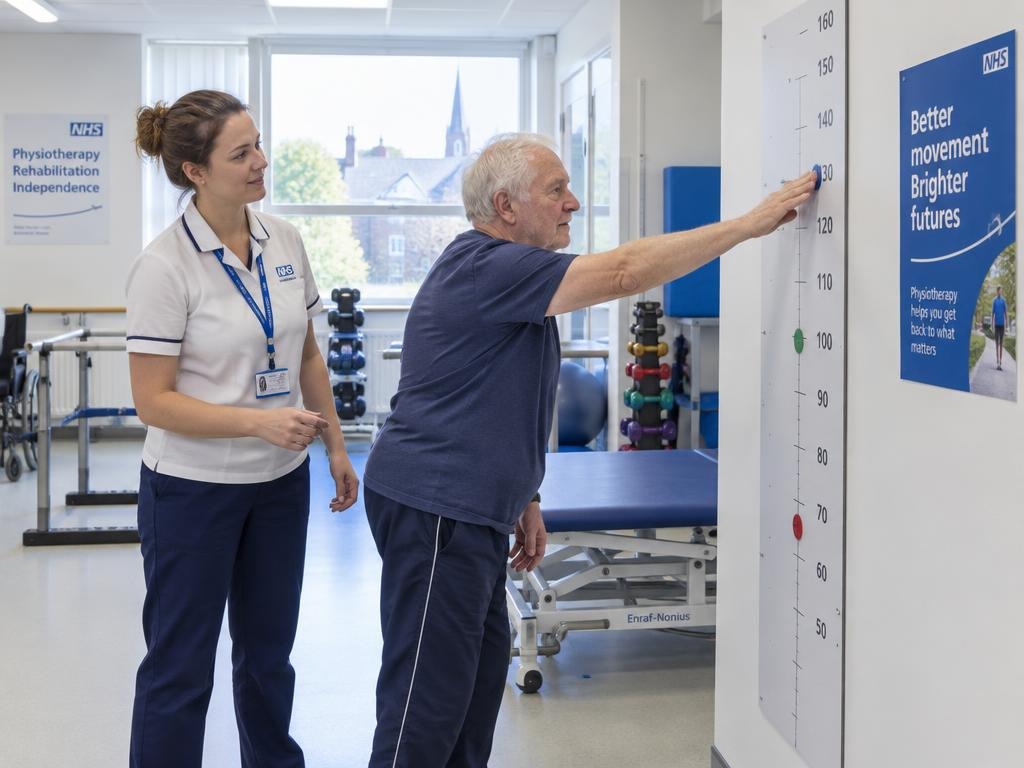
Records postural symmetry, weight-bearing on the affected side and performance on structured movement tasks during rehabilitation.
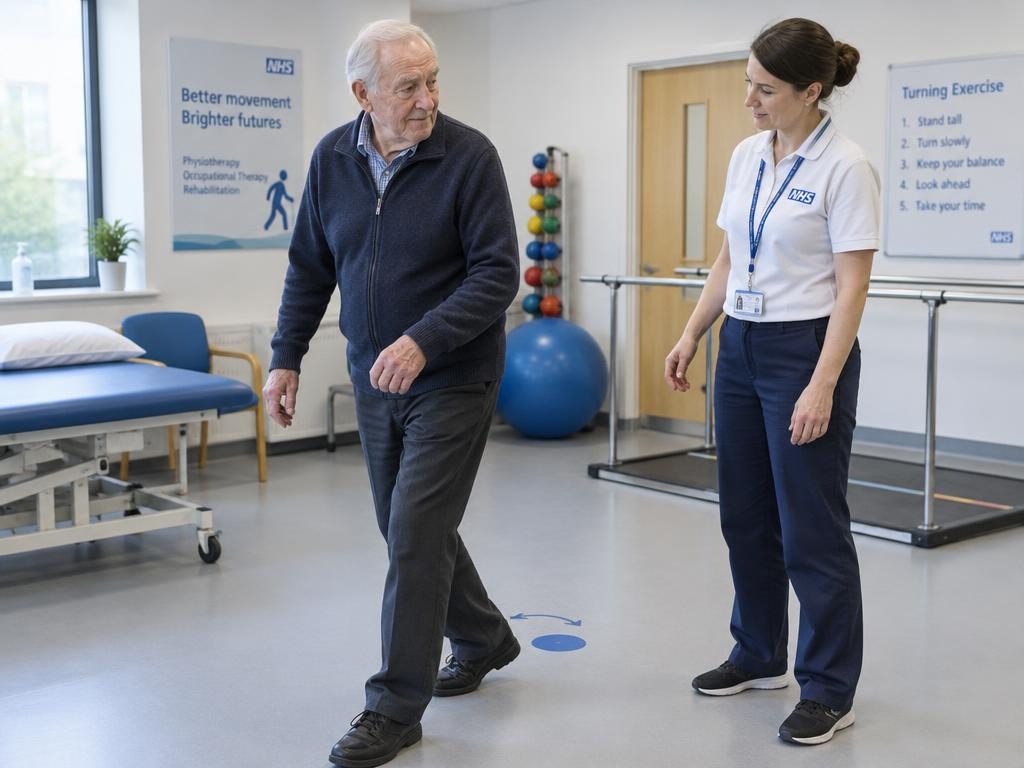
Assesses performance on turning tasks, narrow-base standing and postural adjustments during functional movements.
The scale is also used with some people living with incomplete spinal cord injury, multiple sclerosis, traumatic brain injury or frailty after a prolonged hospital stay. These conditions can affect balance and mobility in different ways, so results need to be interpreted in context. Reviewing changes in individual task scores helps therapists identify areas of progress and aspects that may need continued rehabilitation or adaptive strategies. The Berg Balance Scale is one measurement tool; it does not replace a broader assessment of a person’s needs and function.
Physiotherapists choose outcome measures according to the clinical question, the time available and the person’s ability to take part. Comparing the Berg Balance Scale with the Timed Up and Go Test shows how the two tests assess different aspects of balance and mobility.
The Berg Balance Scale takes around 15 to 20 minutes to assess 14 static and dynamic tasks. The Timed Up and Go Test takes less than two minutes. It times how long a person takes to stand from a chair, walk three metres, turn, walk back and sit down. This test focuses on walking speed, gait and turning, rather than balance in stationary positions.
Neither test is right for every situation, and clinicians may use both to build a fuller picture. Someone may walk at a reasonable speed during a short assessment but find it harder to stand with their feet close together or reach forward. Used together, the tests provide complementary information about balance, gait and everyday mobility.
A person’s performance during a Berg Balance assessment can vary with temporary physical or environmental factors. Taking these into account helps clinicians interpret the score fairly and distinguish short-term changes from a person’s usual abilities. The result reflects performance at the time of the assessment, not a complete picture of someone’s health or everyday balance.
Fatigue can affect performance, particularly if the test takes place late in the day or soon after demanding physical therapy. Acute joint pain, muscle stiffness and changes to medication can also influence stability. Clinicians record relevant context, such as the time of day and how ready the person feels, alongside the score.

Fear of falling and other psychological or cognitive factors can also affect how people approach the tasks. Someone who feels anxious may move cautiously, stiffen their posture or feel unable to attempt a challenging activity, such as standing on one leg. A calm, unhurried setting helps people feel more at ease during the assessment.
Repeating the Berg Balance Scale at suitable points during rehabilitation helps physiotherapists review changes in functional balance. Assessments might take place on admission, during treatment and before discharge, depending on the person’s care plan. Comparing results over time gives the team an outcome measure to consider alongside clinical observations and the person’s own goals. Consistent administration supports reliability, although scores should always be interpreted in context.
Reviewing individual task scores can help therapists identify areas for attention and adapt the exercise plan. For example, someone whose standing balance has improved but who still finds forward reaching and foot tapping difficult may benefit from exercises focused on dynamic balance and core stability. The therapist can decide what is appropriate based on the person’s needs and progress. For personalised guidance, individuals can find a physiotherapist who can design a tailored progressive exercise programme. Using the Berg Balance Scale in this way helps structure review, but it does not replace a broader assessment.
Combined with clinical observations and patient-reported goals, the Berg Balance Scale offers useful information for rehabilitation planning. It helps connect assessment findings with the everyday activities a person wants to manage more safely and independently. The results guide discussion and treatment review, rather than guaranteeing a particular outcome.
The Berg Balance Scale is a clinical test with 14 standardised tasks. Physiotherapists use it to assess static and dynamic balance in adults, along with their ability to transfer between positions. It observes how people manage common movements and maintain stability during the tasks. The results help describe functional balance, but do not diagnose the cause of a difficulty.
The scale assesses postural control across three areas: static balance while sitting or standing, dynamic balance during movements such as reaching and stepping, and transfers between seating surfaces. Together, these tasks give the clinician a structured view of how a person manages different everyday movements.
A trained clinician asks the person to complete 14 standardised functional tasks in a suitable, safe setting. The clinician observes movement, timing and the level of support needed, following the scoring instructions. They stay close to guard against a loss of balance but avoid physical assistance unless safety requires it, as assistance can affect the task score.
The assessment includes exactly 14 tasks. They range from sitting unsupported and transferring between chairs to standing with eyes closed, turning in a full circle and balancing on one leg. Each task assesses a different aspect of functional balance and movement.
Each task is scored from 0 to 4, giving a total score out of 56. A higher score generally reflects better performance on the assessed balance tasks and greater functional independence. The score needs to be considered alongside the person’s movements, health and circumstances; it does not describe every aspect of mobility.
The scale provides information about balance difficulties that can be relevant to fall risk, but one score cannot predict with certainty whether someone will fall. A clinician considers the result alongside factors such as medical history, medicines, home hazards and confidence when assessing a person’s overall risk.
Clinicians use the test with some older adults, stroke survivors and people recovering from traumatic injury or spinal cord injury. It is also used with people living with Parkinson’s disease or mobility decline. Whether it is appropriate depends on the person’s abilities, safety and clinical needs.
The Berg Balance Scale assesses 14 functional balance tasks and usually takes 15 to 20 minutes. The Timed Up and Go test is a shorter walking assessment: it times how long a person takes to rise from a chair, walk three metres, turn, return and sit down. The tests focus on different aspects of balance and mobility.
Yes. Scores can change as a person’s strength, coordination and functional balance change during rehabilitation. Repeating the test helps the clinical team review performance over time and consider whether the treatment plan needs adjusting. Results are interpreted alongside other observations and the person’s goals, rather than used alone.
The Berg Balance Scale offers a structured way to assess balance and understand how a person manages everyday movements. Its scores help clinicians identify areas to discuss and monitor during rehabilitation, but they are only one part of a wider assessment. Considered alongside the person’s goals, clinical observations and circumstances, the results can inform appropriate therapy and practical adaptations. This measured approach supports safer movement and greater independence without treating a score as a guarantee of progress.

Book a personalised demonstration of the StandSure™ today by filling out our request form. Have any questions? Call us now, and our team will be happy to assist!


