No products in the cart.


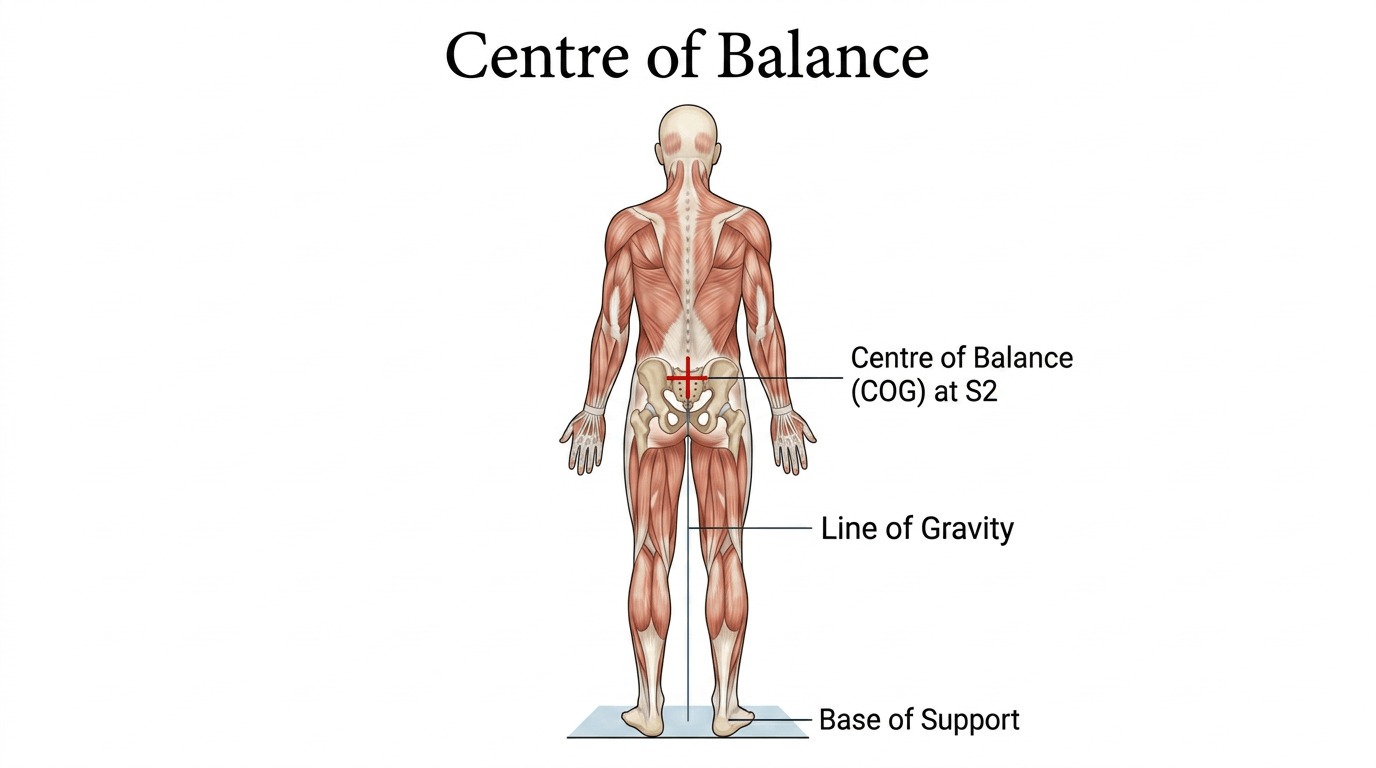
Balance is the ability to keep the body’s centre of mass over its base of support, whether stationary, moving or responding to an external force. Though this often looks effortless, it depends on coordinated, ongoing input from multiple body systems.
The body makes continual automatic adjustments to maintain stability. Everyday examples include standing on one leg, walking over uneven ground or recovering from an unexpected bump — each shows how balance operates in daily life.
When balance is inadequate, basic tasks become harder and the risk of falls rises. For people with neurological conditions, musculoskeletal problems or simply age-related changes, balance problems often have a significant impact on daily function and quality of life.
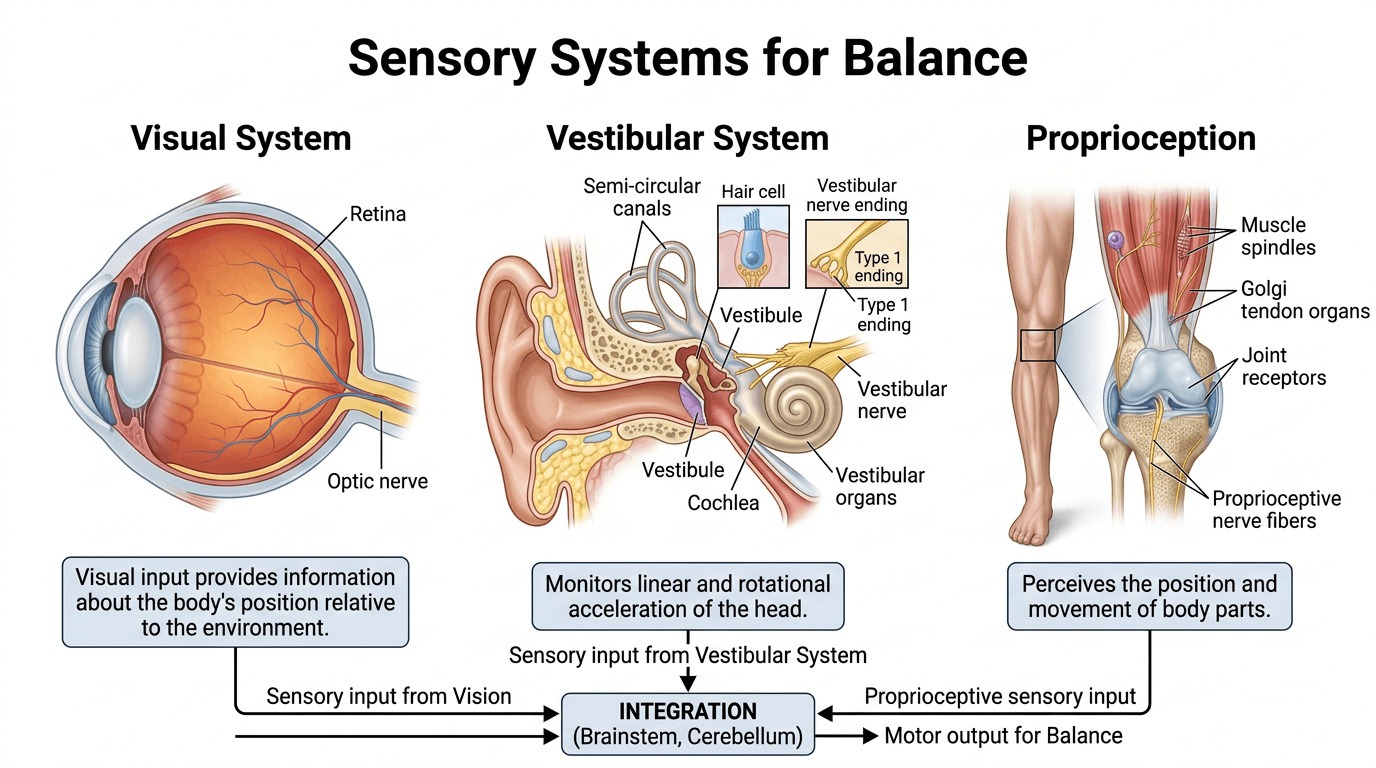
Balance relies on the brain combining information from three principal sensory systems. Each system supplies distinct cues that, together, tell the brain where the body is and how it is moving.
The visual system provides information about the environment and the body’s position within it. Eyes detect floor surfaces, obstacles and changes in terrain; this input helps anticipate and adapt to balance challenges. Many people feel unsteady with their eyes closed, which indicates reliance on visual cues for stability.
The vestibular apparatus in the inner ear senses head movement and orientation relative to gravity. Fluid-filled chambers and specialised hair cells detect positional change and send ongoing signals to the brain about head position in space. When inner ear input is unreliable, dizziness, vertigo or balance disorders may follow and rehabilitation must address this deficit.
Proprioceptive receptors in muscles, joints, ligaments and skin inform the brain of limb position and movement without visual input. The soles of the feet are especially important because they report pressure and surface characteristics to the brain. Reduced foot sensation — for example from peripheral nerve injury — diminishes pressure feedback and commonly leads to poorer balance.
The brain integrates visual, vestibular and somatosensory signals, resolves conflicts and issues rapid commands to muscles to maintain or restore posture. These corrective responses are usually automatic and fast; conscious awareness tends to increase only when balance is strongly challenged.
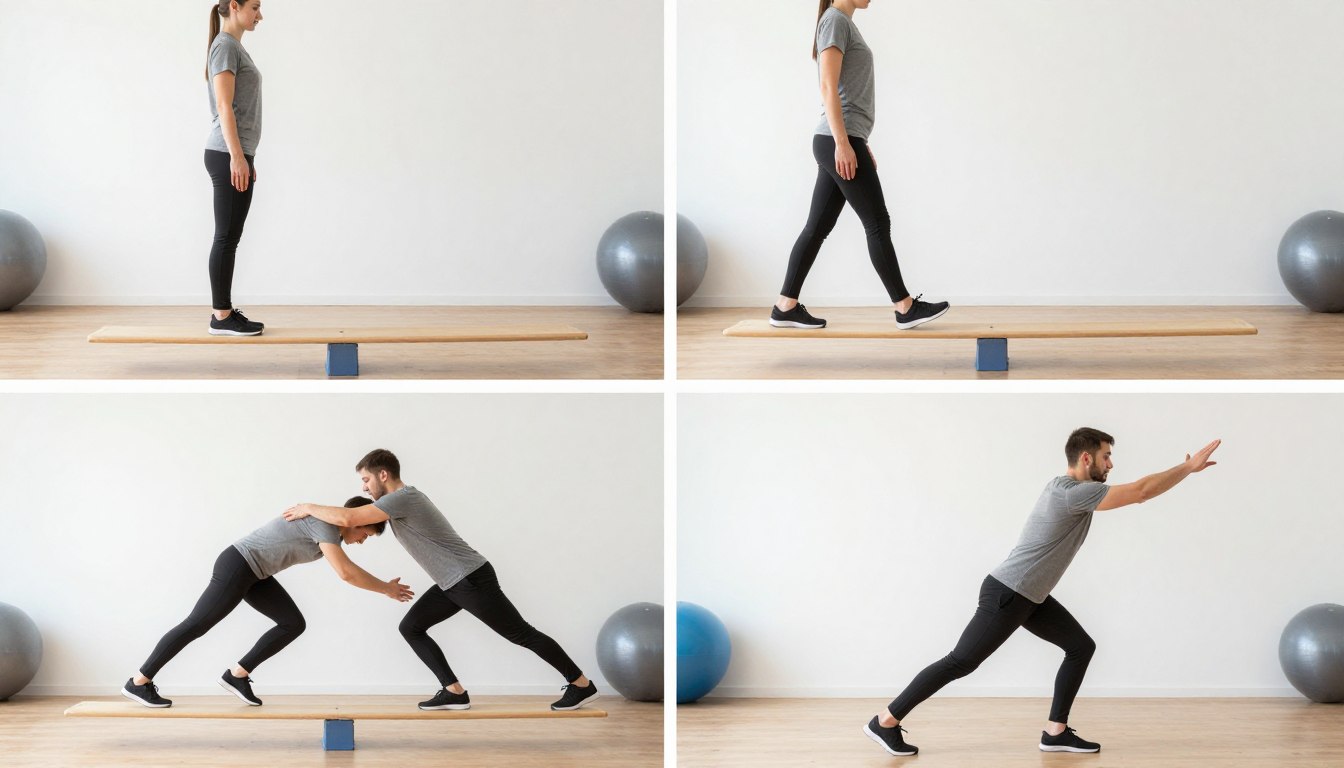
Balance comprises several related abilities rather than a single skill. Identifying these components helps target assessment and rehabilitation to the tasks that matter.
Maintaining stability while sitting or standing still; often assessed first as the foundation for other tasks.
Controlling the body during movement, for example walking, turning or reaching.
Rapid recovery after an unexpected disturbance, such as a trip or a push.
Preparatory adjustments made before voluntary movement, for example shifting weight before stepping or reaching.
Balance is shaped by many interacting factors, and several are modifiable with targeted intervention. Identifying the contributors to an individual’s difficulty allows a physiotherapist to design a personalised, effective programme.
Muscle strength is central to balance. Weak leg muscles make recovery from perturbations harder and limit the ability to sustain positions; targeted strength training for the ankle, knee and hip improves stability. Joint range also matters — restricted ankle or hip movement reduces the capacity of the foot and leg to adapt to changing surfaces or posture.
Coordination and muscle tone determine how the body’s parts work together. Poor coordination reduces efficiency and impairs balance; abnormal tone or spasticity (for example after stroke or in cerebral palsy) can further restrict movement patterns.
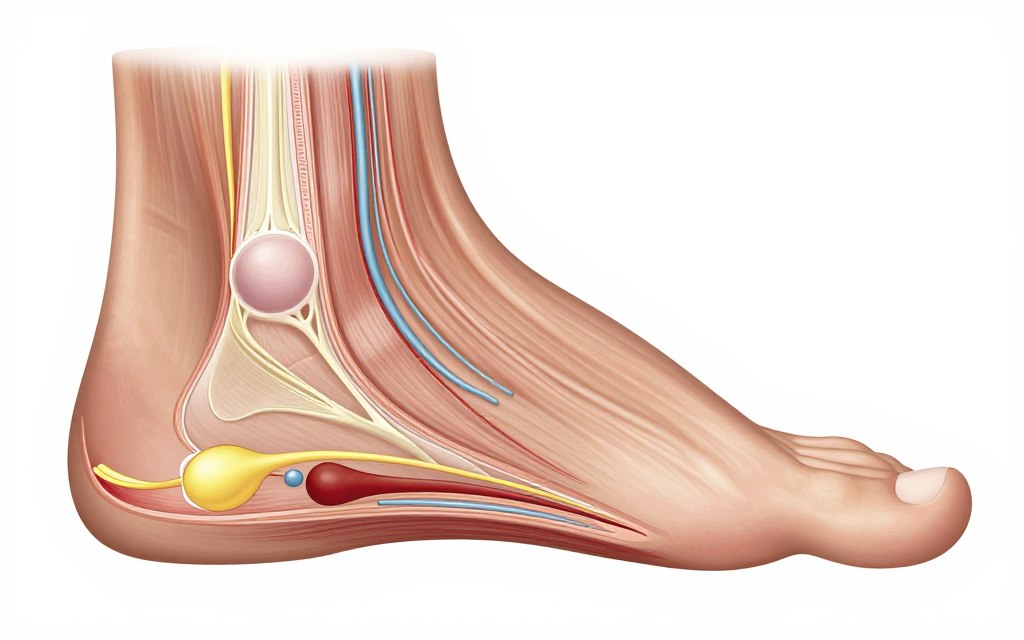
Sensory input provides essential feedback for posture and movement. Reduced sensation in the feet — commonly seen with diabetes or peripheral nerve injury — diminishes pressure information from the soles and degrades balance. Vision problems reduce environmental awareness and spatial orientation; changes in the eyes therefore affect stability. Vestibular function in the inner ear may decline with age or disease and commonly contributes to balance disorders when impaired.
Cognitive load influences balance: multitasking while walking increases fall risk because the brain’s capacity to manage balance and other tasks is limited. Pain and fatigue also reduce stability — pain can produce protective movement patterns and fatigue slows muscular responses.
Age produces broad changes across systems involved in balance: vision, vestibular function, proprioception, muscle strength and reaction times all tend to decline. These changes raise fall risk but are not inevitable; many people respond well to appropriate exercise and rehabilitation.
Clinical action: a physiotherapist will typically assess strength, joint range, foot sensation (including left foot and right foot symmetry), vision, vestibular function and medications to identify modifiable contributors and plan treatment.
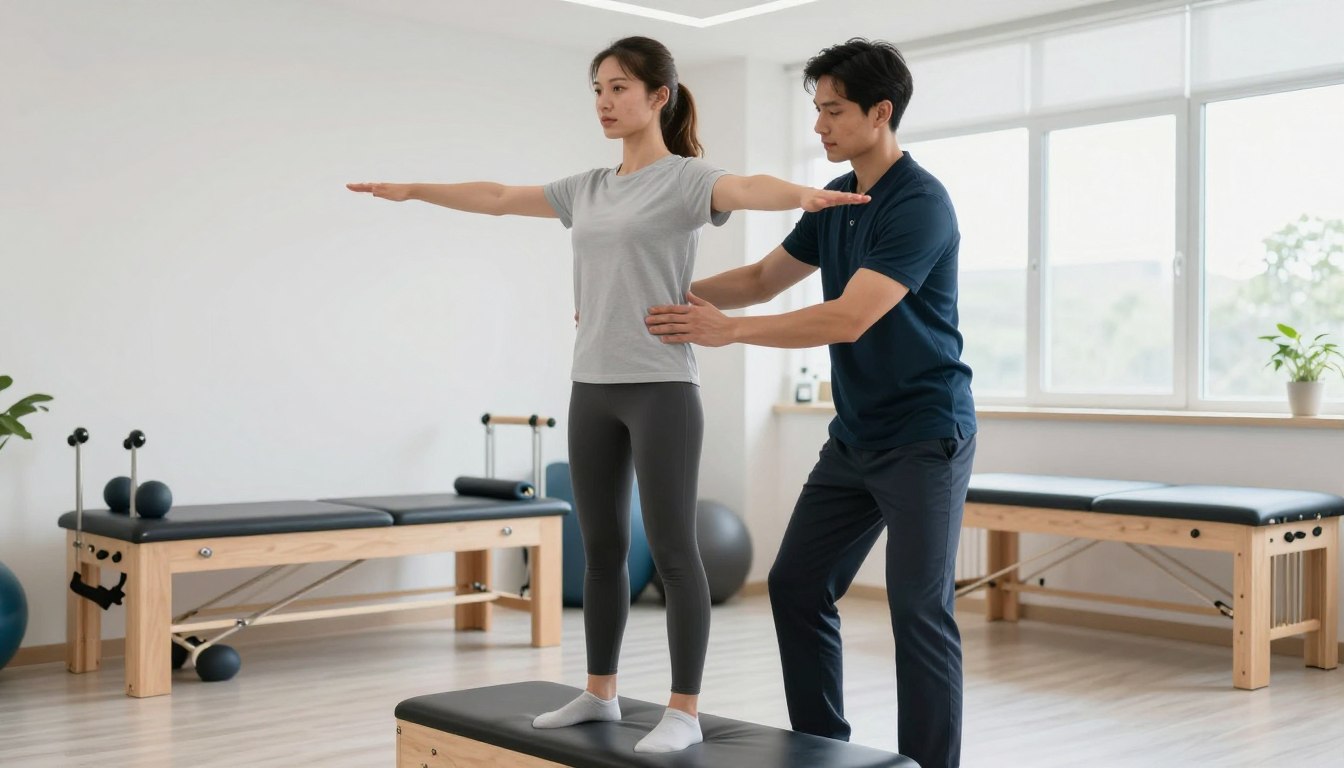
In clinical practice, improving balance means restoring the ability to perform everyday activities safely and efficiently. Rehabilitation is goal‑directed and task‑focused rather than limited to abstract measures of sway, so training is tailored to the activities that matter most to each person.
Therapy targets real‑world tasks. Stable sitting provides the base for many other skills; without it, progressing to standing and transfers is difficult. Sit‑to‑stand ability is a common priority because it underpins independence.
Standing balance supports tasks at a worktop or sink and makes transfers safer. Walking requires complex dynamic control; rehabilitation typically progresses from short, supported ambulation to longer, more independent walking as confidence and capacity increase. Stair negotiation needs additional strength, coordination and confidence.
Reaching and turning integrate dynamic balance into purposeful movement. Practising these functional actions generally produces better outcomes than isolated exercises because training closely matches everyday demands.

Preventing falls is a central aim of rehabilitation. Falls can cause serious injury, reduce confidence and limit activity. Well‑designed programmes that combine strength training, balance exercises and functional practice are proven to reduce fall risk in many groups.
Effective prevention addresses individual risk factors, teaches recovery strategies for loss of balance, and includes education about environmental hazards alongside physical training.
Balance work is integral to rehabilitation for many conditions. Stroke often produces clear impairment on one side of the body; recovery focuses on relearning movement patterns, improving strength and developing compensatory strategies. Cerebral palsy affects tone and coordination from early life; ongoing balance training helps maximise function.
Parkinson’s disease commonly leads to progressive balance and gait changes; targeted exercise can slow functional decline and help preserve mobility. Multiple sclerosis causes fluctuating balance challenges and requires adaptable programmes. Traumatic brain injury may affect any balance system, so assessment directs personalised therapy.
Age‑related frailty impairs balance through multiple mechanisms, yet older adults frequently respond well to training. Improvements in strength, confidence and function are achievable at any age.
Physiotherapists use specialised tools to support balance training in clinic and supervised home programmes. StandSure is a therapy aid designed to help maintain stable foot positioning during rehabilitation exercises under professional guidance.
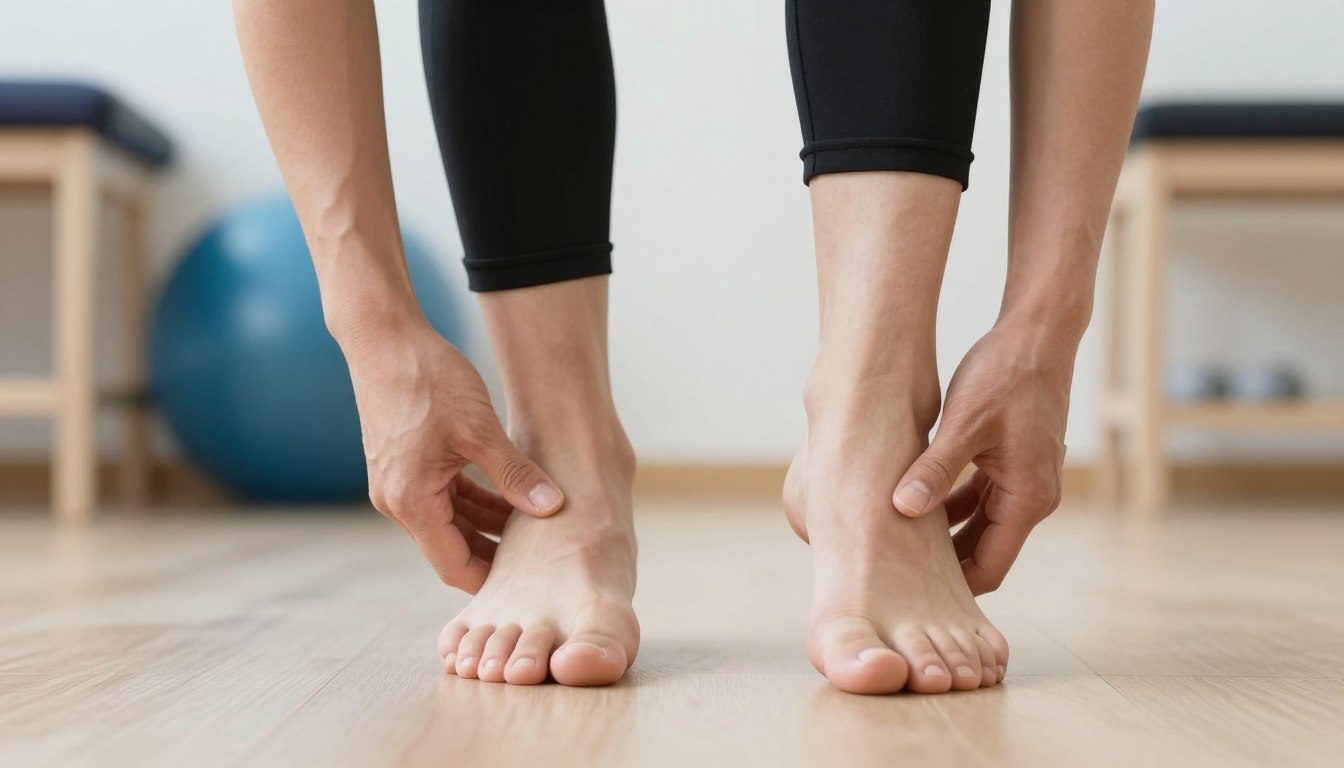
For people with neurological or musculoskeletal impairments, the feet form the primary foundation of balance. Everything above that foundation depends on stable foot contact and correct foot position; when the feet are unstable, overall function is compromised.
Poor alignment or loss of contact between the foot and the floor reduces the base of support and makes postural control more difficult. Uneven weight‑bearing between the left foot and right foot commonly produces asymmetry, muscle imbalance and inefficient movement patterns.
Controlling posture depends on reliable pressure information from the feet. When this feedback is reduced or inconsistent, the body’s automatic adjustments become less effective.
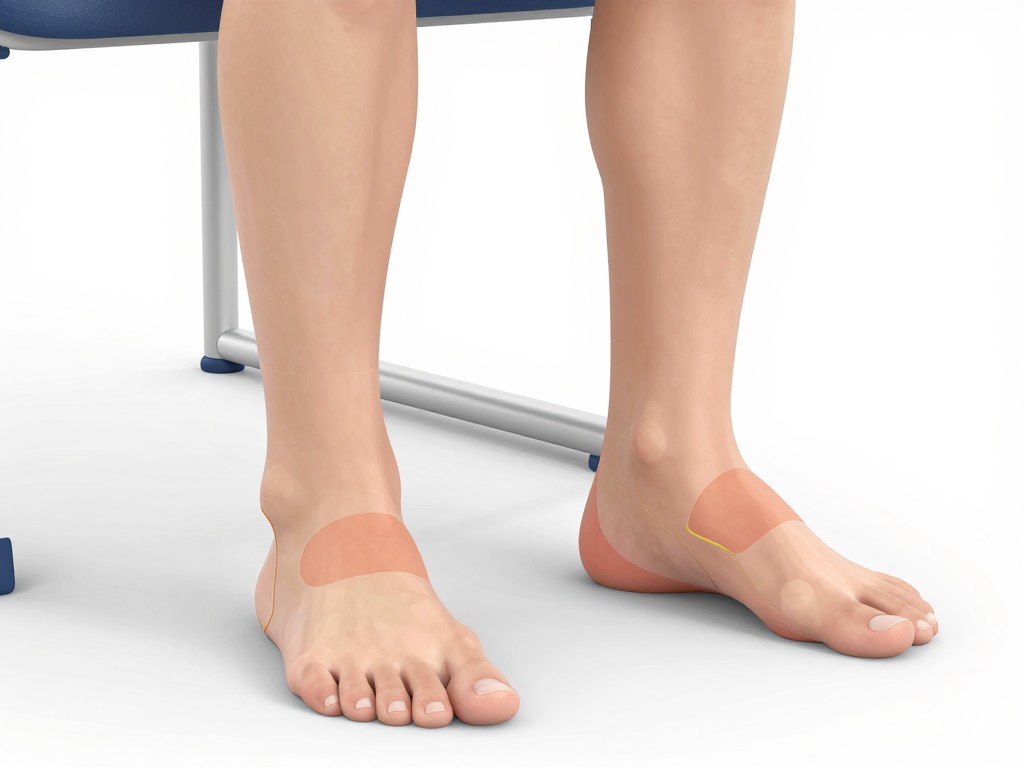
Tasks such as sit‑to‑stand depend on correct foot placement to enable efficient weight transfer. If the feet are not positioned to support the movement, transfers become harder and less safe.
Clinically, therapists often address foot positioning early so that dependable sensory input from the feet supports the remainder of rehabilitation.
No device creates balance on its own, but tools that help maintain consistent foot position can create the conditions needed to practise balance exercises safely. Under physiotherapist supervision, correct foot placement facilitates weight‑bearing practice and functional training.
The StandSure therapy aid is designed to support foot positioning during supervised rehabilitation. Used appropriately by clinicians, it helps establish stable foot contact so patients can focus on improving movement and balance.
Choose exercises that match current ability and progress them gradually. Starting at the right level reduces frustration and injury risk while building confidence and competence.
Begin with safe, supported activities that develop foundational control. Hold onto a stable surface while practising to ensure safety.
Stand with feet together to narrow the base of support and gently increase balance demand; use a counter or sturdy chair back for support initially.
Perform controlled weight shifts from side to side or front to back while holding onto support. These train dynamic control and coordination; reduce hand support as control improves.
March on the spot while holding onto support to introduce leg movement. This builds leg strength and prepares the body for walking.
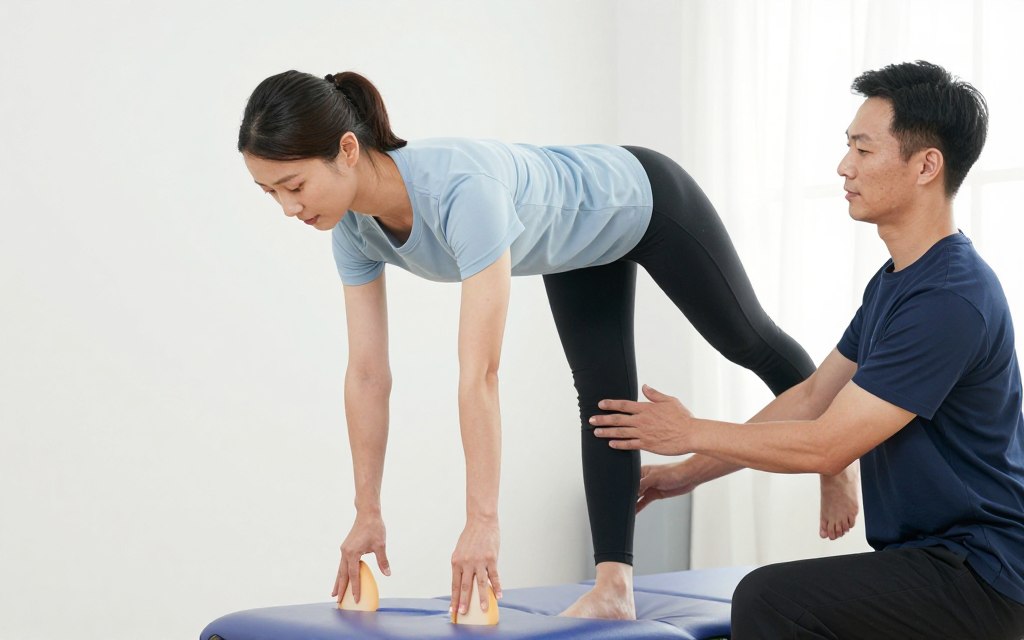
Gradually reduce external support and increase challenge while keeping safety paramount. Keep eyes open at first; closing the eyes removes visual input and makes tasks harder.
Tandem stance places the left foot directly in front of the right foot (or vice versa), heel to toe. This narrow base is more demanding than feet-together; aim to hold the position for around 30 seconds if safe to do so.
Single‑leg stance (standing on one foot) is an effective test of balance. Start with light contact on a support and progress to unsupported holds. Work toward holds of up to 30 seconds on each leg as control permits.
Advanced training combines balance challenges with movement and dual tasks to reflect real‑world demands.
Walk heel‑to‑toe in a straight line to simulate narrow‑path walking. Extend the arms to the side for extra stability if required.
Stand on one foot while performing arm movements to introduce a dual task; this requires the brain to coordinate balance and purposeful movement simultaneously.
Step‑ups onto a low platform build leg strength and challenge balance through ascent and descent; control throughout the movement is essential.
Important Safety Note: All balance exercises carry some fall risk. Always practise near a sturdy support surface and make sure the area is clear of trip hazards. If feeling wobbly, hold onto support or reduce the challenge. People with significant balance impairment should exercise under physiotherapist supervision. Never practise where a fall could cause serious injury.
Effective balance training follows a small set of practical principles that maximise improvement while reducing risk. Applying these principles helps tailor a programme to an individual’s needs and goals.
Training should match the balance components and functional tasks that matter to the person. For example, someone with difficulty walking needs dynamic, gait‑focused practice rather than only static holds. Design exercises so gains transfer directly to the intended activity.
Improvements require an appropriate challenge. Exercises that are too easy give no stimulus; exercises that are too hard risk failure or injury. Progress gradually — increase duration, reduce support, narrow the base, close the eyes, add movement or combine challenges — and keep changes small and achievable.
Regular practice produces the best results. As general clinical guidance, aim for balance exercises at least three times per week; daily short sessions may accelerate gains. Sessions need not be long: 15–30 minutes of focused work is often sufficient, and shorter, more frequent sessions can be effective.
The nervous system adapts to repetition. Vary positions, support, surfaces and tasks to prevent plateaux and maintain engagement. Introducing novel challenges — for example different walking surfaces or combined movements — improves the ability to cope with real‑world situations.
Safety always takes priority. Exercises should push ability without creating undue fall risk. Ensure appropriate support is available and that the environment is clear of hazards. For people at high risk of falls, physiotherapist supervision ensures safe progression. Home programmes should include only exercises that can be performed independently and safely.
Muscle strength and balance are closely linked: stronger muscles allow quicker, more effective corrections when stability is threatened. For this reason, strength training is an essential element of balance rehabilitation.
Leg strength directly supports balance. Ankle muscles make fine corrections to keep the body upright, knee muscles provide support during standing and walking, and hip muscles generate larger responses to recover from perturbations.
Target the major leg groups with functional strength training such as sit‑to‑stand repetitions, step‑ups, heel raises and gentle squats. These exercises develop strength in movement patterns used for everyday activities.
The core muscles of the abdomen and back stabilise the trunk during movement. Adequate core control improves posture and the efficiency of limb actions; weakness here can compromise balance even when leg strength is adequate.
Integrate core work into balance tasks — maintaining an upright trunk during balance challenges engages the core naturally. Supplementary exercises such as bridging or controlled abdominal activation may be added as required.
The most effective programmes combine strength and balance within functional activities. Practising sit‑to‑stand builds leg strength while challenging balance; walking drills improve endurance and dynamic control; stair practice develops strength, balance and confidence together. This integrated approach transfers more readily to daily life than isolated training.

Changes in blood pressure can influence balance, particularly in older adults and people with cardiovascular conditions. Recognising these links helps make training safer and more effective.
Some people experience a drop in blood pressure on standing, causing dizziness, light‑headedness or fainting and increasing fall risk. This becomes more common with age and certain medical conditions; some blood pressure medicines may contribute.
When orthostatic symptoms are a concern, move more slowly from sitting to standing and pause briefly after standing to allow blood pressure to settle. Maintain good hydration to support stable blood pressure.
Longstanding, poorly controlled high blood pressure can contribute to vascular complications that may affect balance, for example after stroke. Well controlled high blood pressure does not usually cause balance problems directly.
Most people with controlled high blood pressure can take part in balance training; exercise commonly helps with blood pressure management. Seek medical clearance before starting an intensive programme if there are cardiovascular concerns.
Monitor symptoms during training and stop if severe dizziness, chest pain, marked breathlessness or faintness occur. Make sure the physiotherapist is aware of any cardiovascular conditions and current blood pressure medications so the programme can be adapted and appropriate precautions applied.
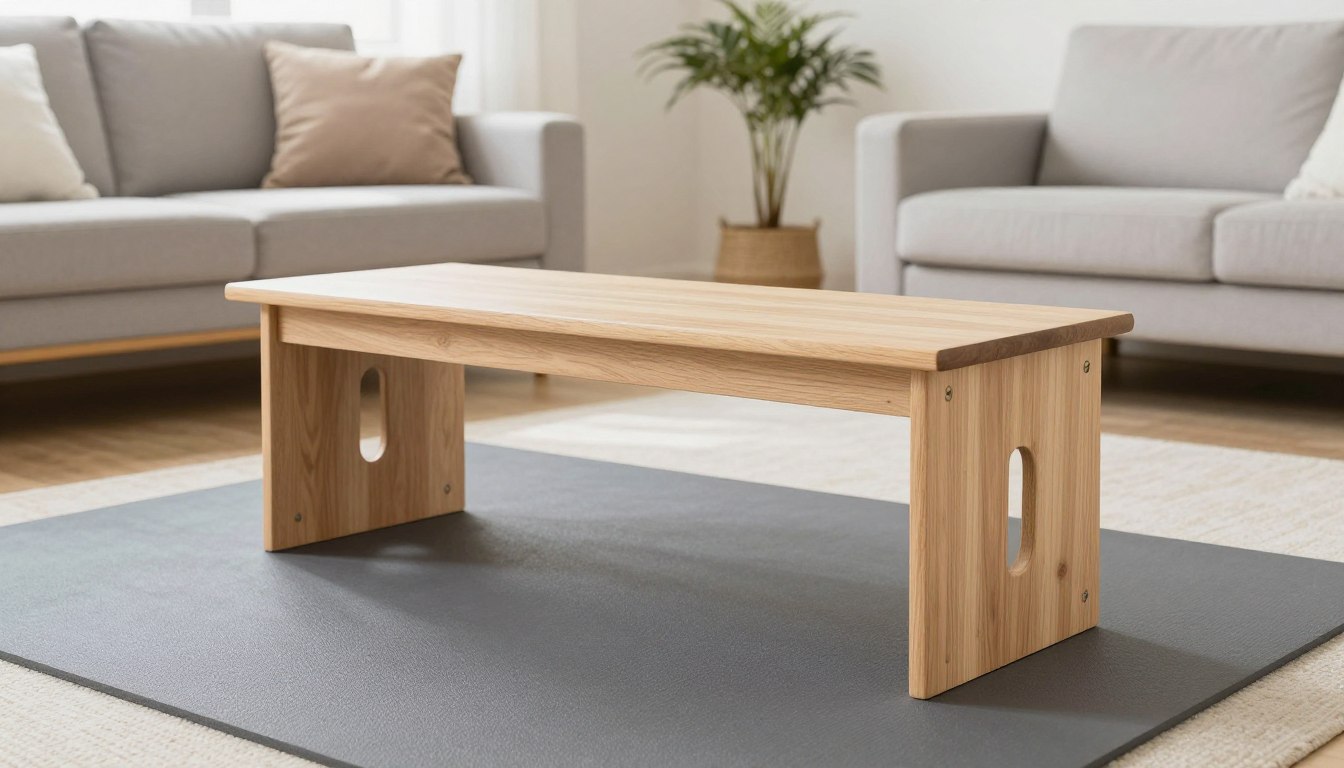
Many people improve balance through a consistent, well‑structured home programme. Success depends on choosing suitable exercises, using correct technique and paying careful attention to safety.
Begin with an honest appraisal of current ability: which tasks can be completed safely and where difficulties begin? This guides selection and progression of exercises.
Consider a physiotherapist assessment to identify specific deficits and establish a safe starting programme; even one session can provide valuable direction.
Prepare a safe area with good lighting, a level non‑slip floor and no trip hazards. Make sure sturdy furniture or a rail is available for support and practise near a corner if two‑sided support may be needed.
Aim for regular practice rather than occasional long sessions. As a general guide, practise balance exercises at least three days per week and, where possible, include short daily sessions. Start with a small number of exercises performed well and increase difficulty gradually as ability improves.
Record simple measures to monitor improvement: time a position can be held, number of repetitions completed, or whether support is still required. Review progress monthly and celebrate small gains — these indicate meaningful functional change.
If balance worsens, new symptoms appear or falls occur, consult a healthcare professional. Do not assume decline is inevitable. Professional input is also useful if progress plateaus — a physiotherapist can identify barriers and adjust the programme.
Balance changes at each stage of life. Recognising these age‑related variations helps set realistic expectations and choose appropriate interventions.
Balance skills develop progressively as the nervous system matures: sitting balance comes before standing, standing before walking, and more complex abilities such as hopping on one foot emerge later. Early intervention for children with developmental conditions takes advantage of neural plasticity and generally produces better outcomes.
Many adults maintain good balance without focused training, but a sedentary lifestyle reduces strength and coordination. Regular activities that challenge balance — for example dancing, tai chi, yoga or walking on varied terrain — help preserve function and slow age‑related decline.
Age brings gradual changes across systems that support balance: vision, inner ear function, foot sensation, muscle strength and reaction time may all diminish. These changes increase the risk of balance problems, yet targeted exercise reliably mitigates decline. Research shows balance training can produce meaningful benefits even in very advanced age — improvements in strength, stability and confidence are achievable and it is rarely too late to start.
Many medical conditions can impair balance. Understanding how specific conditions affect the systems that support stability allows rehabilitation to be targeted and more effective.
Stroke frequently disrupts control of movement on one side of the body, producing marked balance impairment; rehabilitation emphasises relearning movement patterns, improving strength and developing compensatory strategies. Parkinson’s disease commonly leads to progressive balance and gait changes (for example a shuffling gait and difficulty turning); combining balance training with medication and cueing strategies helps preserve function. Multiple sclerosis causes fluctuating balance problems often influenced by fatigue, so programmes must be adaptable to variable ability and energy levels.
Disorders of the inner ear often produce dizziness and substantial balance disturbance. Benign paroxysmal positional vertigo (BPPV) causes brief spinning sensations with head movements and is usually treatable with specific repositioning manoeuvres. Conditions such as vestibular neuritis or labyrinthitis may cause longer‑lasting vertigo; vestibular rehabilitation aims to promote central compensation for reduced inner ear input.
Arthritis and joint pain limit range of motion and alter movement patterns, which impairs balance; maintaining joint flexibility and leg strength supports better control. Lower limb amputation changes the base of support and requires bespoke prosthetic training with extensive balance practice to maximise safety and function.
Visual loss removes key environmental cues and increases reliance on vestibular and proprioceptive input; orientation and mobility training teaches alternative strategies. Peripheral neuropathy — often due to diabetes — reduces foot sensation and pressure feedback from the soles, significantly impairing balance; careful foot care and compensatory training are important elements of management. Clinicians routinely assess left foot and right foot symmetry and nerve function when planning rehabilitation.
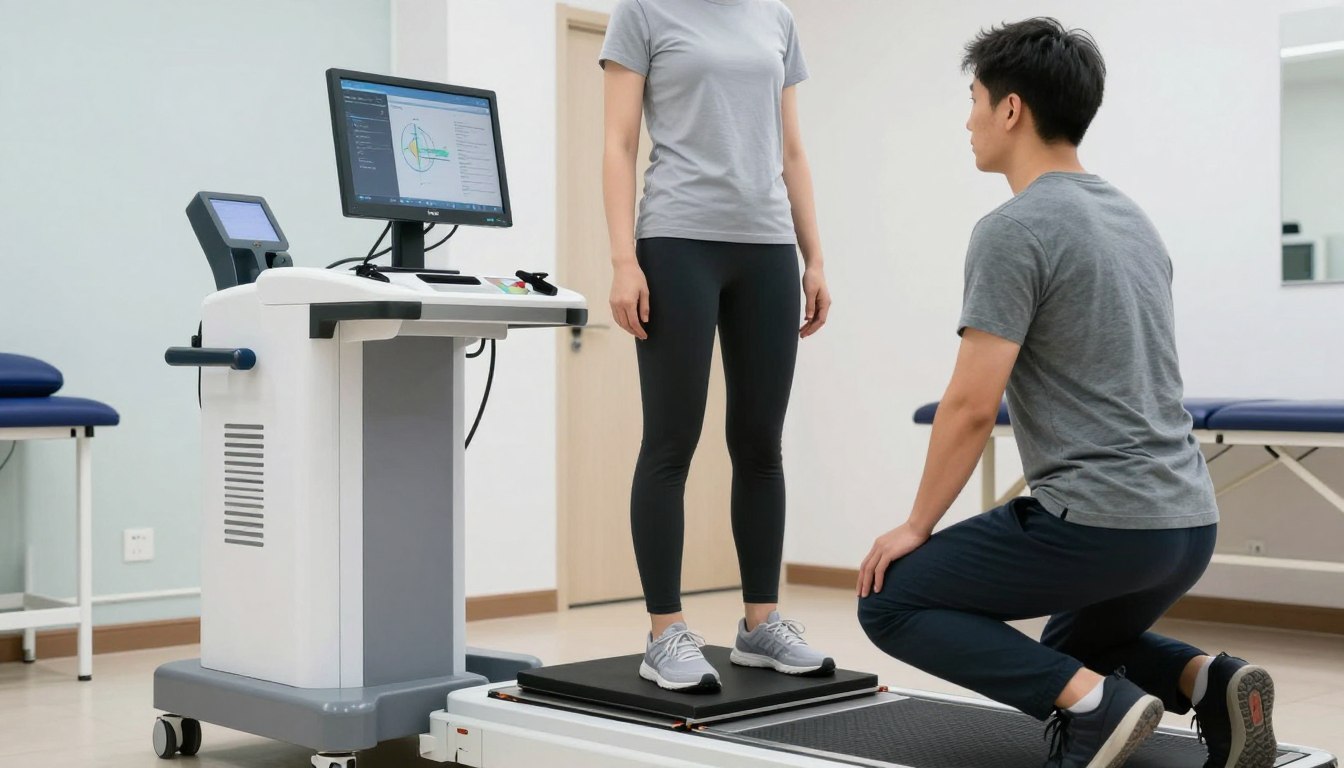
Advances in technology offer useful options for assessing and training balance, particularly in complex or unclear cases. These tools provide objective data that can complement clinical assessment and guide treatment content.
Specialised platforms and force plates measure weight distribution and body sway with precision. Such systems help isolate sensory contributions to balance and inform targeted treatment when routine assessment leaves questions.
Virtual reality and gamified systems create engaging training environments that adjust difficulty and provide immediate feedback. They can improve adherence and add a valuable stimulus, but they remain an adjunct rather than a requirement for effective rehabilitation.
Traditional, clinician‑led exercise programmes remain the foundation of balance training; advanced technology is useful when available or when detailed assessment is needed.

Nutrition and hydration support the physical systems that maintain balance. Simple dietary measures can complement exercise and rehabilitation to improve outcomes.
Adequate protein intake helps preserve and build muscle, which is essential for balance. Older adults particularly benefit from including a protein source at each meal, especially when undertaking strength training alongside balance exercises.
Vitamin D contributes to bone and muscle health; deficiency has been associated with an increased fall risk. In the UK, reduced sun exposure makes insufficiency relatively common. Discuss testing and, if needed, supplementation with a GP or clinician — combined with exercise, correcting deficiency may support balance improvements.
Dehydration can affect blood pressure and cause dizziness, directly impairing balance. Encourage regular fluid intake throughout the day rather than waiting until thirsty, especially for older adults or those prone to blood pressure changes.
Balance is a multifactorial ability that depends on coordinated input from several body systems. When it is impaired, daily activities, confidence and independence are affected — but decline is not inevitable and meaningful improvement is achievable.
Targeted balance training produces measurable gains across ages and conditions. Consistent practice of appropriately challenging exercises, performed safely, underpins progress. Whether recovering after stroke, managing Parkinson’s disease, or aiming to prevent age‑related decline, evidence supports the benefits of exercise to improve balance.
Understanding how balance works — including the role of foot position and the sensory systems — helps people make informed choices about rehabilitation. For those with significant impairment, working with a physiotherapist ensures comprehensive assessment, individualised goals and safe progression. Many people also benefit from home programmes that complement clinical sessions.
The journey to better balance requires patience and steady effort. Changes are typically gradual but meaningful: improved stability often brings greater independence, fewer falls and an enhanced quality of life.
StandSure provides physiotherapists with a professional tool to support foot stability during balance training. When used by clinicians in clinic or supervised home programmes, it helps establish the stable foot positioning needed for effective rehabilitation.
Balance problems often have multiple causes. Common contributors include inner ear (vestibular) disorders, poor vision, reduced foot sensation from nerve injury or peripheral neuropathy, muscle weakness and neurological conditions such as stroke or Parkinson’s disease. Medications that affect blood pressure or cognition, age‑related changes, pain and deconditioning also play a role. Identifying the specific causes requires professional assessment, which may include tests of vision, vestibular function, strength and sensation.
Some people notice small gains within four to six weeks of consistent practice (for example three sessions per week). More substantial, functional improvements commonly take eight to twelve weeks of regular training. Timelines vary with starting ability, the underlying cause and how consistently exercises are performed; continued practice is important to maintain and build benefit.
Yes. Appropriately designed balance programmes produce improvements even in very advanced age. Although ageing brings changes in vision, vestibular function, muscle strength and reaction time, targeted exercise can significantly mitigate these effects. The extent and speed of change vary, but it is rarely too late to start.
See a physiotherapist if there are frequent near‑falls or actual falls, progressive balance decline, unsteadiness during usual activities, dizziness on position changes, difficulty with stairs or uneven ground, or reduced confidence. People with conditions known to affect balance (for example stroke, Parkinson’s disease or peripheral neuropathy) should also seek assessment. Early intervention usually gives better outcomes.
Many balance exercises can be performed safely at home when matched to ability and environment. Start with tasks that can be completed confidently, practise near a sturdy support and remove trip hazards. Stop if severe pain or dizziness occurs. Those with significant impairment, a history of falls or complex medical problems should work with a physiotherapist to determine which exercises are safe to do independently and which require supervision.
Foot position is fundamental because the feet form the body’s base of support. Proper alignment and even weight distribution between the left foot and right foot provide reliable sensory feedback from pressure receptors in the soles. Poor foot placement reduces that feedback, makes sit‑to‑stand and other transfers harder, and increases imbalance. Clinicians often correct foot position early in rehabilitation to create a stable foundation for further training.
Static balance is maintaining stability when stationary (for example standing still or sitting upright). Dynamic balance is maintaining control during movement — walking, reaching, bending or climbing stairs. Most daily activities rely heavily on dynamic balance, so rehabilitation usually includes both static and dynamic practice to improve real‑world mobility.
Yes. Some blood pressure medicines may cause dizziness on standing; sedatives and sleep aids can impair coordination and reaction time; and other drugs may affect vision or vestibular function. Multiple medications together can have cumulative effects. Anyone with new balance difficulties after starting medication should consult the prescribing clinician — do not stop medications without medical advice.
Vision provides essential information about the environment, obstacles and spatial relationships. When vision is reduced or eyes are closed, balance becomes more challenging because the brain loses a major source of orientation. Regular eye checks, correct lenses and good lighting all support safer mobility. People with low vision can learn compensatory strategies that rely more on vestibular and proprioceptive input.
Muscle strength enables the body to maintain positions, make rapid corrections and recover from disturbances. Strong leg muscles support standing and walking; ankle muscles make fine adjustments, hip muscles produce larger corrective actions and core muscles stabilise the trunk. Combining strength training with balance‑specific exercises produces better outcomes than either approach alone.
Stop the exercise immediately and sit or hold onto a stable support until symptoms settle. Mild unsteadiness can be expected with challenging tasks, but severe dizziness, spinning sensations or faintness require stopping and seeking assessment. If dizziness recurs, consult a physiotherapist or doctor to identify the cause — for example blood pressure changes, inner ear problems or an exercise that is too advanced — and adjust the programme accordingly.
Prevention focuses on staying active and addressing modifiable risks: practise activities that challenge balance (for example walking on varied surfaces, dancing or tai chi), maintain leg and core strength, have vision checked regularly, manage chronic conditions such as diabetes or high blood pressure, review medications with a clinician, and create a safe home environment by removing trip hazards, improving lighting and installing handrails where needed.

Book a personalised demonstration of the StandSure™ today by filling out our request form. Have any questions? Call us now, and our team will be happy to assist!


