No products in the cart.
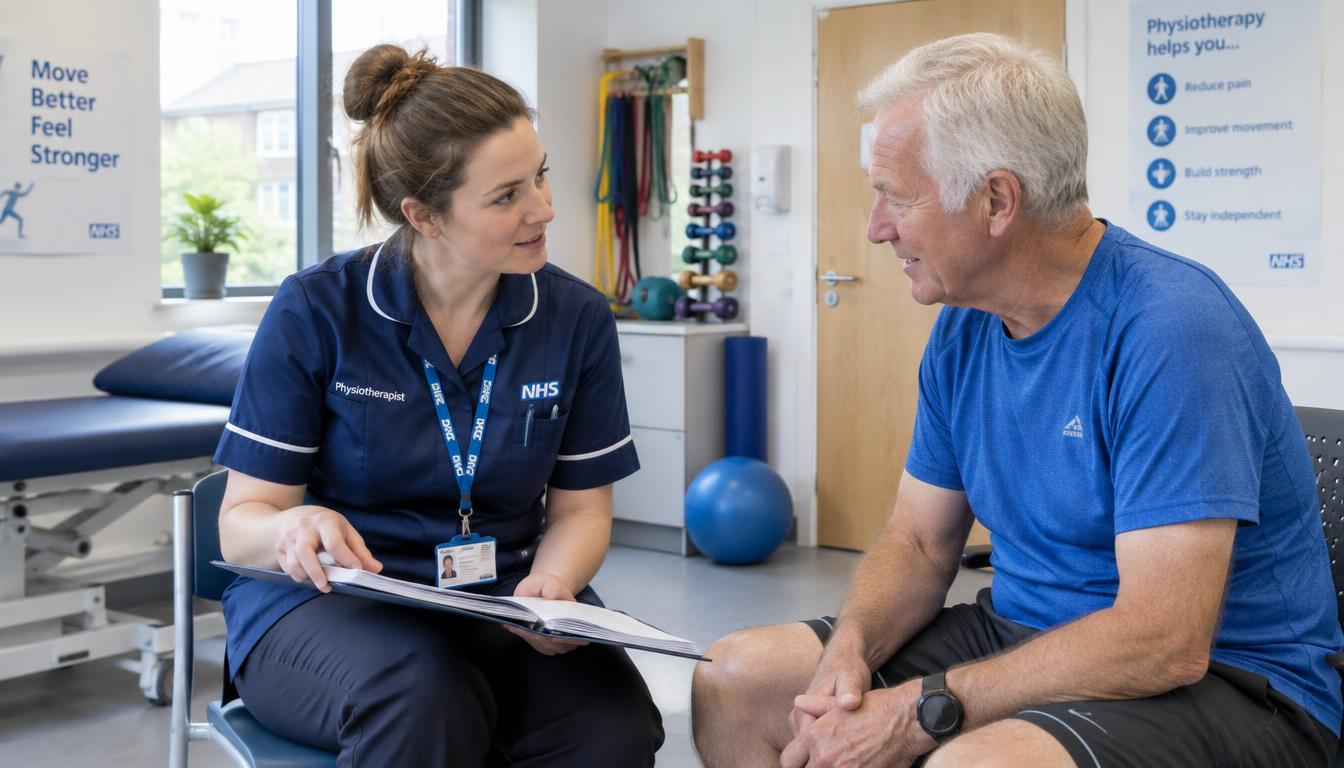

In the UK, falls risk assessment often begins with a brief screen, followed by a fuller multifactorial assessment when needed. Screening may take place during a routine health care review in primary care, with a GP, practice nurse or community healthcare worker. The approach varies between services.
If the screen identifies recent unsteadiness or changes in walking, a more detailed assessment can help clarify a person’s risk of falling. A physiotherapist, occupational therapist or specialist falls team commonly carries out this review. They consider how different bodily systems work together during everyday activities and whether difficulties appear temporary or persistent. A history of falls, including events in the past year, can help identify people at increased risk.
Screening highlights possible risk factors; it is not a full risk assessment and does not establish the precise cause of instability. A comprehensive falls risk assessment looks more closely at these factors and may include checks of strength, mobility, footwear and daily activities. This distinction helps guide appropriate care and prevention, so patients can receive further evaluation and interventions when needed. Neither a single number nor a manual observation alone gives the complete picture for older adults.
A falls risk assessment starts with a calm conversation about what a person has experienced in daily life. Clinicians ask about any history of falls during the past year and the circumstances surrounding each event. This helps build an individual picture of fall risk, including possible risk factors for people aged over 65 and other older adults.
The time of day, activity, lighting and symptoms such as light-headedness or palpitations can all offer useful information. Near falls are important too. These happen when someone stumbles or loses balance but catches themselves on a wall or piece of furniture. They can signal emerging mobility problems before a fall causes injuries, giving patients and health care professionals an opportunity to discuss timely support and prevention. Including near falls in the review helps clarify a person’s risk of falling and whether they might benefit from further assessment or care.
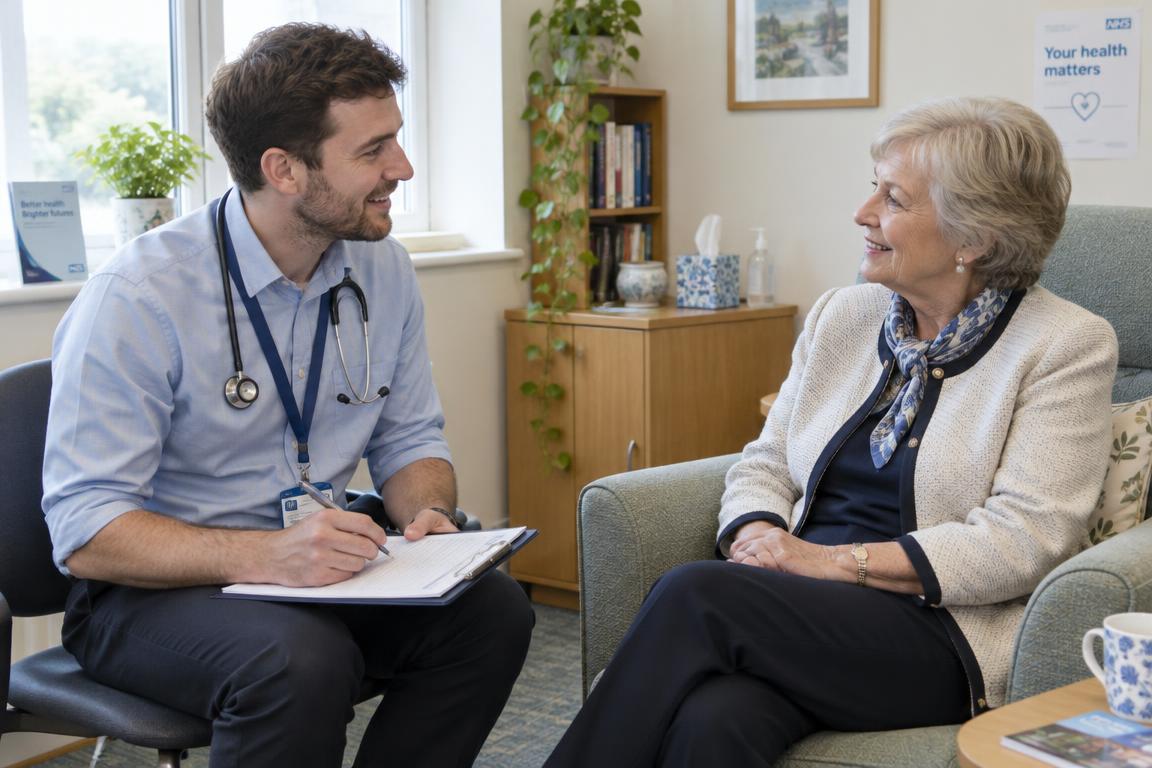
Medical conditions are also reviewed as part of a clinical falls assessment. Conditions affecting the nervous system, including Parkinson’s disease, stroke and peripheral neuropathy, can affect how sensory information travels from the feet to the brain. Cardiovascular conditions can also affect blood flow when a person changes position. These factors do not determine whether someone will fall, but they help clinicians understand why some people may be at higher risk.
Postural hypotension is a sudden drop in blood pressure when moving from lying or sitting to standing. It can cause dizziness or brief blackouts. Assessors routinely measure blood pressure while a person is lying down and standing to check whether changes in circulation contribute to instability.
Joint health is another consideration, particularly osteoarthritis in the hips, knees or ankles. Stiffness or ongoing pain can change a person’s usual walking pattern and affect balance. Understanding how symptoms vary on easier and more difficult days helps the assessor build a realistic picture of movement and identify relevant falls risk factors in older adults.
A review of prescription medicines, over-the-counter preparations and supplements is an important part of a falls risk assessment for older adults and older people. Some medicines, often described as fall-risk-increasing drugs, can affect alertness, coordination or blood pressure. These effects are among the risk factors health care professionals consider when assessing falls risk.
Sedatives, sleeping tablets, antidepressants and strong pain medicines can cause drowsiness or slow reactions. Some blood pressure medicines, including diuretics and beta-blockers, can contribute to dizziness, particularly if a person’s dose no longer suits their health needs or hydration. Taking several medicines together can also increase the chance of side effects, such as blurred vision or light-headedness. Patients should discuss concerns with a health professional rather than stopping or changing medication themselves. A medication review may identify problems and support appropriate care or interventions to reduce risk.
| Factor | Clinical Focus | Assessment Purpose |
| Polypharmacy | Multiple drugs | Identifies adverse drug interactions and sedation risks |
| Visual acuity | Sight checks | Evaluates depth perception, contrast sensitivity, and bifocal use |
| Foot health | Podiatry status | Examines bunions, clawed toes, numbness, and structural deformities |
| Footwear | Shoe design | Checks sole grip, heel support, fastening, and indoor slippers |
Vision is considered alongside medication as part of a falls risk assessment. Reduced depth perception or contrast sensitivity, cataracts and macular degeneration can make steps and changes in floor level harder to see. Multifocal or varifocal lenses can also affect how some people judge ground-level obstacles when walking outdoors. These factors can increase fall risk, but their effects differ between individuals.
Foot health and footwear are also reviewed. Loose, backless slippers and shoes with smooth, worn soles provide less grip and can contribute to slips. Assessors check for pain, calluses or loss of sensation, which can affect posture and balance. The findings help identify personal risk factors and practical prevention options for people at higher risk of falls.
Watching someone move provides practical information that a conversation alone may not reveal. A mobility assessment looks at how a person changes position, maintains an upright posture and coordinates their limbs while moving. These observations contribute to a wider falls risk assessment, helping clinicians understand individual movement and possible fall risk.
During gait assessment, the clinician observes the person walking along a clear corridor or room. They look at step length and height, symmetry, and the width of the base of support. Hesitation, shuffling, an uneven rhythm or difficulty walking in a straight line can point to problems with motor control, muscle strength or vision. These findings help the clinician consider factors that could affect a person’s risk of falling.
Transfer assessment looks at movements such as getting out of bed, standing from a sofa or sitting on a toilet. The assessor notes whether the person needs several attempts to stand, relies heavily on armrests or rocks to build momentum. These movements provide information about lower-limb strength and coordination, which can help guide appropriate care and interventions for older adults.
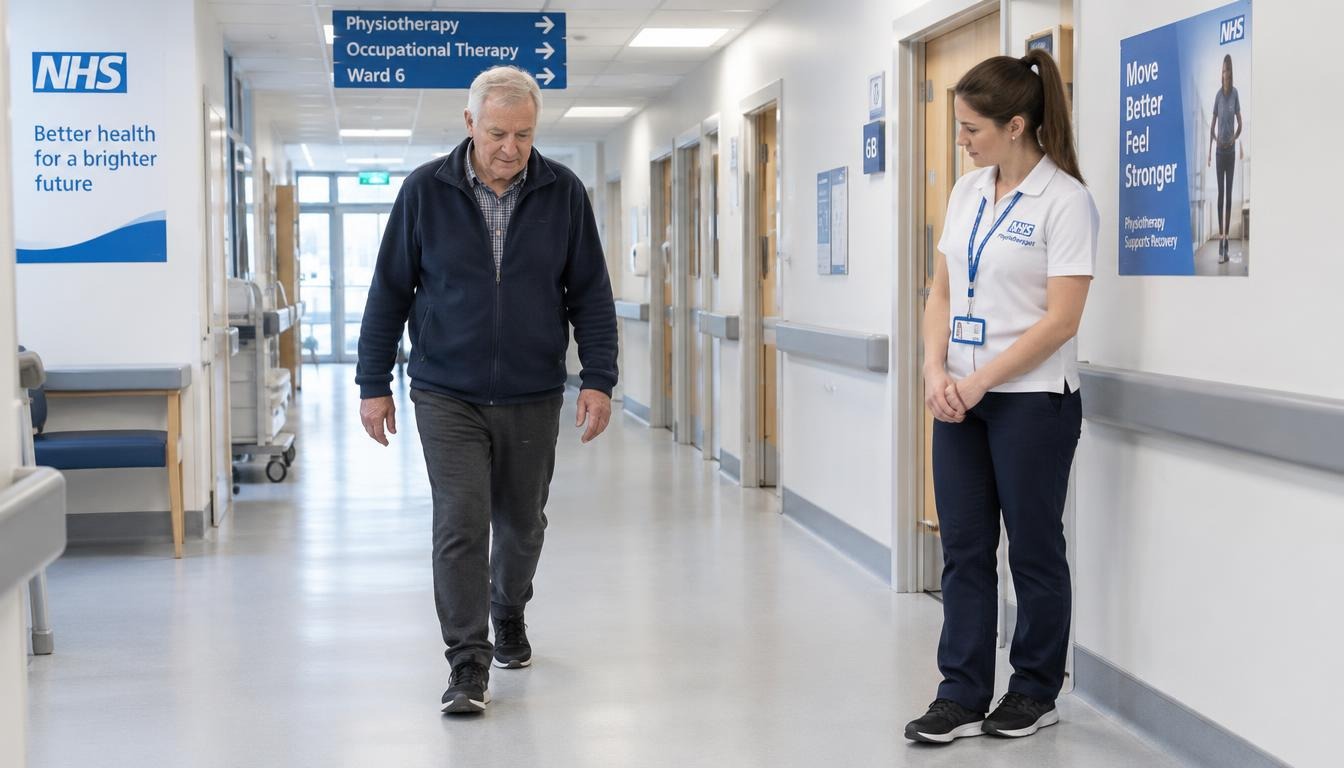
Standardised mobility tests can provide a useful benchmark as part of a multifactorial falls assessment. One example is the Timed Up and Go Test. It measures the time taken to stand from an armchair, walk three metres, turn, return and sit down. It is not a pass-or-fail test or a definite prediction of future falls. Instead, clinicians use the result alongside other assessment findings to understand movement, transitions and stability, and to plan suitable support and prevention for patients.
A balance assessment looks at how well a person stays steady when standing still and moving. Clinicians may begin with feet side by side, then use semi-tandem, tandem or single-leg positions to see how stability changes as the base of support narrows. These checks form part of a wider risk assessment and should be chosen and supervised by a healthcare professional, particularly for older adults with balance problems.
Dynamic balance tests involve movement, such as reaching forwards, stepping over small markers or turning the head while walking. They show how the nervous system responds when the body’s centre of mass shifts. Balance depends on information from the eyes, inner ears and joints. For more on how these systems work together, read understanding balance.
Balance and strength vary with fatigue, pain and practice. Tests provide a snapshot of a person’s current ability, helping clinicians identify relevant risk factors and where tailored physical activity could support health, care and falls prevention. Results are considered alongside other findings, such as blood pressure, rather than used alone to judge fall risk.
Strength checks focus on major lower-limb muscles, including the quadriceps, hamstrings, gluteal muscles and calves. Clinicians may assess ankle strength by asking a person to rise onto their toes or lift the front of their feet while standing, with support as needed. Calf and ankle strength helps people adjust to uneven pavements and door thresholds. These findings help guide suitable support for patients and inform falls risk management.
Mobility is shaped by more than physical ability. Confidence, emotional wellbeing and cognitive function also influence how people move. After a stumble or injury, some people develop a lasting fear of falling, which can affect their movement and everyday choices. This is an important part of a falls risk assessment, not a personal failing.
Fear of falling may lead people to limit activities, avoid going outdoors or walk with a tense, rigid posture. Over time, reduced activity can affect muscle strength, joint flexibility and reaction speed, potentially making balance more difficult. A clinician may use a confidence questionnaire, such as the Falls Efficacy Scale, to understand how secure someone feels doing daily tasks, from preparing a meal to answering the telephone. This helps identify individual risk factors and consider supportive care that could reduce risk.
Explores how confident a person feels doing everyday household tasks while staying steady. It can help identify hesitation that is limiting activity and affecting wellbeing.
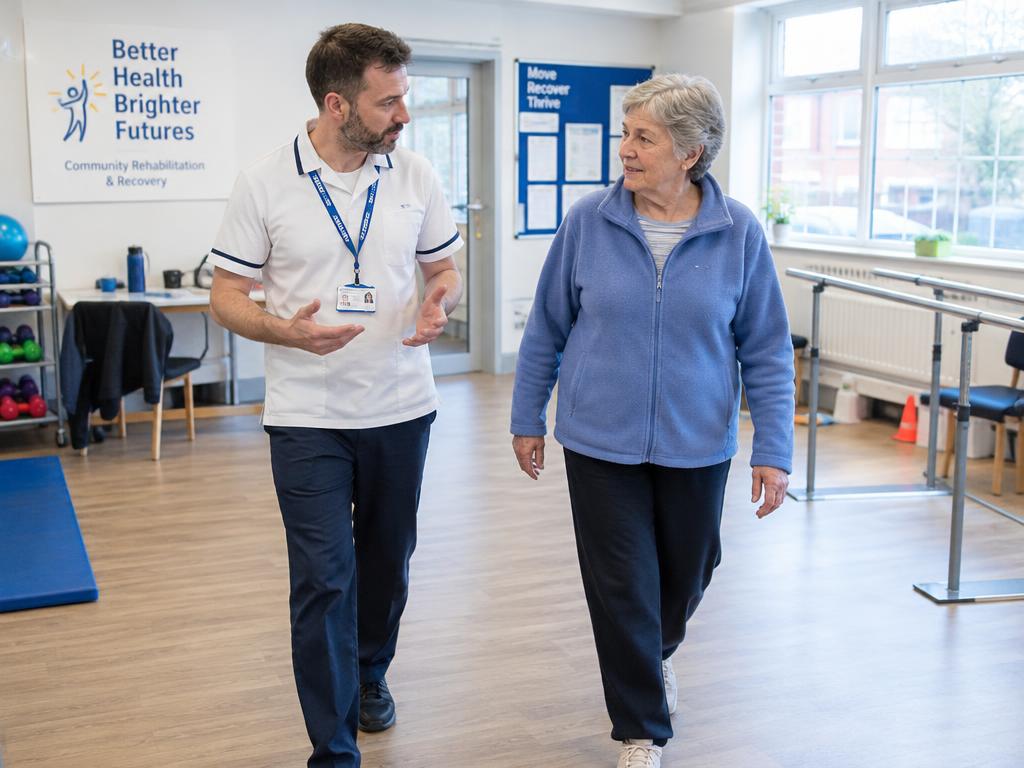
Looks at how a person walks while completing a mental task, such as counting backwards, to see how divided attention affects stability.
Cognitive function is also reviewed during assessment. Changes in memory, spatial awareness or planning can affect how someone judges distances, responds to risk or remembers to use walking equipment. In a dual-task assessment, a person walks while talking or recalling names. This helps clinicians see whether mobility changes when attention is divided. As part of a multifactorial falls assessment, these findings may include practical ways to support confidence, maintain activity and address fall risk in older adults who may be at higher risk.
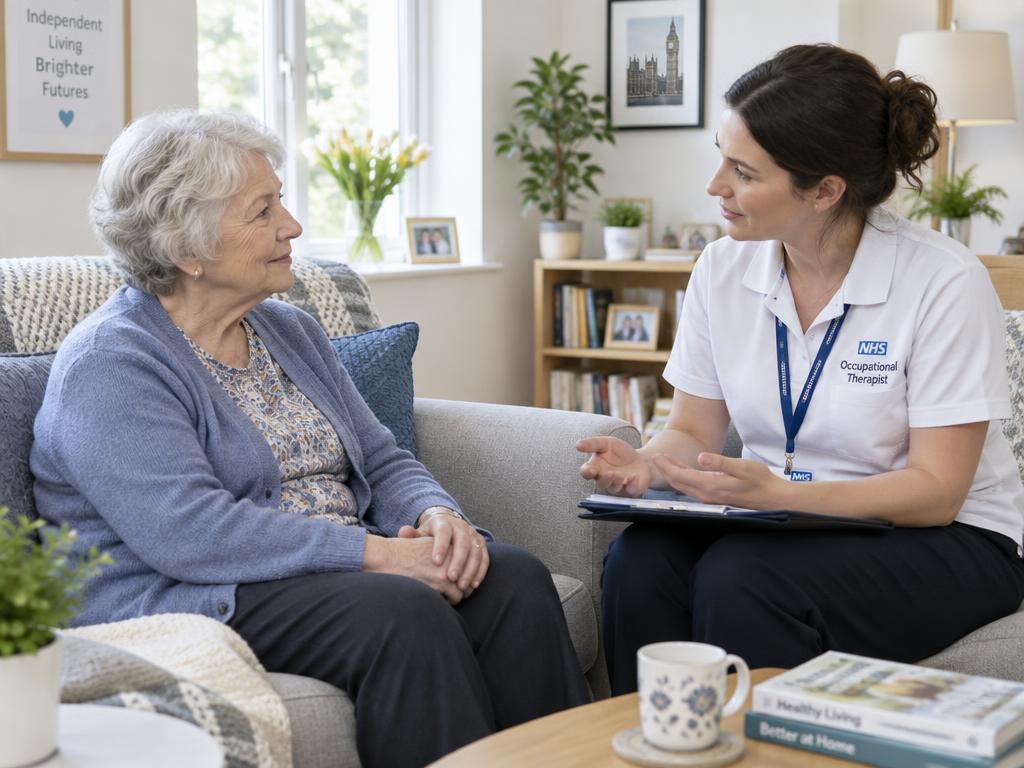
A falls risk assessment considers not only the person but also the places where they spend time. A home assessment looks for everyday hazards that could increase fall risk, such as obstacles that may cause trips or slips. This helps patients and clinicians consider practical falls prevention while respecting the person’s needs.
The assessor carries out a manual, room-by-room review, from entrances and hallways to living areas, kitchens, bathrooms and bedrooms. They check for loose rugs, trailing wires, cluttered walkways and slippery flooring, including polished lino or unsealed tiles. Poor lighting can also present a risk, particularly on stairs or along routes between the bed and bathroom at night. These are common risk factors, but what matters will vary between people and homes.
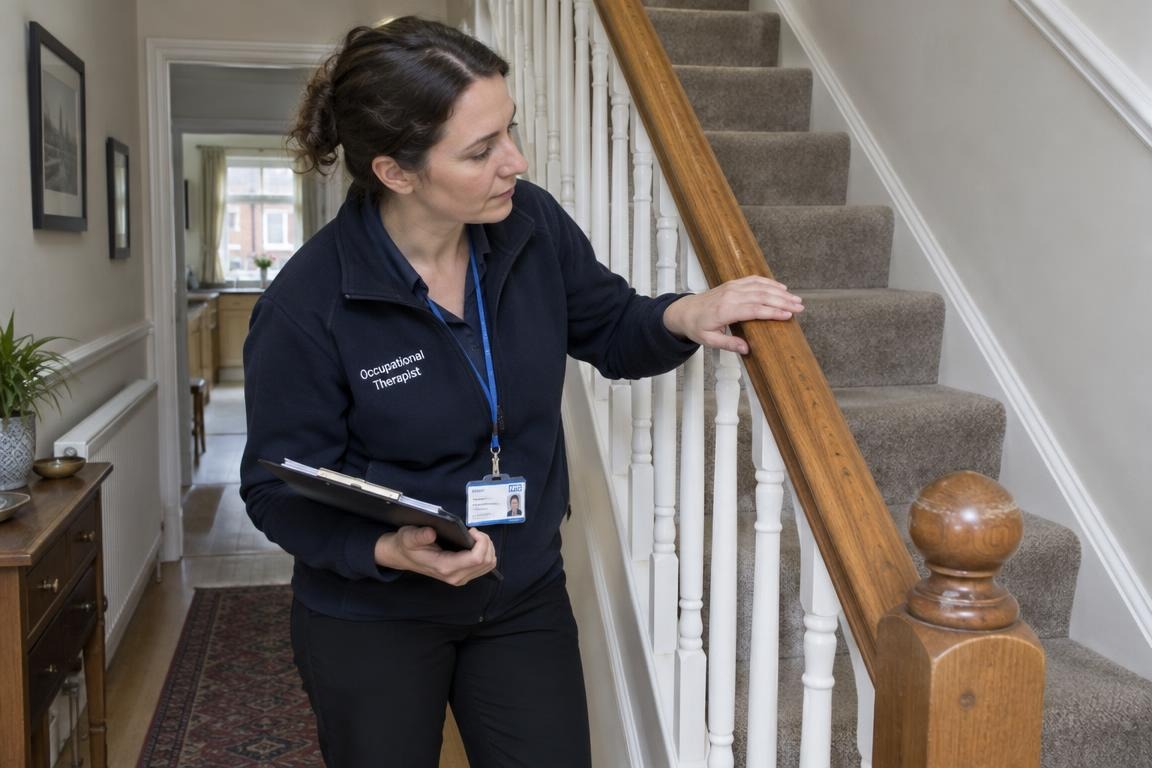
Bathrooms receive particular attention because wet, smooth surfaces can increase the chance of slipping. The assessor checks access to the bath or shower, grab rails and toilet-seat height. In the kitchen, they consider whether everyday items are within easy reach, without the need to use an unstable stool or stretch too far.
Home adaptations work best when they suit a person’s routines and preserve the comfort of their home. Securing rug edges, improving lighting or fitting discreet grab rails are possible interventions to support independent living. The right changes depend on the individual and their surroundings.
The assessment also considers how older adults manage pets, toys or food bowls, as well as outdoor tasks such as hanging out laundry or collecting post from low letterboxes. Discussing these everyday activities helps identify fall risk and support health and safety at home. A tailored approach can help address hazards and reduce the risk of falls and related injuries in a way that supports independence.
After gathering physical, medical, psychological and environmental information, the assessor brings the findings together into an individual profile. No single fall risk assessment tool or score can reliably predict who will fall. Instead, the results help clinicians understand a person’s circumstances and identify factors that can be addressed.
The clinician discusses modifiable risk factors with the person rather than assigning a fixed risk category. For example, someone may have good muscle strength but experience dizziness when standing, or face hazards from unsuitable footwear and dim lighting at home. This falls risk assessment helps patients and clinicians agree on practical next steps that suit the individual. Recommendations are tailored to the person’s needs, health and goals, with the aim of improving confidence, reducing risk and helping prevent falls.
Following an assessment, clinicians compile practical recommendations ranging from strength programmes to simple home adaptations.
A physiotherapy falls assessment may include progressive balance training, muscle strengthening or gait re-education. Depending on the findings, referrals could include a medication review with a doctor, an optometrist appointment or podiatry care. Community occupational therapists may suggest bathroom aids, banister rails or improved lighting. These services and interventions are selected according to the person’s needs, not prescribed as a standard package for all older adults.
If changes in movement or balance are identified, a qualified professional can introduce exercises safely and progress them at a manageable pace. For tailored rehabilitation and support with assessing risk and prevention, people can find a physiotherapist experienced in older adult mobility and falls management. Working together on a personalised plan can support risk prevention and help people at higher risk of falls maintain mobility and independence.
A falls risk assessment is a structured clinical review that helps healthcare professionals understand factors affecting a person’s balance and mobility. It considers health, medical history, medicines, vision and the home environment, among other aspects. The findings help the clinician and patient agree on an individual plan to address relevant risks and support safe, confident movement.
An assessment is worth discussing with a healthcare professional after a recent fall, slip, stumble or near fall, or if walking confidence has changed. Older people and older adults with conditions that affect balance, including Parkinson’s disease or arthritis, may also benefit. A clinician can consider each person’s circumstances and decide whether a fuller review is appropriate.
The clinician asks about your history of falls, including when and how they happened, and discusses any near falls or changes in mobility. They may check your blood pressure and vision, review your medicines, and observe how you walk, balance and rise from a chair. Your footwear and home environment are also considered as part of the wider assessment.
The tests depend on the person and the concerns being explored. An assessor may observe timed walking, standing with feet together or in tandem, and standing up from a chair. They may also look at everyday movements such as turning, picking up an object or stepping over a low obstacle. These checks provide useful information, but are interpreted alongside medical history and other risk factors.
The Timed Up and Go Test measures functional mobility, walking speed and balance during changes of position. It does not definitively predict whether someone will fall. Instead, it gives clinicians a useful benchmark and can highlight movement difficulties. The result is considered alongside a wider falls risk assessment, rather than used alone to judge a person’s fall risk.
Previous falls help clinicians understand what was happening at the time, including the activity, symptoms and surroundings. A history of falls over the past year can reveal patterns or circumstances linked with instability. This information helps the clinician explore possible causes, identify relevant risk factors and discuss suitable support to reduce the chance of further falls and related injuries.
Some medicines can cause drowsiness, dizziness or slower reactions. Others can contribute to a drop in blood pressure when standing. A clinician or pharmacist can review prescription and non-prescription medicines to check whether side effects or interactions might be affecting balance. Do not stop or change prescribed medicines without first seeking advice from the person responsible for your care.
Dizziness and changes in vision can affect balance and make it harder to notice steps, uneven surfaces or other obstacles. During an assessment, a clinician may ask about dizziness and check blood pressure changes or visual acuity. These findings help build a fuller picture of what is contributing to unsteadiness and whether further review or care is appropriate.
Fear of falling can affect how a person moves and the activities they feel comfortable doing. Some people tense their muscles, shorten their stride or avoid going out. If this leads to less activity over time, strength and joint flexibility can decline, making movement more challenging. Discussing confidence is an important part of understanding fall risk and planning appropriate support.
The healthcare professional explains the findings and works with you to agree on next steps. Depending on your needs, the plan may include balance or strength exercises, a medication review with your doctor, podiatry care or changes at home. These personalised recommendations aim to address relevant risks, support mobility and confidence, and contribute to falls prevention.
A falls risk assessment offers a thorough, respectful review of the factors that influence balance, movement and confidence in daily life. It considers physical abilities, medicines, health and the home environment rather than relying on one test or score. This helps patients and healthcare professionals understand an individual’s fall risk and identify relevant risk factors.
For older adults, a personalised assessment can guide practical care and prevention steps that support safer mobility and independence. Patients and clinicians can work together to decide which adjustments suit the person’s needs and daily routines. An assessment cannot guarantee that falls will be prevented, but understanding falls risk can help inform appropriate risk prevention and support people to maintain confidence and take part in everyday life.

Book a personalised demonstration of the StandSure™ today by filling out our request form. Have any questions? Call us now, and our team will be happy to assist!


