No products in the cart.
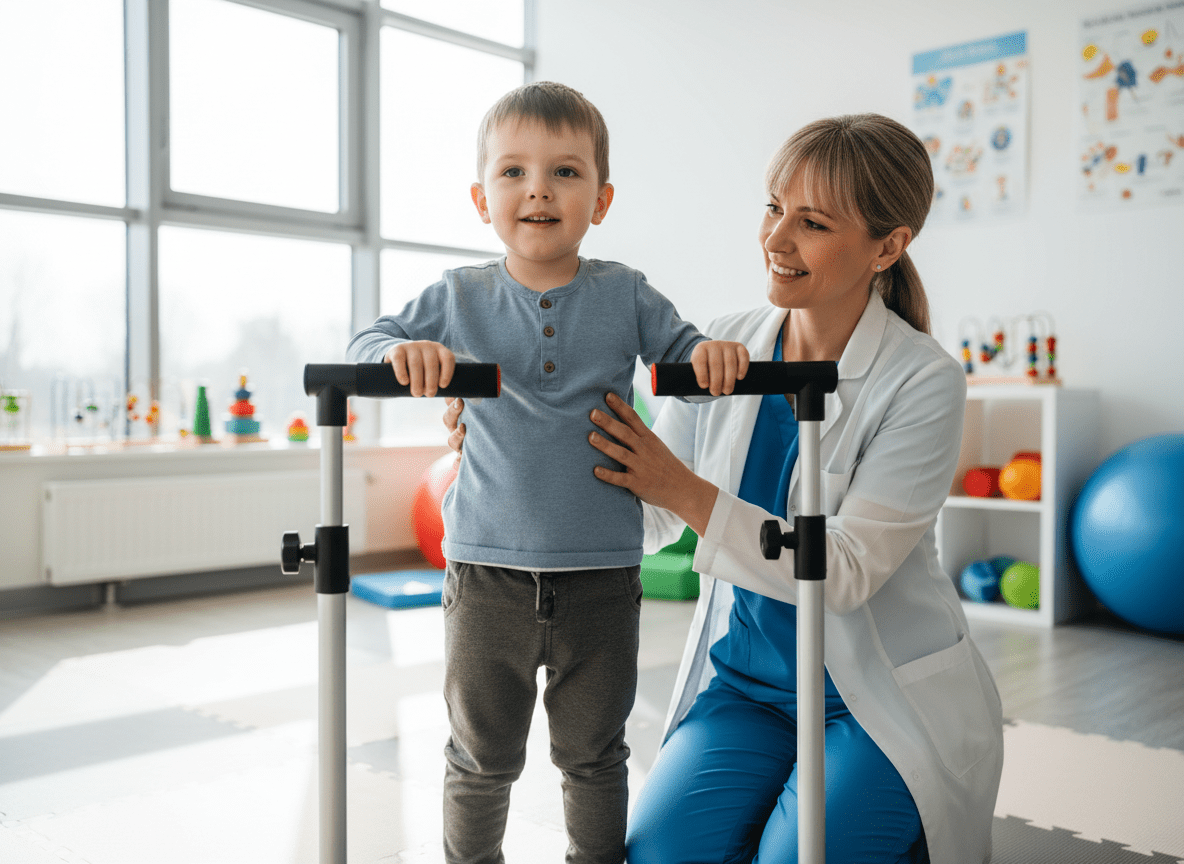

The MOVE Programme adopts a holistic, family-centred approach in which education and therapy teams work together towards shared, meaningful goals. This collaborative structure ensures the child’s needs guide decision-making and that practice remains consistent across settings.
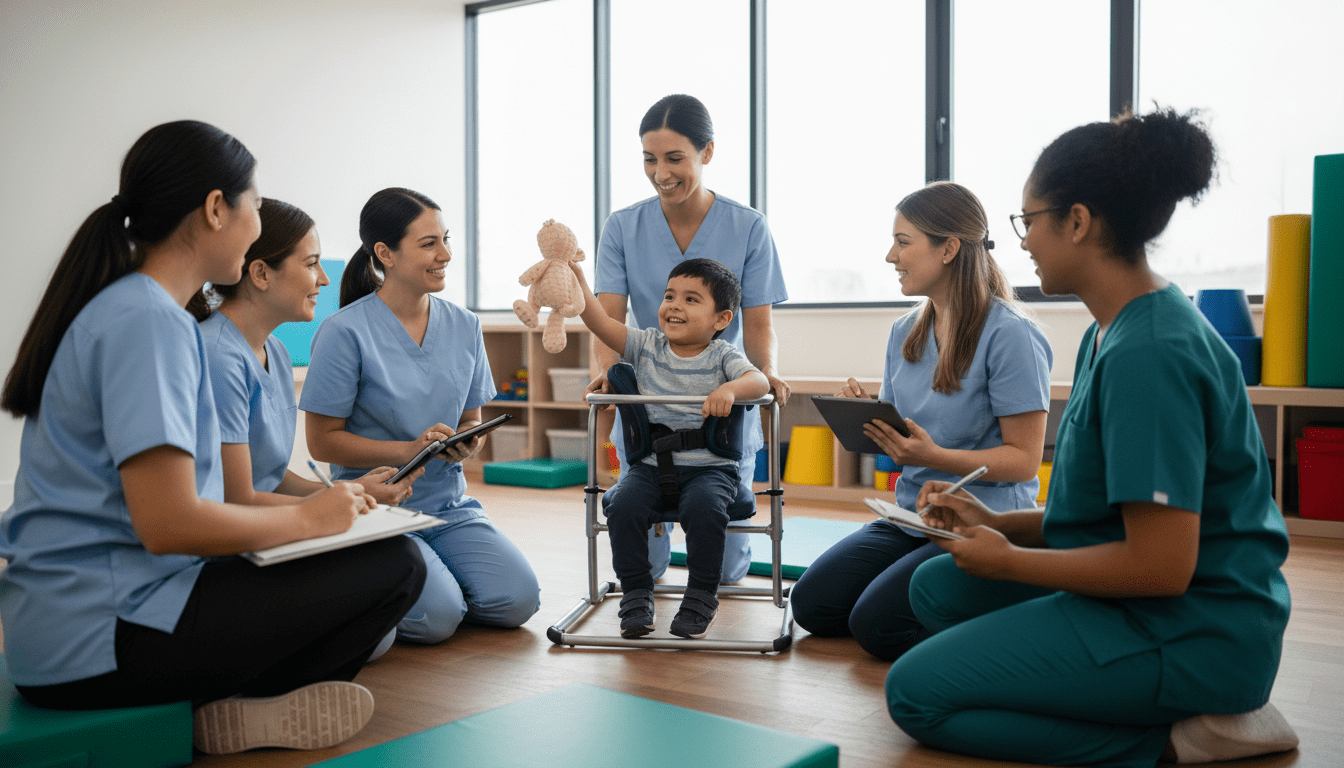
Implementation follows six structured steps that build sequentially to support functional movement. Assessment establishes current abilities and participation; goal setting defines meaningful targets for the child and families; task analysis breaks goals into teachable components.
Prompt measurement identifies the level of physical or verbal support required. Prompt adjustment reduces assistance progressively as skills emerge. Teaching the skills ensures regular practice is embedded into daily routines. This systematic cycle supports measurable skill acquisition and sustainable progress.
Children learn through repeated practice in real contexts. The programme helps staff identify natural moments for movement practice so that therapy is not restricted to isolated sessions. Mealtimes, classroom transitions and activity participation become planned opportunities to work on sitting, standing and walking skills.
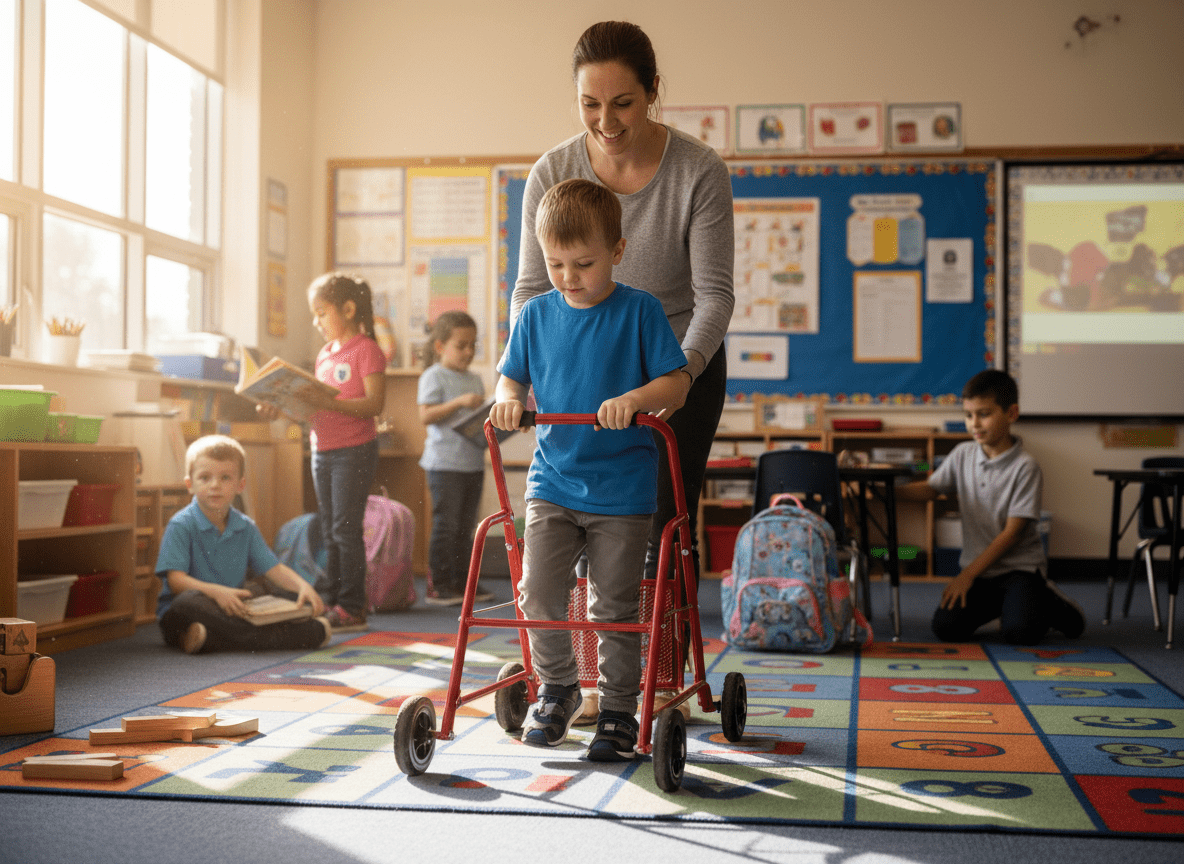
Embedding practice across routines increases dosage and relevance, improving the likelihood that gains transfer into everyday life.
Meaningful, motivating goals drive sustained engagement. Goals reflect what matters to the child and their family — for example, standing to reach a musical instrument or walking to join peers at playtime. This person-centred focus makes practice purposeful and measurable.
Families collaborate with therapists and teachers to define priorities and to agree how home and school practice will support goals. Clear expectations and shared ownership strengthen implementation and learning.
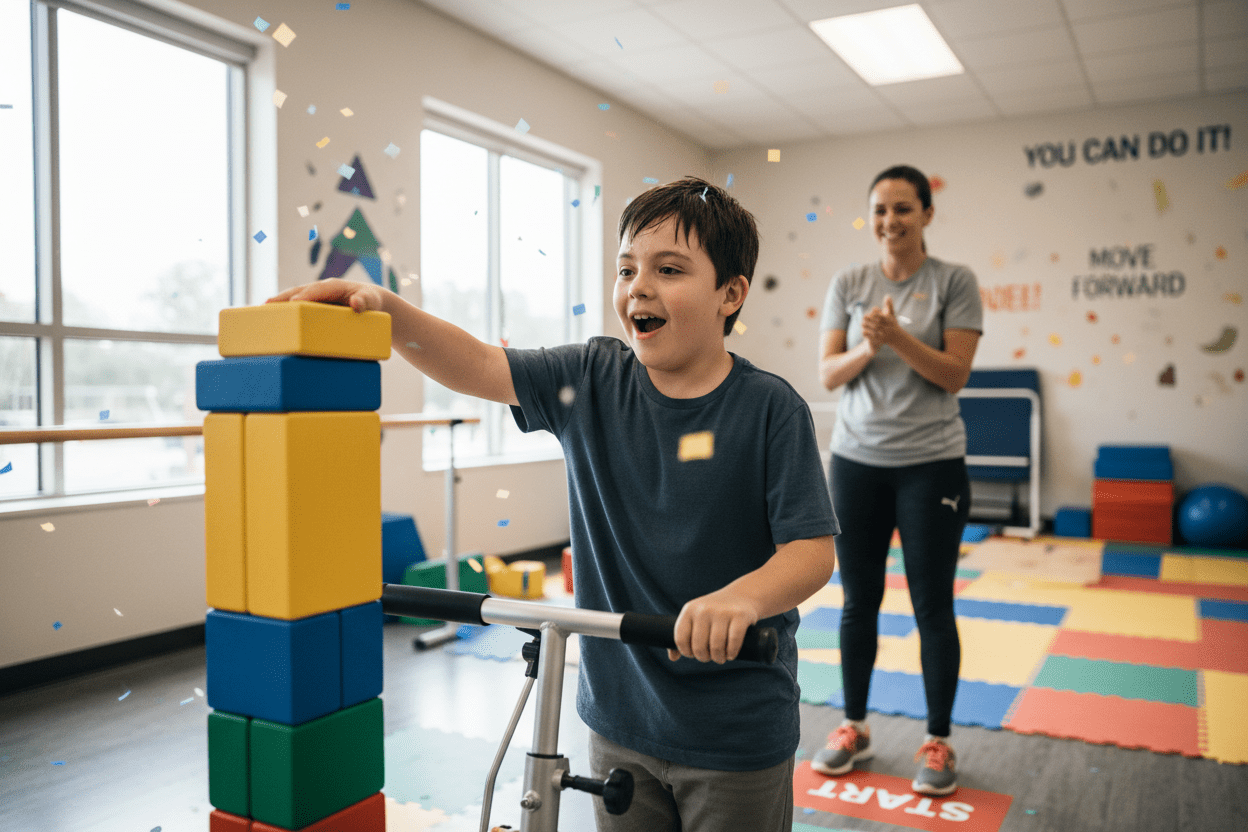
Practitioners who adopt a positive, high-expectation stance support greater gains in functional movement. Emphasising possibilities rather than limitations encourages pupils to attempt more challenging tasks. Celebrating small, measurable steps promotes confidence and accumulates into significant improvements in mobility and participation.
MOVE Europe coordinates the MOVE Programme across the United Kingdom and Europe. As a registered charity, the organisation pursues a clear vision: every young person with disabilities should have choice and opportunities to learn independent movement.
The charity provides training for education and therapy professionals in the MOVE methodology and offers ongoing implementation support. Continued guidance, resources and follow-up support help teams maintain standards and achieve consistent outcomes for pupils and children with mobility needs.
Three core values shape the organisation’s work. “Dare to Dream” reflects an ambition to set high, yet achievable, expectations for young people and the professionals who support them.
“Better Together” recognises that collaborative teams — including family members, therapists, teachers and support staff — produce the most holistic outcomes. Each contributor has a defined role in planning and delivery.
“Pursue Excellence” drives continuous improvement: the charity supports teams to develop provision so that best practice becomes standard practice. This approach builds long-term capacity across schools and therapy services.
MOVE Europe offers comprehensive support beyond initial training, including practical resources, mentoring and advice as practitioners embed the programme. Close relationships with member schools and therapy services enable ongoing dialogue and tailored assistance as needs evolve over time.
The organisation draws on accumulated knowledge and experience to support settings of different types and sizes. This team-based approach ensures implementation reflects local priorities while maintaining fidelity to the MOVE framework.
The MOVE Quality Mark acknowledges organisational commitment to high-quality MOVE provision through a clear, tiered framework. It supports continuous development so that schools and therapy services can progress through defined stages of programme maturity.
There are four levels reflecting different stages of embedding: Bronze recognises solid foundational provision and team processes; Silver denotes sustainable, whole-school commitment; Gold celebrates provision fully integrated into organisational practice.
Centre of Excellence represents the highest level, awarded to organisations demonstrating sustained excellence and ambassadorial leadership. Currently, 21 organisations hold Centre of Excellence status; this should be verified against the latest MOVE Europe records for currency.
Accreditation signals formal recognition of quality and supports stronger outcomes for pupils. The framework helps teams identify priorities for development and provides structured steps to enhance mobility provision.
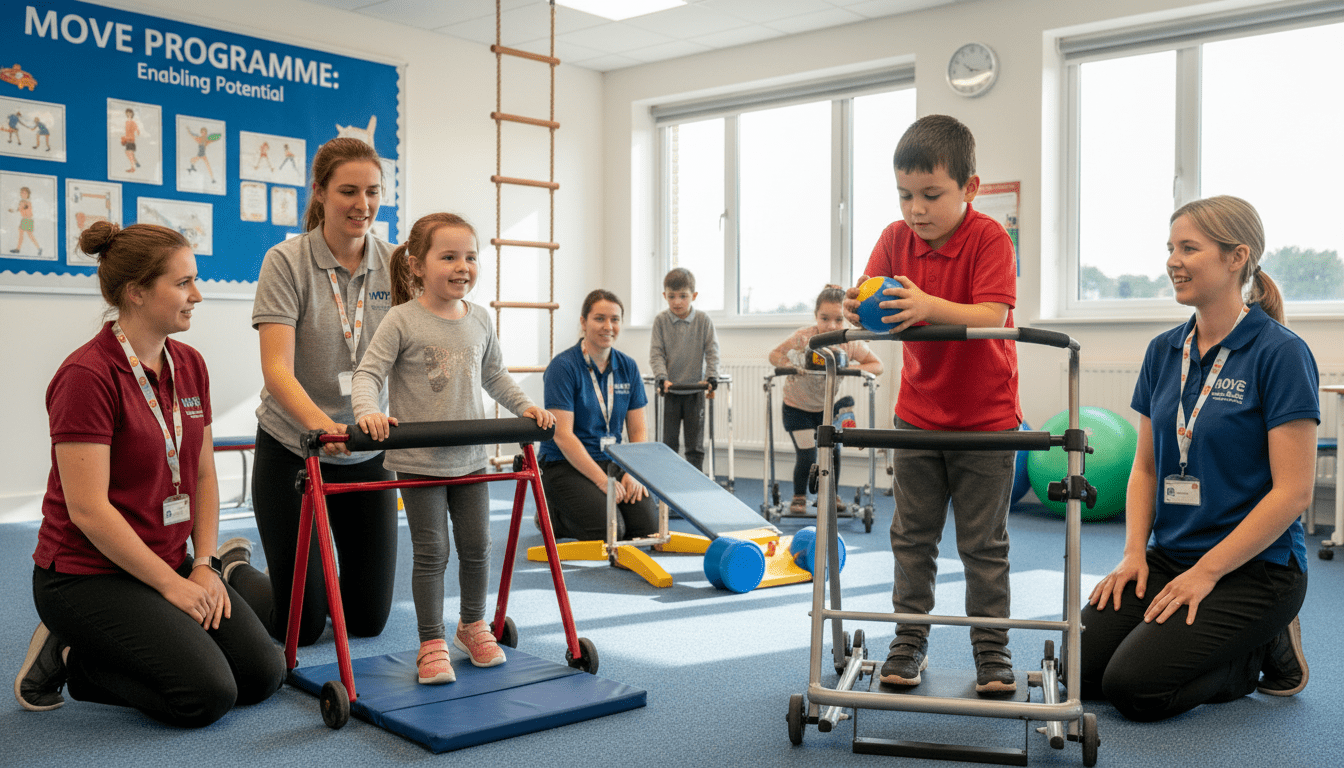
The accreditation process begins with an honest self-assessment against Quality Mark criteria to identify strengths and development needs. MOVE Europe then provides guidance to help teams gather evidence and strengthen core elements of provision.
External assessment visits offer constructive feedback and confirm progress. At present, 31 organisations across the United Kingdom hold Quality Mark accreditation; this figure should be checked against current MOVE Europe data before publication.
The Quality Mark framework provides structured development for organisations committed to excellence. MOVE Europe supports you every step of the way toward achieving recognised standards that transform outcomes for disabled young people.
Professional training is the foundation for safe, effective MOVE implementation. MOVE Europe provides structured training pathways tailored to differing organisational needs so that staff develop the practical skills and knowledge required to deliver the programme with fidelity.
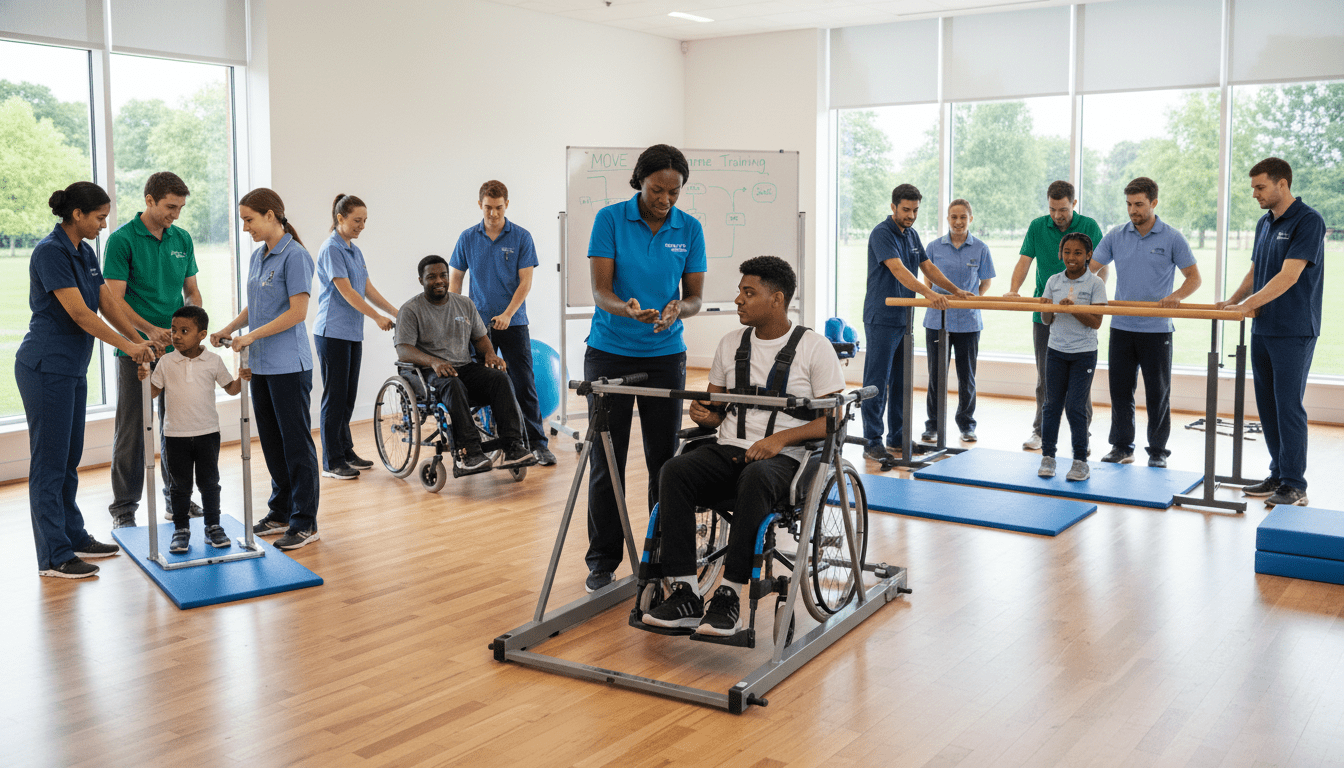
Courses combine theoretical learning with practical application. Participants practise the six-step framework, work through case studies from real settings and rehearse task analysis, prompt measurement and prompt adjustment so that skills are transferable into everyday practice.
In-house courses bring expert instruction directly into a setting, allowing whole teams to learn together. This approach strengthens shared understanding and makes it easier to integrate MOVE into routine school or therapy practice.
Practitioner-level training covers assessment techniques, family-centred goal setting and task breakdown. Senior Practitioner training builds leadership skills needed to coordinate delivery, support colleagues and monitor quality across the organisation. Both levels emphasise how to embed practice into daily routines using existing equipment and resources.
In-house delivery offers scheduling flexibility to suit organisational timetables and supports immediate application of learning within familiar environments.
In-house training builds collective expertise across your entire team. Customized delivery ensures learning applies directly to your pupils and setting. Develop the knowledge and skills to deliver outstanding MOVE provision that transforms mobility outcomes.
Open courses bring practitioners from multiple organisations together, creating valuable opportunities for shared learning and professional networking. These sessions suit individuals or small teams who cannot commit to whole-organisation training but who wish to develop MOVE expertise.
Open courses present the same core content as in-house Senior Practitioner training, using a mixture of input, practical workshops and case-based discussion to consolidate learning. Exposure to varied settings encourages flexible problem-solving on return to the workplace.
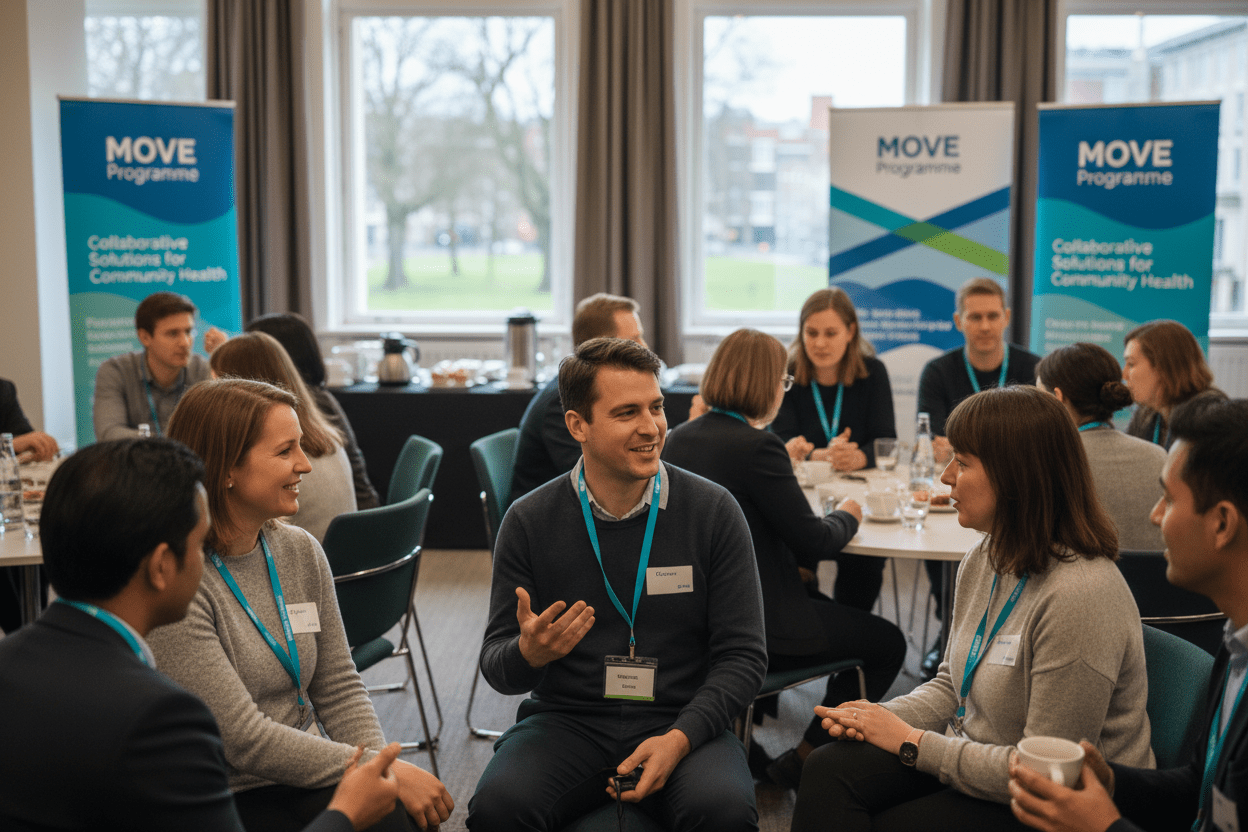
Open training connects you with passionate practitioners from across the region. Gain comprehensive MOVE Programme expertise whilst building your professional network. Return to your setting equipped with practical skills and fresh implementation ideas.
Trainer accreditation develops practitioners who can deliver MOVE courses locally, increasing capacity and reach. The trainer pathway builds on Senior Practitioner competence and focuses on adult learning methods, course facilitation and assessment to ensure consistent, high-quality delivery.

Accredited trainers receive ongoing support and resources from MOVE Europe to maintain standards across regions. Becoming a trainer offers substantial professional development and enables individuals to deliver MOVE learning for their local schools and therapy services.
Trainer accreditation enables you to multiply programme impact across your region. Develop advanced expertise whilst gaining valuable training delivery skills. Join our trainer community and help more disabled young people access quality MOVE provision.
Periodic reaccreditation ensures trainers remain current with any refinements to the MOVE framework and continue to meet delivery standards. The process reviews recent training activity and provides updates on resources and methodology.
Ongoing quality assurance protects programme integrity and reassures families and organisations that training is consistent and up to date.
Free webinars offer accessible introductions to the MOVE Programme for busy practitioners. Topics vary from core principles to focused modules on assessment, goal-setting and embedding practice; webinars complement formal courses and support continued professional development.

Webinar registration and course bookings are available via the MOVE Europe website; places for popular topics are limited, so early registration is advised.
MOVE Europe operates as a registered charity dedicated to improving mobility outcomes for disabled children and young people. The organisation relies on support from individuals and organisations who share this aim; every contribution helps more children access training, resources and practical MOVE support.
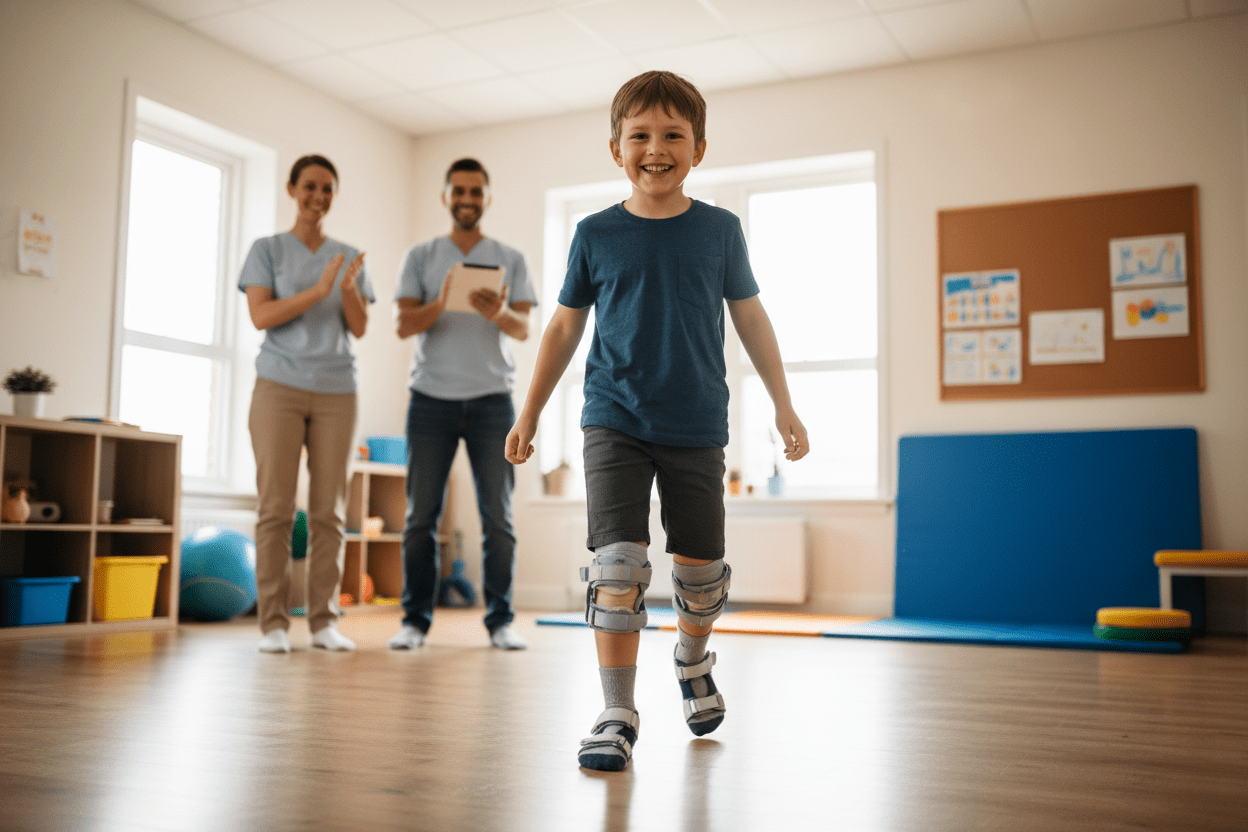
Charitable funding enables development of practitioner resources and helps keep training costs affordable for schools and therapy services. Support also contributes to reaching areas with greater need, so that more children can benefit from evidence-informed movement practice.
Support options are designed to suit different circumstances. One-off or regular financial donations underwrite programme development and delivery; legacy gifts secure long-term impact. Organisations may partner corporately, provide in-kind support such as equipment, or sponsor training to extend local capacity.
Raising awareness is an equally valuable contribution: sharing information about the programme with colleagues, local services and families helps increase access for children who need it most.
Donations translate into more practitioners trained, improved materials and strengthened local delivery. This in turn improves the quality of MOVE provision for children with mobility needs and supports family involvement through clearer guidance and shared goals.
Funding is used to balance excellence with accessibility, helping ensure that financial constraints do not prevent schools or therapy services from accessing the training and resources required to meet local needs.
Your support helps MOVE Europe reach more disabled young people across the United Kingdom and Europe. Together we can ensure every child has opportunities to develop independent movement skills that transform their life experiences.
The MOVE Programme has produced documented improvements in functional mobility across a range of settings. Special schools report pupils achieving standing and walking goals that were previously considered unlikely, and therapy services record sustained gains where systematic skill-building approaches are applied consistently.
Families report greater independence beyond therapy sessions: walking skills used on family outings, standing enabling participation in everyday activities, and increased opportunities for social engagement. These functional changes often extend into community life and daily routines.
Pupils gain increased independence and access to experiences that were previously limited. Improvements in mobility support greater participation, enhance self-confidence and broaden choice in how young people engage with the world around them.
Families value the clearer, goal-focused approach: structured plans make progress visible and measurable and reduce uncertainty about therapy trajectories.
Practitioners report that a consistent framework removes much of the guesswork from mobility goal planning and that coordinated work between education and therapy teams streamlines implementation around shared objectives.
The MOVE Programme complements existing therapy and education practice rather than replacing it. Physiotherapists align MOVE goals with clinical treatment plans and occupational therapists integrate objectives with daily living skills.
Teachers incorporate movement practice into classroom routines and support staff facilitate regular opportunities for skill rehearsal during the school day. This whole-team approach maximises practice dosage and helps skills transfer to everyday contexts.
In acute care settings, health professionals adapt MOVE principles so that short admissions become opportunities for focused movement practice and discharge planning includes MOVE goals to support community follow-up.
Starting with a clear picture of current provision supports successful MOVE implementation. Settings already supporting disabled children often have valuable foundations to build on; the MOVE programme adds structure to enhance existing good practice and increase the consistency of movement-focused teaching.
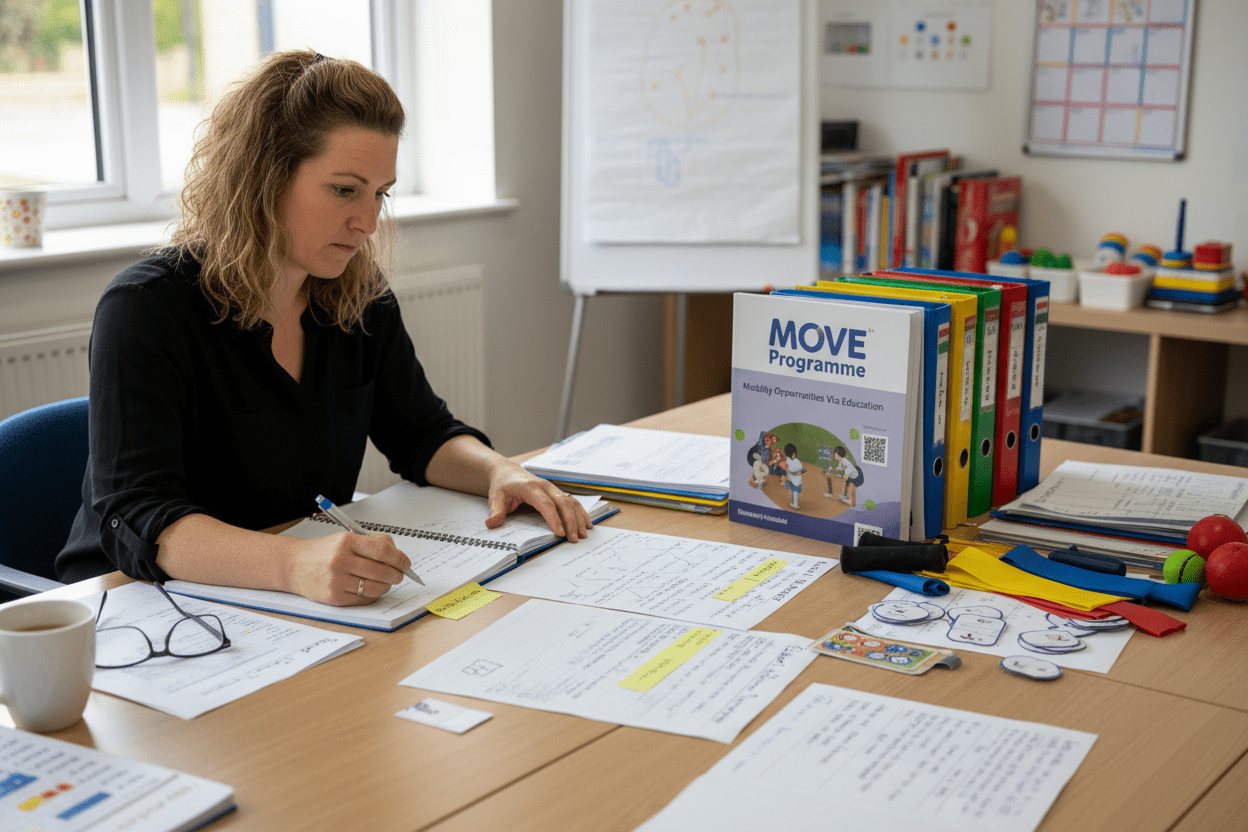
Individual practitioners may attend open courses to develop specialist knowledge and practical skills. Learning gained at open training can be introduced gradually to colleagues, with small-scale practice providing the evidence base for wider, whole-organisation adoption.
Organisations considering whole-setting implementation benefit from an initial readiness assessment and implementation plan. MOVE Europe offers consultancy to identify development priorities and to plan staged, sustainable change so that practice embeds effectively from the start.
How much time is required? The programme is designed to integrate movement practice into everyday routines rather than add separate therapy sessions; this improves efficiency by increasing practice dosage within normal school or clinical activities.
Is specialised equipment necessary? Many settings already have appropriate adaptive equipment. Guidance on selection and prioritisation of equipment is available where gaps exist; emphasis remains on teaching functional skills rather than dependence on devices.
How are families involved? Family participation is central: families help set meaningful goals for the child, receive clear explanations of practice priorities and are supported to extend exercises at home. Regular communication between staff and family ensures goals remain relevant to the child’s needs and everyday life.
The MOVE Europe team is available to answer enquiries and to support settings and individual practitioners exploring the programme. Whether seeking information on training, implementation planning or Quality Mark accreditation, staff will provide tailored advice relevant to each organisation’s needs.
Telephone conversations enable focused discussion of specific circumstances, including course options and implementation queries. Calls are handled by knowledgeable staff who can signpost appropriate next steps.
Email enquiries are usually answered within two working days; include detailed information where possible to allow a targeted response. The address below may be used for general enquiries about the programme.
Contact MOVE Europe for guidance on training, implementation support or Quality Mark accreditation. The team will work with organisations and families to identify suitable next steps and resources.
The online contact form allows structured enquiry submission; specifying role, setting type and areas of interest helps the team provide relevant information efficiently.
The MOVE Programme is more than a therapeutic method; it is a practical philosophy that enables young people to explore their movement potential. High expectations combined with systematic, activity-based support promote measurable improvements in mobility and participation.

Practitioners across the United Kingdom report examples of substantial change: children making new standing and walking gains, young people participating in activities previously inaccessible and families experiencing reduced day-to-day caring demands as functional skills improve.
MOVE Europe continues to extend the programme’s reach through training, Quality Mark development and ongoing implementation support. These combined elements help organisations deliver consistent, high-quality MOVE provision that meets local needs.
Every young person should have opportunities to develop movement skills that enhance choice and engagement with the world. Participation in training, programme implementation or charitable support contributes directly to this shared aim.
The path towards greater mobility begins with a single step. MOVE Europe supports practitioners, families and organisations throughout that journey so that more children can experience the practical benefits of independent movement.

Book a personalised demonstration of the StandSure™ today by filling out our request form. Have any questions? Call us now, and our team will be happy to assist!


