No products in the cart.
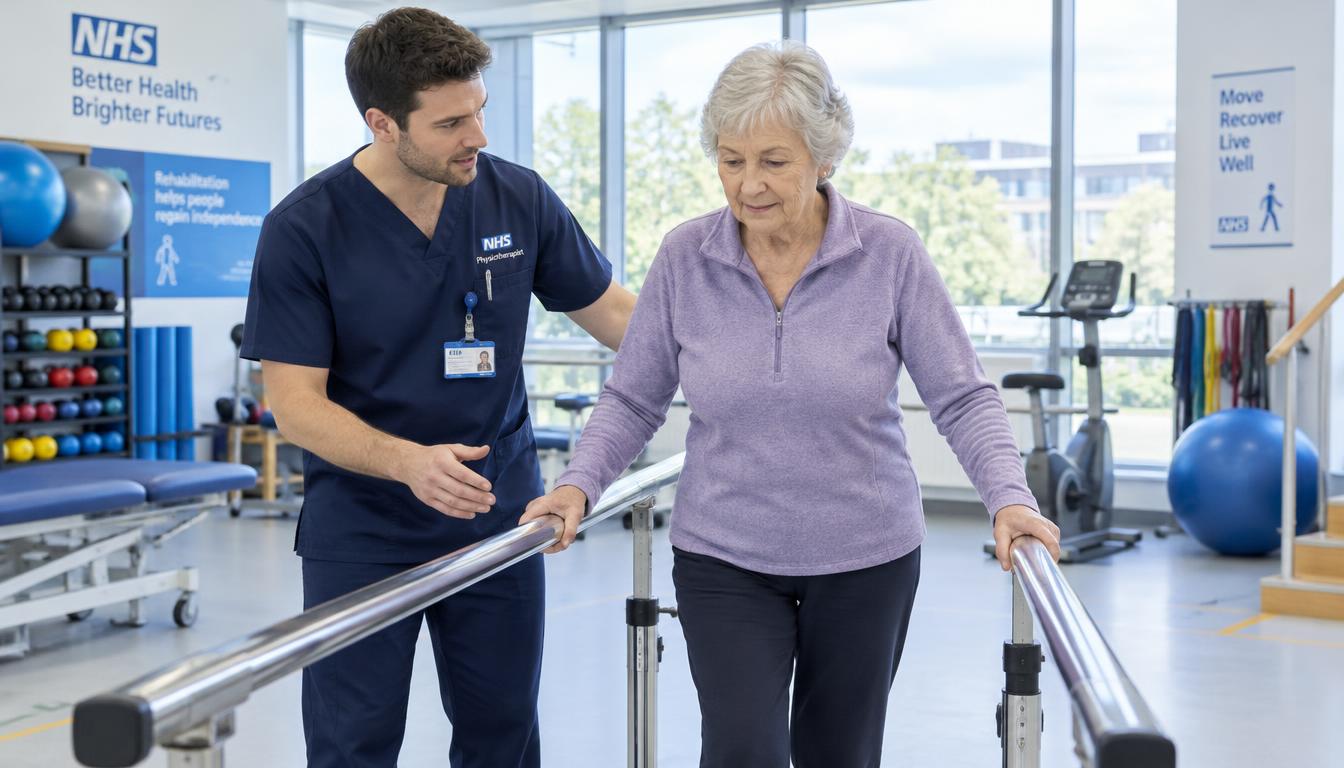

Physiotherapists assess each person before recommending rehabilitation equipment. They consider current abilities and limitations, then compare suitable options to encourage active movement and manage risks. There is no single checklist or standard set of equipment for everyone.
The right level of support helps maintain muscle engagement during rehabilitation. Too much assistance reduces the effort involved, while too little increases the risk of falls, compensatory movement and injuries. Therapists also check that each aid is the right size and that the person understands how to use it safely.
Before purchasing equipment or adding it to a home routine, seek professional advice or find a physiotherapist for an individual movement assessment.
Balance rehabilitation uses exercise to challenge the sensory and musculoskeletal systems and improve upright stability. Training usually starts on a firm surface, then progresses to less stable equipment as appropriate. This helps the body respond to changes in position and movement.
Under supervision, foam balance pads and mats challenge posture by requiring the trunk and leg muscles to respond to small shifts. These exercises also engage the core and support balance stability.
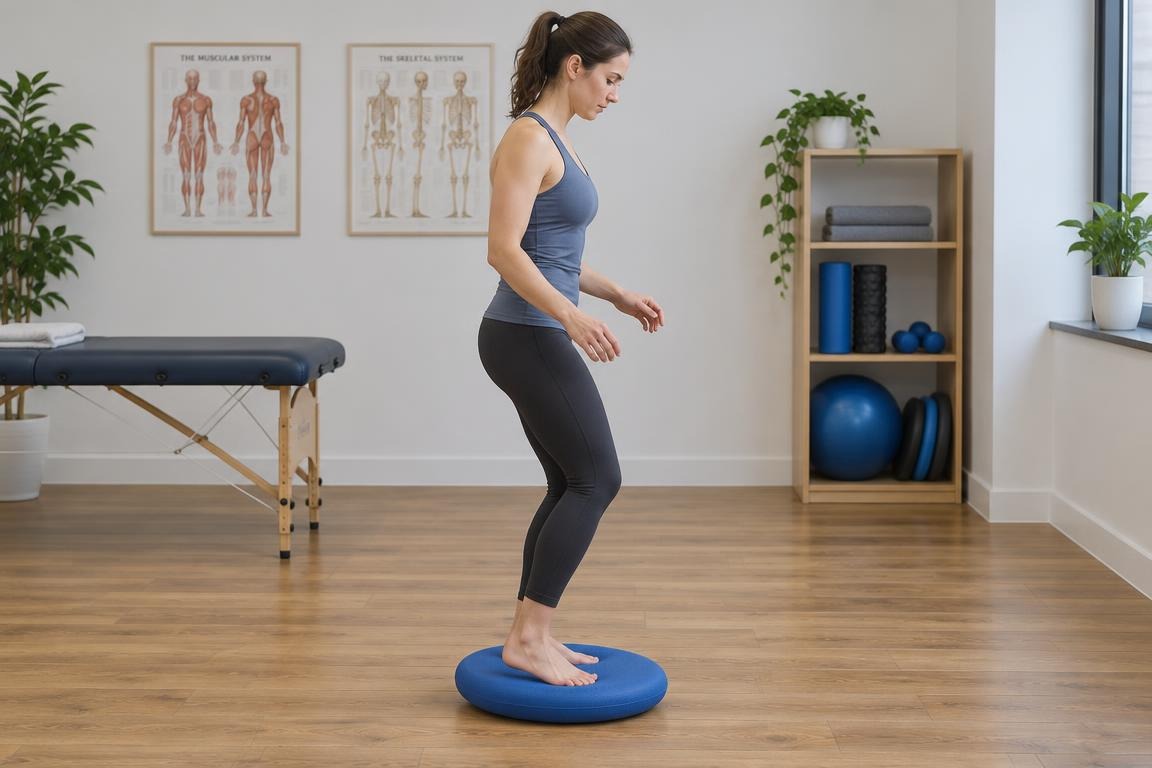
Wobble boards, rocker boards and air-filled stability discs introduce movement in different directions. Therapists may add tasks such as catching a ball or turning the head, tailoring the challenge to the person. Exercise balls are another option in some gym-based fitness and rehabilitation training.
Progressive balance training starts with eyes-open standing on firm ground, then advances to a narrower stance, foam pads or wobble boards as appropriate.
Transfer aids support movement between surfaces, such as a bed, wheelchair, commode or armchair. They are selected to reduce physical strain for the person and their carer while encouraging the person to take part where possible.
The right equipment depends on upper-body strength, trunk control and how much weight the person can bear through their legs. A mechanical hoist supports a passive transfer when the person cannot actively move. Active transfers use aids that help bridge a gap between seated positions.
Rigid, smooth boards support seated sliding between nearby surfaces without full weight bearing through the legs. They are suited to people with good seated balance and arm strength.
Rotating discs help a person pivot on a chair or car seat. They support leg positioning while limiting the need to twist at the hips or lower back.
Padded waist belts give therapists secure handholds when guiding transfers. They support controlled assistance without pulling on clothing or the arms.
Standing from a chair is a demanding everyday movement. Sit-to-stand equipment supports practice of leaning the trunk forward, shifting weight and extending both legs evenly, while helping manage the risk of falls.
Good foot placement provides a firm base for sit-to-stand training. Therapists focus on proper foot placement during sit-to-stand therapy. Feet positioned beneath the knees help the hips move forwards over the base of support, rather than drifting backwards.
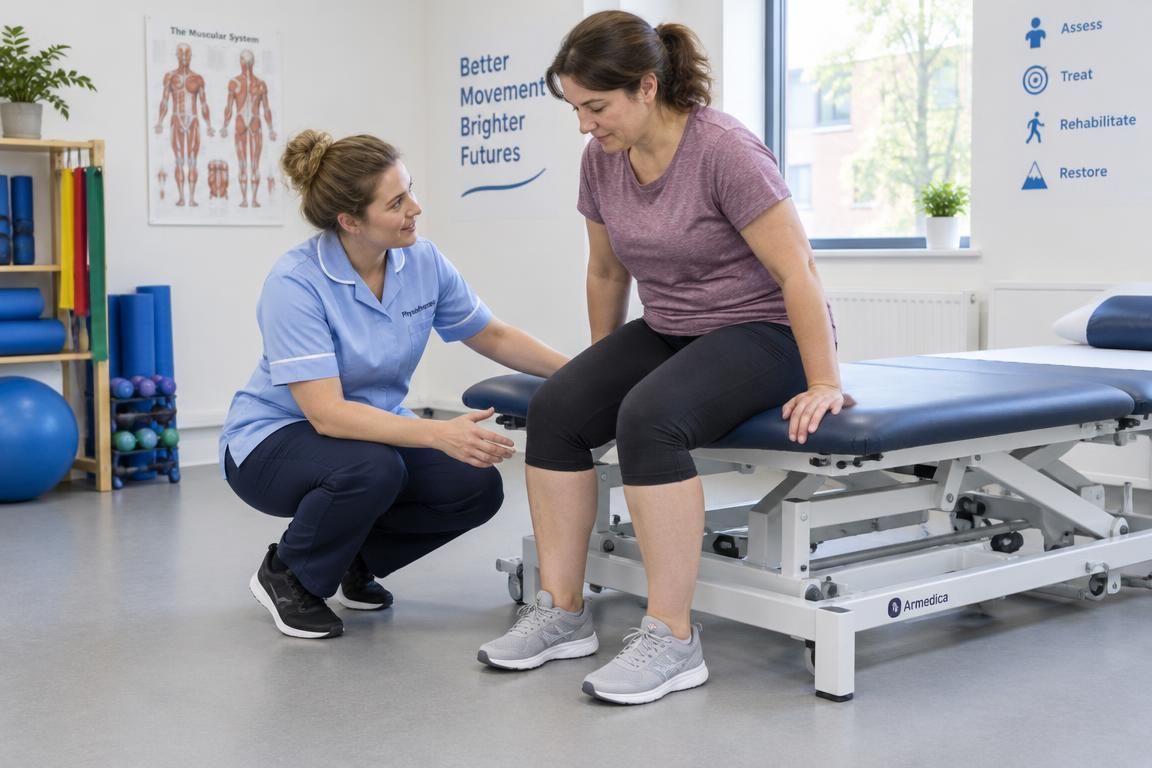
If a person struggles to place both feet evenly or their heels slide on a smooth surface, a foot-positioning aid helps keep them aligned. The StandSure sit-to-stand rehabilitation aid provides a defined, stable base, allowing the person to focus on moving forwards and using their leg strength.
Placing the heels beneath the knees before leaning forwards shortens the horizontal lever arm. This reduces the effort required from the quadriceps and gluteal muscles during the movement.
Standing equipment supports an upright position for people who cannot maintain it independently. Weight-bearing therapy forms part of some rehabilitation programmes and supports movement and positioning while reducing the effects of prolonged bed rest or wheelchair use.
Clinicians use standing frames, tilt tables and dynamic aids in neurological and orthopaedic rehabilitation. A therapist selects the approach to suit the individual. Learn more about weight-bearing exercises and rehabilitation.
Gait training equipment helps people practise walking in a controlled setting. Therapists use it to work on step length, cadence and even stance after injury or neurological illness.
Parallel bars provide hand support for early stepping practice. As confidence and stability improve, therapists may introduce walkers, rollators or harness-supported treadmills.
Positioning tools can reinforce consistent foot placement. See how StandSure is used in rehabilitation across different therapy settings.
Neurological conditions such as stroke, Parkinson’s disease, multiple sclerosis and spinal cord injuries can affect muscle tone, sensation and coordinated movement. Physiotherapy equipment is selected to address each person’s specific needs.
Therapists use task-specific practice to support movement retraining. Wide treatment plinths provide space for rolling, bridging and sitting balance exercises, with room for hands-on guidance.
| Equipment Type | Clinical Target | Functional Application |
| Bobath Plinth | Trunk Control | A wide, height-adjustable surface for developmental positions, rolling and seated balance practice. |
| Functional Stimulators | Foot Drop | Delivers electrical impulses to the peroneal nerves during the swing phase to support ankle dorsiflexion. |
| Gymnastic Balls | Core Stability | Supports pelvic tilting, trunk righting and balance adjustments in supported sitting. |
| Wedge Positioners | Postural Alignment | Supports prone positioning, stretches tight hip flexors and helps extend the spine over firm foam contours. |
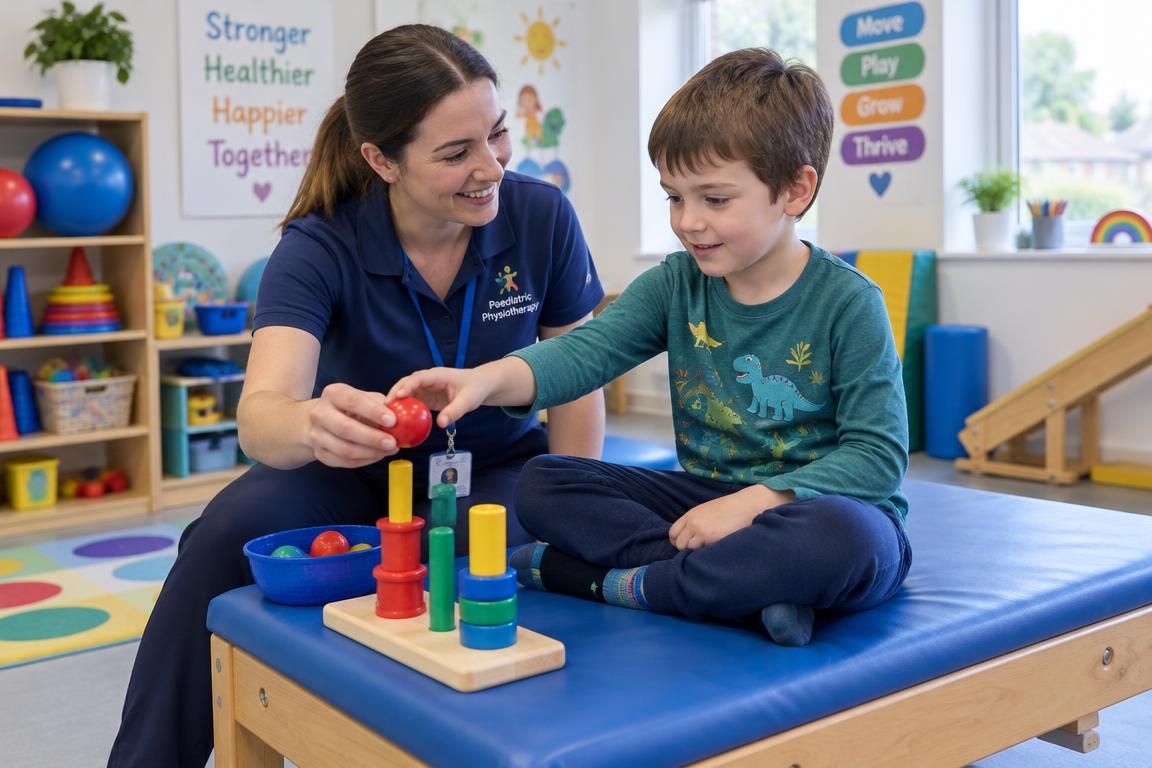
Paediatric physiotherapy equipment supports children as they develop movement skills, posture and confidence exploring their surroundings. Equipment is chosen to accommodate growth and make therapy welcoming.
In schools, clinics and homes, therapists use positioning rolls, dynamic seating and paediatric gait trainers. These aids support head control, balanced sitting and standing during play-based rehabilitation.
Common options include plinths, resistance bands, balance pads, walking aids, transfer boards, standing frames, electrotherapy devices and exercise balls.
Foam mats, wobble boards, stability cushions and parallel bars support balance practice. Therapists may also use sensory challenges and biofeedback force plates.
Equipment includes adjustable chairs, standing turners, handling belts and foot-positioning aids to support foot placement and weight shift.
Transfer aids support movement between beds, chairs, wheelchairs and toilets. Examples include slide boards, swivel turners, belts and hoists.
Parallel bars, rollators, walking frames, supported treadmills and electrical stimulation units assist walking practice.
Options include Bobath plinths, standing frames, nerve stimulators, positioning wedges and gym balls for movement retraining.
They assess medical history, strength, mobility, sensation, cognition and home conditions, then match equipment to the person’s abilities.
Many aids are suitable for home use after guidance from a healthcare professional.
A physiotherapist can assess suitability, sizing and technique to help reduce injury risk.
It keeps the feet aligned during standing or sit-to-stand exercises.
Choosing physiotherapy equipment for balance and transfers starts with an individual clinical assessment of movement, surroundings and recovery goals. Well-matched aids support safer practice and confidence, helping each person work towards greater independence in daily life.

Book a personalised demonstration of the StandSure™ today by filling out our request form. Have any questions? Call us now, and our team will be happy to assist!


