No products in the cart.


MRI scan showing brain areas affected by HIE
Hypoxic Ischaemic Encephalopathy (HIE) describes brain dysfunction that happens when the brain receives too little oxygen and reduced blood flow around the time of birth. The name itself breaks down simply: ‘hypoxic’ means low oxygen, ‘ischaemic’ means reduced blood flow, and ‘encephalopathy’ means a problem with how the brain works. HIE most often affects newborn babies, although similar injury can occur in older children and adults after events such as cardiac arrest or severe breathing problems.
HIE is uncommon but potentially serious. Estimates in developed countries vary, often reported around 2–9 per 1,000 live births, and the outcome depends on how long and how severe the lack of oxygen and blood flow was. Causes around the time of birth can include problems with the placenta, issues with the umbilical cord (for example, cord prolapse), prolonged labour, or severe bleeding — all of which can reduce blood and oxygen delivery to the baby’s brain and cause injury.
Early recognition and prompt care can make a big difference. Read on for practical information about the signs to watch for and how HIE is investigated and treated.
Neonatal HIE most often becomes apparent within the first hours to days after birth. How a baby presents depends on how severe the brain injury is, but common signs families and clinicians may notice include:
Practical cue: if a baby won’t feed, seems unusually floppy or has odd movements, ask the neonatal team for urgent review — these signs usually prompt investigations such as blood tests, EEG monitoring and brain imaging.
Although HIE is most commonly discussed in newborns, similar brain injury can occur in older people after events that cause a global drop in oxygen or blood flow, for example:
Adults with HIE may show reduced consciousness, problems with thinking and movement, and seizures. Care focuses on treating the cause, preventing further injury and supporting recovery — the investigations and management differ from neonatal care.
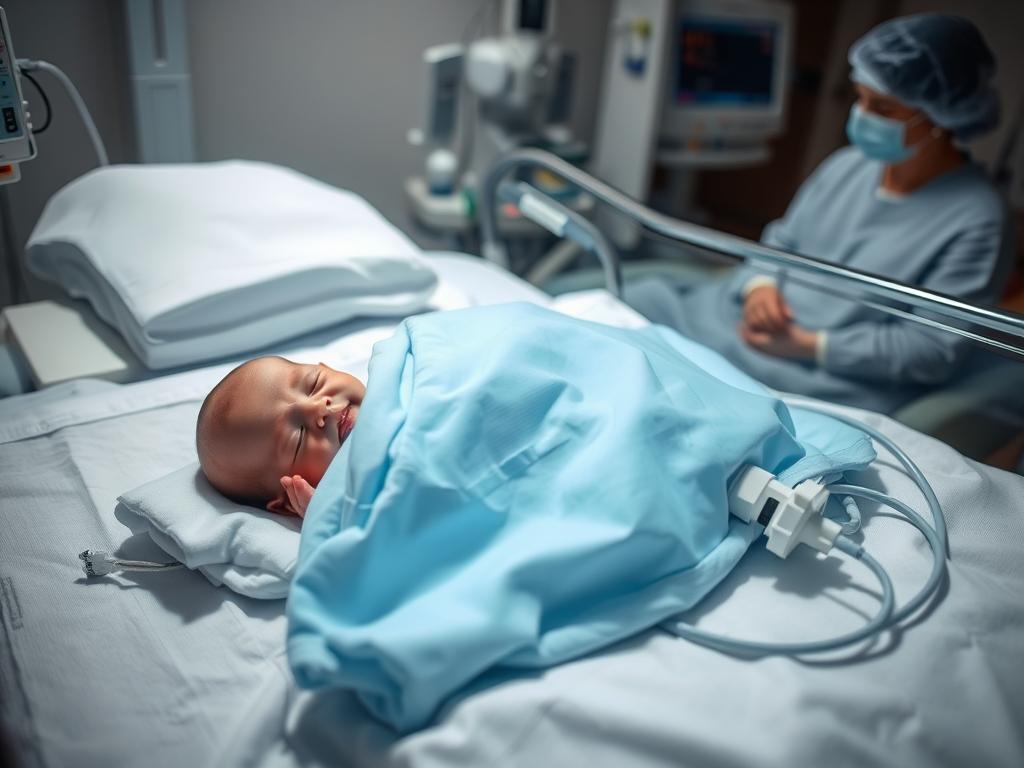
Newborn receiving therapeutic hypothermia treatment for HIE
Clinicians use grading systems to describe how badly the brain has been affected by lack of oxygen and reduced blood flow. The Sarnat staging is the most commonly used in practice and helps guide immediate care and discussions about likely outcomes.
| Grade | Level of Consciousness | Muscle Tone | Reflexes | Seizures | EEG Findings |
| Mild (Grade I) | Hyperalert, irritable | Normal or slightly increased | Exaggerated | None | Normal or mild abnormalities |
| Moderate (Grade II) | Lethargic or obtunded | Hypotonia | Weak or absent | Common | Low voltage, periodic patterns |
| Severe (Grade III) | Stuporous or comatose | Flaccid | Absent | Frequent or decerebrate posturing | Burst suppression or isoelectric |
In plain terms, mild HIE often recovers well with little or no lasting problem, while moderate and severe grades are more likely to need intensive care and specialist treatments. Grading also helps the medical team decide eligibility for specific therapies (for example, therapeutic hypothermia is considered for many infants with moderate to severe HIE).
The Thompson score is another bedside tool that adds detail by scoring nine clinical signs (tone, consciousness, fits, posture, Moro reflex, grasp, suck, respiration and fontanelle). Scores of 1–10 suggest mild encephalopathy, 11–14 moderate and >15 severe — this gives teams a numerical way to track changes over time.
The NICHD (National Institute of Child Health and Human Development) classification is used mainly in research and standardises assessment across six neurological categories. All these systems aim to describe the degree of brain injury so families and clinicians can plan monitoring, treatment and early developmental support.
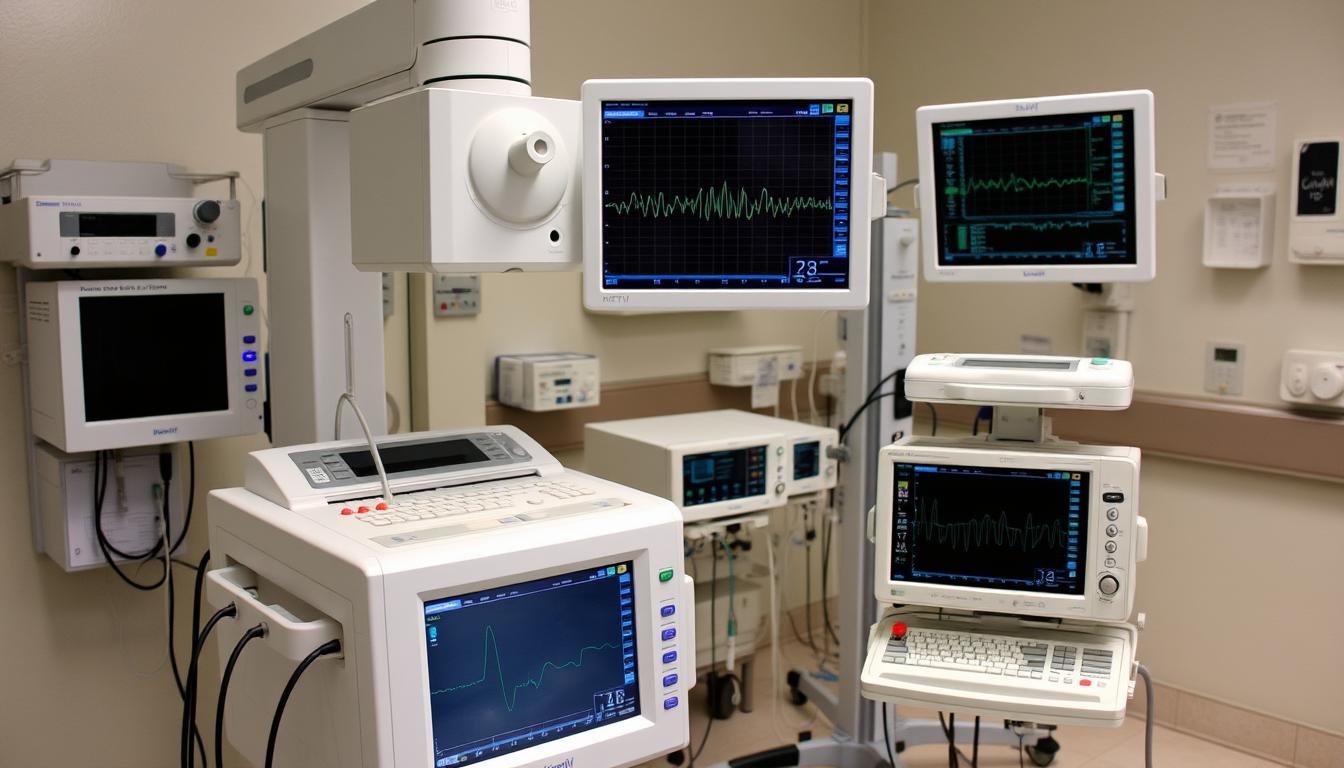
Diagnostic equipment used for HIE assessment including EEG monitoring
Making a diagnosis of HIE uses several pieces of information together: what happened around the time of birth, how the baby is behaving at the cot-side, blood tests, bedside brain monitoring and brain scans. Quick, accurate assessment is important because some treatments are time‑sensitive.
At the bedside the medical team will review the birth history and look for early signs that suggest brain injury. This includes:
Blood tests help confirm whether the baby experienced significant oxygen deprivation and show how other organs are coping. Tests commonly used include:
Monitoring brain activity helps detect seizures (which can be subtle) and gives information about background brain function:
What parents can expect: EEG or aEEG electrodes are attached gently to the baby’s head and allow continuous monitoring while the baby stays on the neonatal unit; staff will explain how long monitoring is likely to continue.
Brain imaging confirms the pattern and extent of injury and helps predict outcome. Typical approaches include:
Quick and bedside‑friendly, ultrasound is often the first scan performed. It can detect major abnormalities but may miss early or subtle HIE changes.
MRI is the gold standard for detailed assessment. Different MRI techniques (conventional MRI, diffusion‑weighted imaging and MR spectroscopy) show the pattern and severity of injury.
Common MRI patterns seen in HIE are:
Timing note: MRI performed about 5–7 days after the event usually shows the full extent of injury. Very early MRI (days 1–3) may underestimate damage, although diffusion‑weighted imaging can sometimes detect changes within hours.
In practice, signs such as poor feeding, abnormal tone or suspicious movements prompt urgent blood tests and bedside brain monitoring straight away. Scans and more detailed investigations follow to guide prognosis and further care.

Child with HIE receiving physiotherapy treatment
It helps families to know that a range of factors influence how a baby does after HIE. No single test gives a complete answer; clinicians combine clinical signs, brain scans and monitoring results to estimate risk and plan support. Outcomes vary from full recovery to long‑term disability, largely depending on how severe and prolonged the brain’s lack of oxygen and blood flow was.
| HIE Severity | Mortality | Normal Outcome | Neurodevelopmental Disability | Common Sequelae |
| Mild (Grade I) | ~0% | 98–100% | 0–2% | Usually minimal or no long‑term problems |
| Moderate (Grade II) | ~10% | 50–80% | 20–40% | Motor delays, learning difficulties, seizures |
| Severe (Grade III) | 50–75% | 0–25% | 75–100% of survivors | Cerebral palsy, intellectual disability, epilepsy, sensory impairment |
Children who survive moderate or severe HIE may face a range of challenges as they grow, including:
Sensitive note: statistics give a general picture but cannot predict an individual child’s future. Early intervention and close developmental follow‑up make a meaningful difference for many children.
Families can expect structured follow‑up after a neonatal HIE episode. Typical elements include regular developmental checks during the first two years, referral to physiotherapy or other allied health professionals as needed, and school‑age monitoring for learning or behavioural issues. Engaging with early intervention services as soon as they are offered is recommended — practical therapies often focus on promoting movement, communication and participation in everyday life.
If you are caring for a child affected by HIE, discuss follow‑up plans and local support services with your medical team; they can explain what to watch for and how to access therapies and family support.
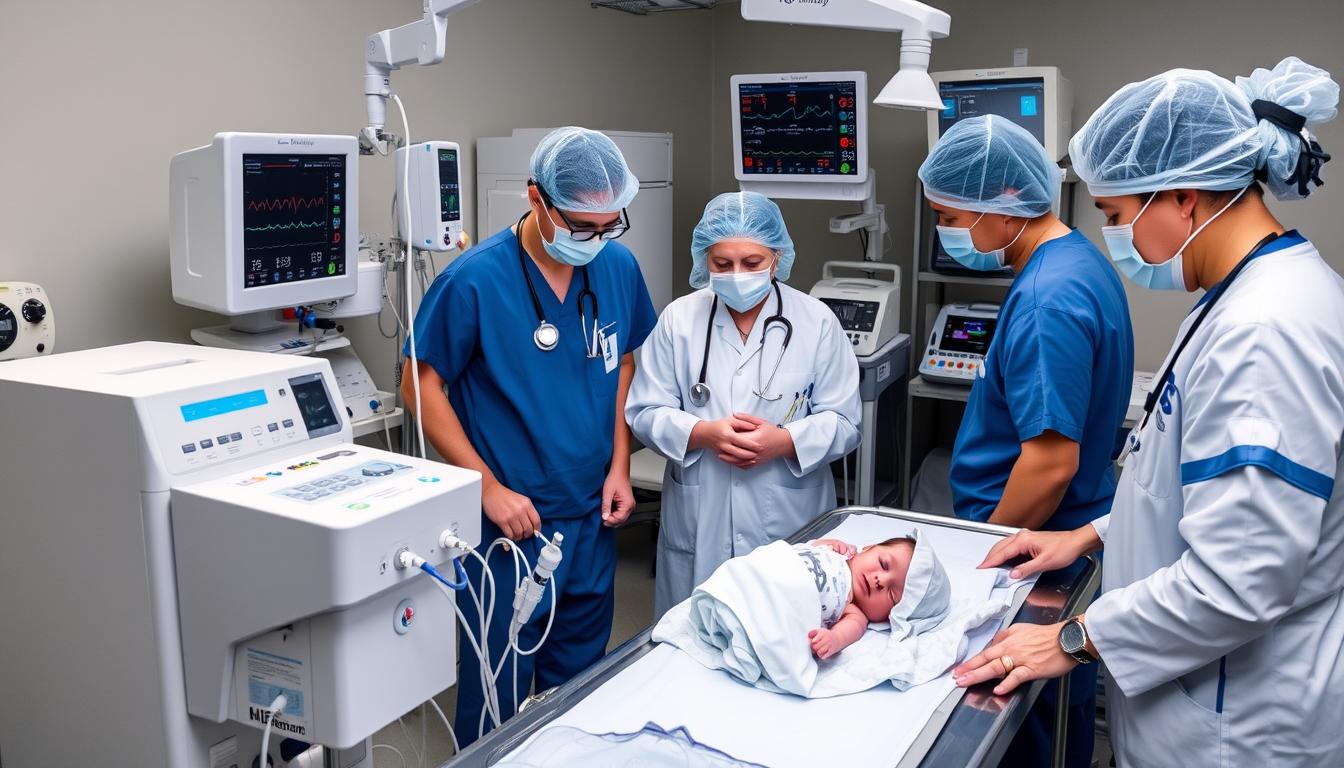
NICU team providing therapeutic hypothermia treatment for HIE
Managing HIE is a team effort. The medical team aims to protect the brain, support vital organs and prevent further injury. Which treatments are used depends on how severe the baby’s condition is and how quickly care can begin.
Therapeutic hypothermia, often called “cooling”, is the established treatment for many babies with moderate to severe HIE. In practice this usually means gently lowering the baby’s core temperature to around 33–34°C for about 72 hours, then rewarming slowly.
Cooling is time‑sensitive: to be most effective it should usually be started within about six hours of birth. The treatment reduces the brain’s metabolic demand and helps limit inflammation and further injury after the initial event.
Two common cooling methods are used in neonatal units:
Alongside cooling (when indicated), supportive care is crucial to maintain oxygen delivery and stable blood flow to the brain and other organs. Typical elements include:
Seizures are common in babies with HIE and may not always be obvious without monitoring. Management typically includes:
Research is exploring treatments that might be given alongside cooling to improve outcomes. These are still largely experimental but include:
These treatments are being tested in clinical studies and are not yet routine standard care; families should discuss any trial options with their neonatal team.
The National Institute for Health and Care Excellence (NICE) and other national bodies publish guidance on assessment, therapeutic hypothermia protocols and follow‑up care. Ask your medical team for patient‑facing NHS information if you would like a plain‑language summary.
What does cooling look like? The baby is cared for on a specialised mattress or with a head device; staff closely monitor temperature, breathing and heart function. Parents are supported to be with their baby where safe and possible.
Why is speed important? Treatments such as therapeutic hypothermia are most effective when started early because they aim to limit the secondary wave of injury that follows the initial lack of oxygen and reduced blood flow.
How will decisions be made? The neonatal team will explain how they assess eligibility for cooling and other treatments using clinical signs, blood tests and monitoring results — you can ask them for a clear explanation of the plan for your baby.

Physiotherapist using StandSure Therapy aid with a child
Physiotherapy is central to helping children recover function after HIE. Early assessment and support aim to maximise development, prevent secondary problems such as contractures, and help babies and children take part in everyday life — from holding a toy to standing and playing with peers.
Therapy starts with a thorough assessment so the team can set realistic, meaningful goals with the family:
Typical goals focus on improving movement that matters at home and nursery or school, for example helping a baby to sit with support, stand safely, or use hands to explore toys independently.
Therapists use a range of evidence‑based approaches tailored to the child’s needs:
Hands‑on techniques to encourage normal movement patterns, manage tone and support function during everyday activities.
Structured sensory input to help children who struggle with processing sensations, improving motor planning and confidence in movement.
Short, focused programmes that encourage use of a weaker arm by temporarily limiting the stronger side — useful when one side is notably affected.
Task‑specific practice (for example standing, stepping, reaching) to build skills that transfer into daily life.
Supportive equipment can make therapy more effective and enjoyable. The StandSure Therapy aid offers stable support so children can practise weight‑bearing and standing activities safely while engaging with play.

Child using StandSure Therapy aid for independent standing during rehabilitation
The StandSure aid can be incorporated into simple, motivating activities such as standing practice, reaching and play‑based tasks that improve balance and upper‑limb use.
Referral to physiotherapy commonly begins during neonatal follow‑up or as soon as a developmental concern is identified. Therapists will advise safe home activities parents can try to encourage movement — always follow the therapist’s guidance and check with your medical team first.

Support group meeting for families affected by HIE
Finding the right support after an HIE diagnosis can feel overwhelming. Many families face emotional, practical and financial challenges, and it helps to know there are charities, NHS services and peer networks ready to offer information and practical care.
PEEPS is the UK charity dedicated to families affected by HIE. They offer:
Within the NHS, families can usually access a range of services following neonatal HIE:
First steps checklist: keep a record of important contacts (neonatal unit, community paediatrician, therapist), take a copy of discharge summaries to appointments, and bring notes about what concerns you most so the team can help prioritise support.
If you are unsure how to access services, ask the neonatal or paediatric team for a clear plan and contact details — they can refer to local follow‑up clinics and support organisations. Early engagement with services gives the best chance of addressing developmental issues promptly and easing family burdens.
Accurate clinical documentation and coding matter for patient care, service planning and research. The International Classification of Diseases (ICD‑10) includes specific codes used to record HIE on medical records and discharge summaries, which in turn affect funding, audit and follow‑up arrangements.
| ICD-10 Code | Description | Usage Notes |
| P91.60 | Hypoxic ischaemic encephalopathy [HIE], unspecified | Used when the severity is not specified |
| P91.61 | Mild hypoxic ischaemic encephalopathy [HIE] | Corresponds to Sarnat Stage I |
| P91.62 | Moderate hypoxic ischaemic encephalopathy [HIE] | Corresponds to Sarnat Stage II |
| P91.63 | Severe hypoxic ischaemic encephalopathy [HIE] | Corresponds to Sarnat Stage III |
| P91.0 | Neonatal cerebral ischaemia | Used for ischaemic brain injury without encephalopathy |
| G93.1 | Anoxic brain damage, not elsewhere classified | Used for HIE in adults or older children |
Additional codes that may be relevant include those for underlying causes (for example placental abruption or cord prolapse), associated complications such as seizures or respiratory distress, procedures like therapeutic hypothermia, and long‑term outcomes including cerebral palsy.
Note for clinicians: medical coders usually assign the final ICD codes from the documented clinical notes. Clear documentation of diagnosis, severity grade, diagnostic test results and treatments (for example cooling or anticonvulsant therapy) helps ensure accurate coding and supports ongoing care and referrals.

Research laboratory studying potential HIE treatments
Research into HIE is active and evolving. Several promising avenues aim to improve how we protect the brain after an injury and how we predict a baby’s outlook — but it’s important to remember that many of these approaches remain investigational and are tested in clinical studies rather than routine care.
Scientists are testing treatments that could be given alongside therapeutic hypothermia to enhance protection of the brain, including:
Work continues to find reliable early indicators of injury and better ways to forecast development:
Longitudinal studies track children over years to understand how early injury affects learning, behaviour and quality of life. These studies help answer questions such as whether interventions change the rate of later problems and which early measures best predict long‑term development.
If you are interested in participating in a study (for example the DOLFIN trial or other UK studies), discuss this with your neonatal team. Trials typically run in specialist centres and involve careful consent and explanation of potential risks and benefits.
Overall, research brings hope but should be presented as exploratory. Families considering trial participation should be supported by their medical team to weigh options and find trustworthy, up‑to‑date information.
HIE: Hypoxic Ischaemic Encephalopathy is a serious condition that can affect a baby’s brain when oxygen and blood flow are reduced around the time of birth. While this can lead to long‑term challenges in some children, advances in diagnosis, monitoring and treatment — particularly therapeutic hypothermia — have improved outcomes for many families.
Care after HIE is best delivered by a multidisciplinary team: neonatologists, paediatric neurologists, physiotherapists and other allied health professionals working together to plan treatment, rehabilitation and follow‑up. Practical aids such as the StandSure Therapy device may support rehabilitation and help with a child’s development and independence.
For parents, getting clear information and timely support matters: engage with neonatal follow‑up clinics, ask your medical team about developmental monitoring, and contact peer organisations such as PEEPS for family‑to‑family support and practical guidance. Early intervention and ongoing therapies can make a real difference to a child’s development and quality of life.
Research and clinical trials continue to explore new treatments and ways to predict outcomes more accurately. If you are interested in studies, talk to your neonatal team about options and whether any local trials (for example nutrient or neuroprotective studies) might be suitable.
If you have urgent concerns about your baby, contact your neonatal unit or GP. For more information and family support, the organisations below can help.

Book a personalised demonstration of the StandSure™ today by filling out our request form. Have any questions? Call us now, and our team will be happy to assist!


