No products in the cart.
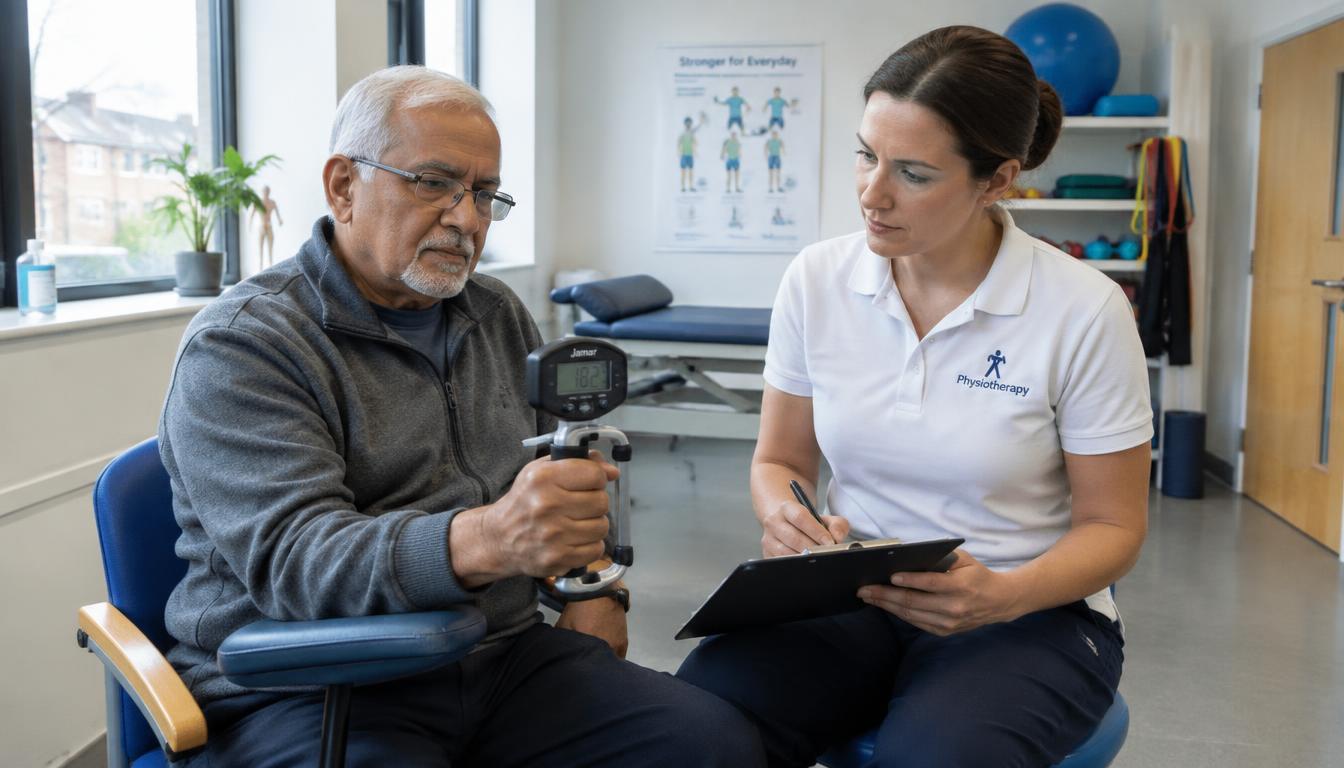

A grip strength test measures how much force a person can produce by squeezing a handle. The usual device is a grip dynamometer, also called a hand grip dynamometer or hand dynamometer.
The test is commonly used in physiotherapy, occupational therapy, rehabilitation and research. It can help describe hand function after injury, surgery or stroke. It may also contribute to a broader review of muscle strength and physical function in older adults.
A grip test should not be treated as a stand-alone health verdict. A lower result may reflect pain, arthritis, reduced sensation, fatigue, a neurological condition or unfamiliarity with the equipment. Results need to be interpreted alongside the person’s history and abilities.
A clinician can explain what the measurement means in the context of movement, pain and everyday function.
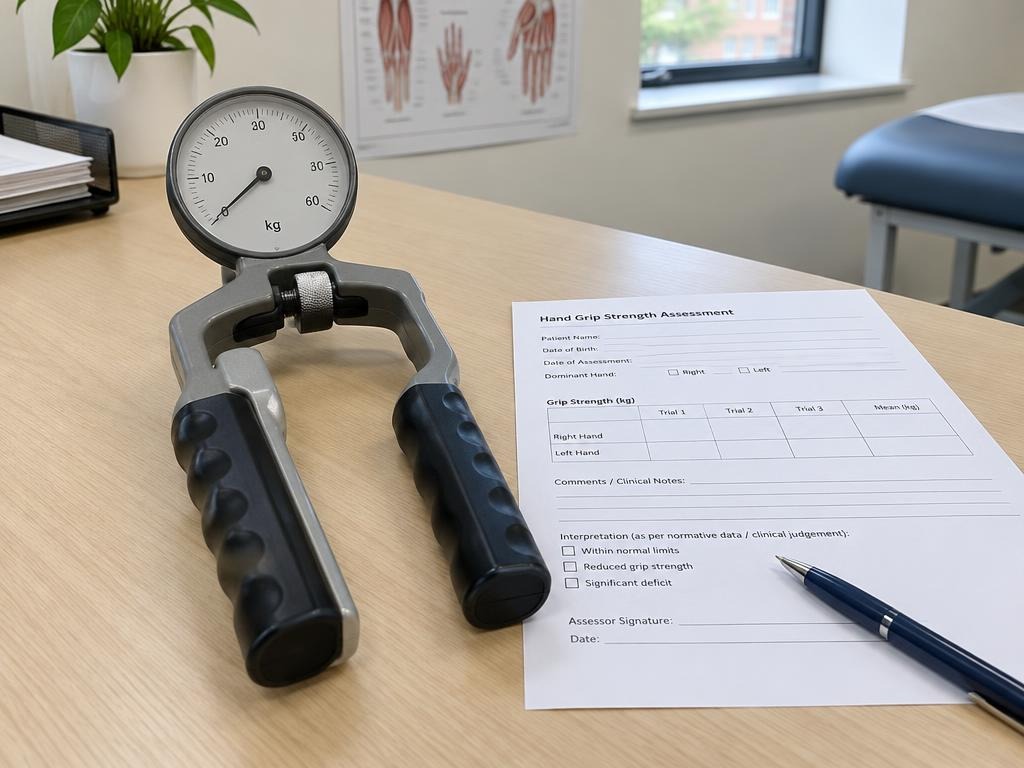
A dynamometer records force produced through the handle.
The reading reflects the force produced by the muscles of the hand and forearm. It also depends on wrist position, elbow position, shoulder stability, effort and understanding of the instructions.
Hand grip strength is therefore a useful functional measure, but it is not a complete measure of total-body strength. A person may have a modest grip result yet walk well, manage stairs and remain independent. Another person may have a reasonable grip score but struggle with balance or lower-limb power.
Research often reports that grip strength is associated with physical function, mobility and health outcomes. An association does not prove that one factor causes another. The value of the test lies in combining the result with meaningful clinical observations.
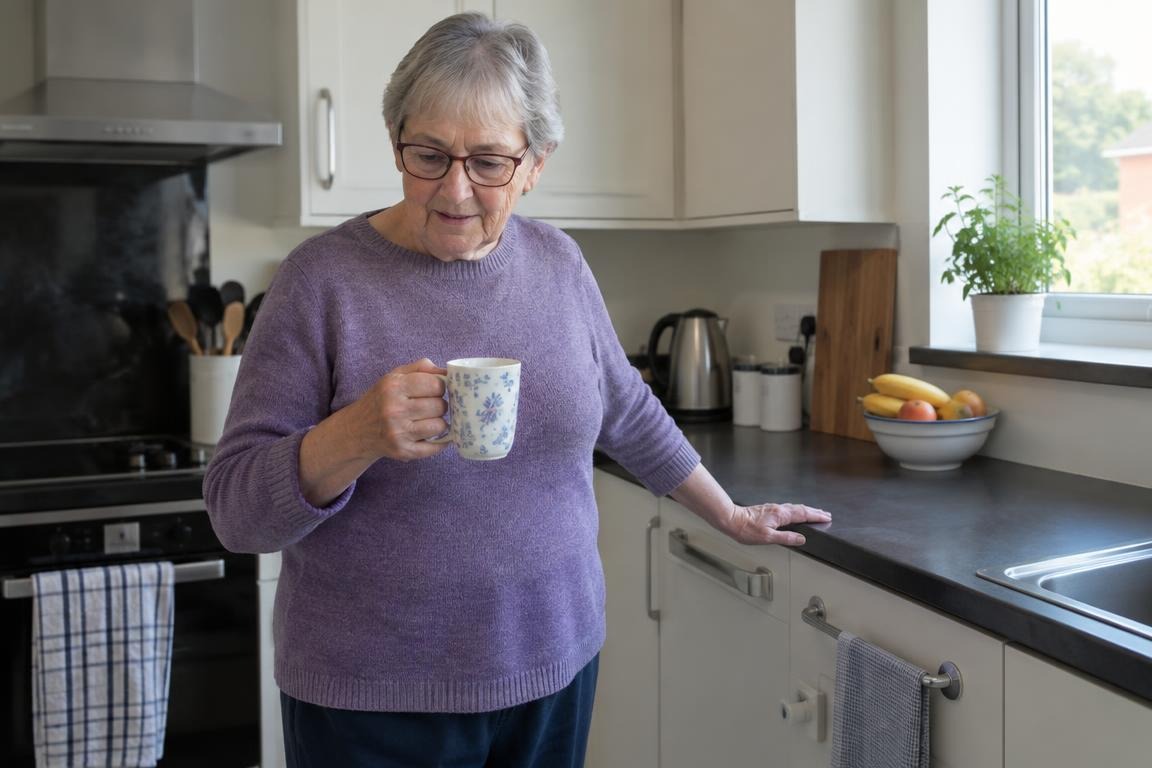
Functional strength is best understood through real activities as well as measured force.
A trained professional will explain the task, check comfort and position the person in a consistent way. A common method uses a seated position, a supported or neutral shoulder, a bent elbow and a neutral wrist. The exact protocol can vary between services and studies.
Usually, several attempts are taken for each hand. The strongest reading, mean reading or change across trials may be used, depending on the assessment protocol. A result should never be forced through pain.
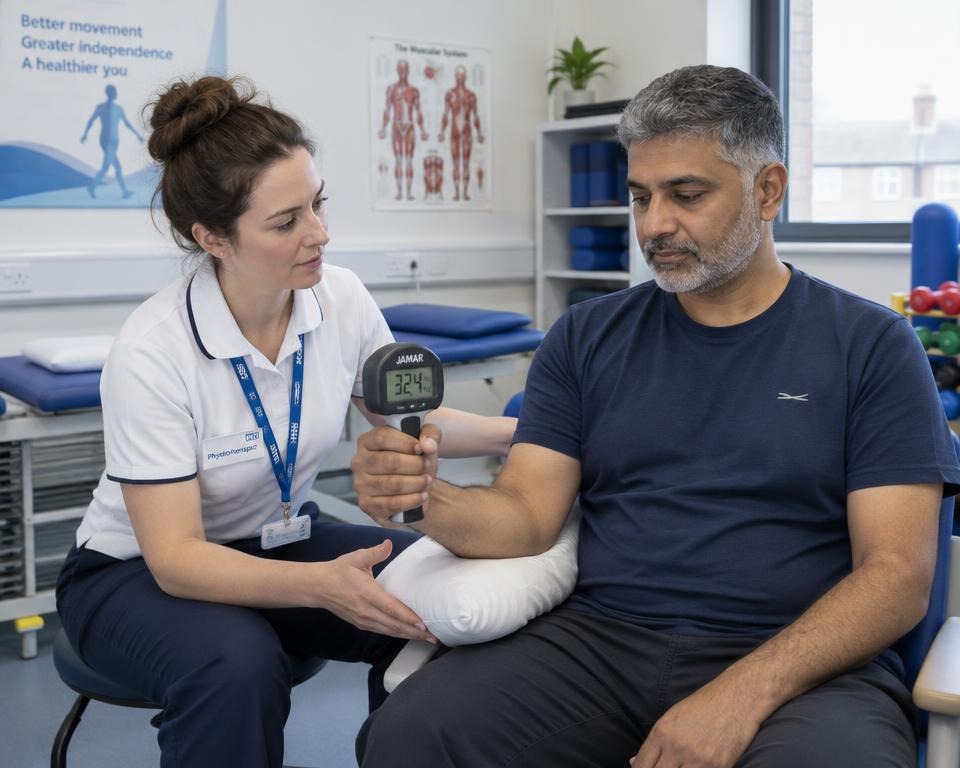
Position and instructions should remain consistent between sessions.
A grip strength dynamometer contains a handle linked to a mechanism that records force. Some models are hydraulic. Others are digital or use different mechanical systems. The device should be suitable for the intended population and maintained according to the manufacturer’s guidance.
The handle setting can affect the result. A setting that is too small or too large may place the fingers and thumb in an awkward position. A professional will also consider hand size, pain, swelling, tremor and reduced sensation.
In research and rehabilitation, excellent test-retest reliability is more likely when the same device, protocol and assessor are used. This does not mean every reading is perfect. It means the method can be useful for identifying change when testing conditions are controlled.
Discuss intended users, measurement needs and safe setup before selecting equipment for a rehabilitation service.
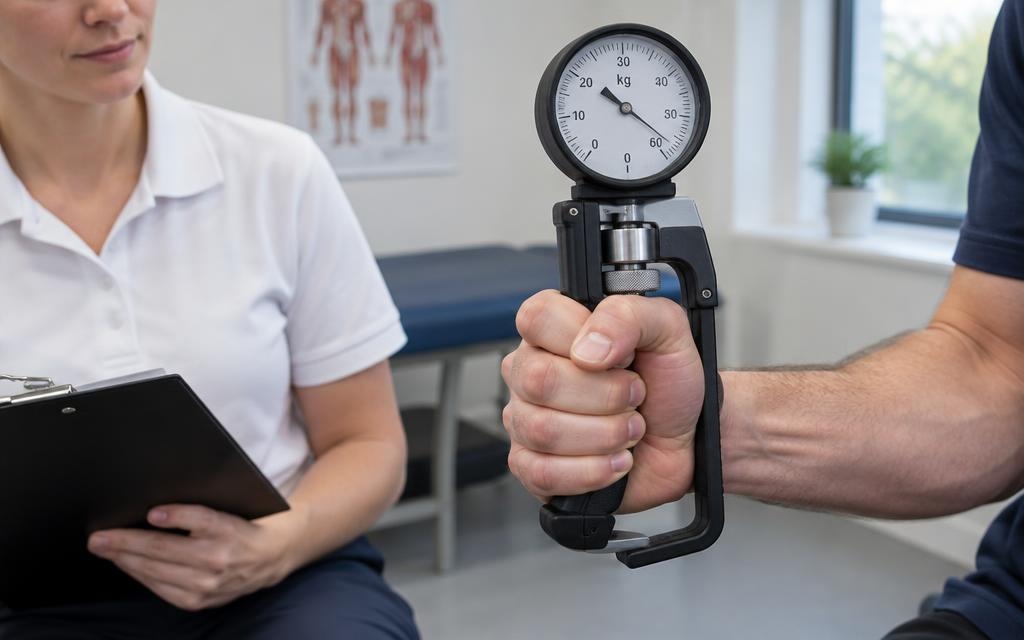
A hand dynamometer should be held in a repeatable and comfortable position.
Grip strength is commonly recorded as force in kilograms-force, pounds-force or newtons, depending on the device and local protocol. The display unit should always be documented with the score.
Two results cannot be compared safely if they were recorded using different units or different equipment without checking the conversion and measurement method. A clinical record should include the date, hand, device, handle setting, position and protocol.
Dynamometer grip strength can also be affected by motivation, fatigue and learning. A change of only a small amount may not represent a meaningful physical change. The wider clinical picture remains important.
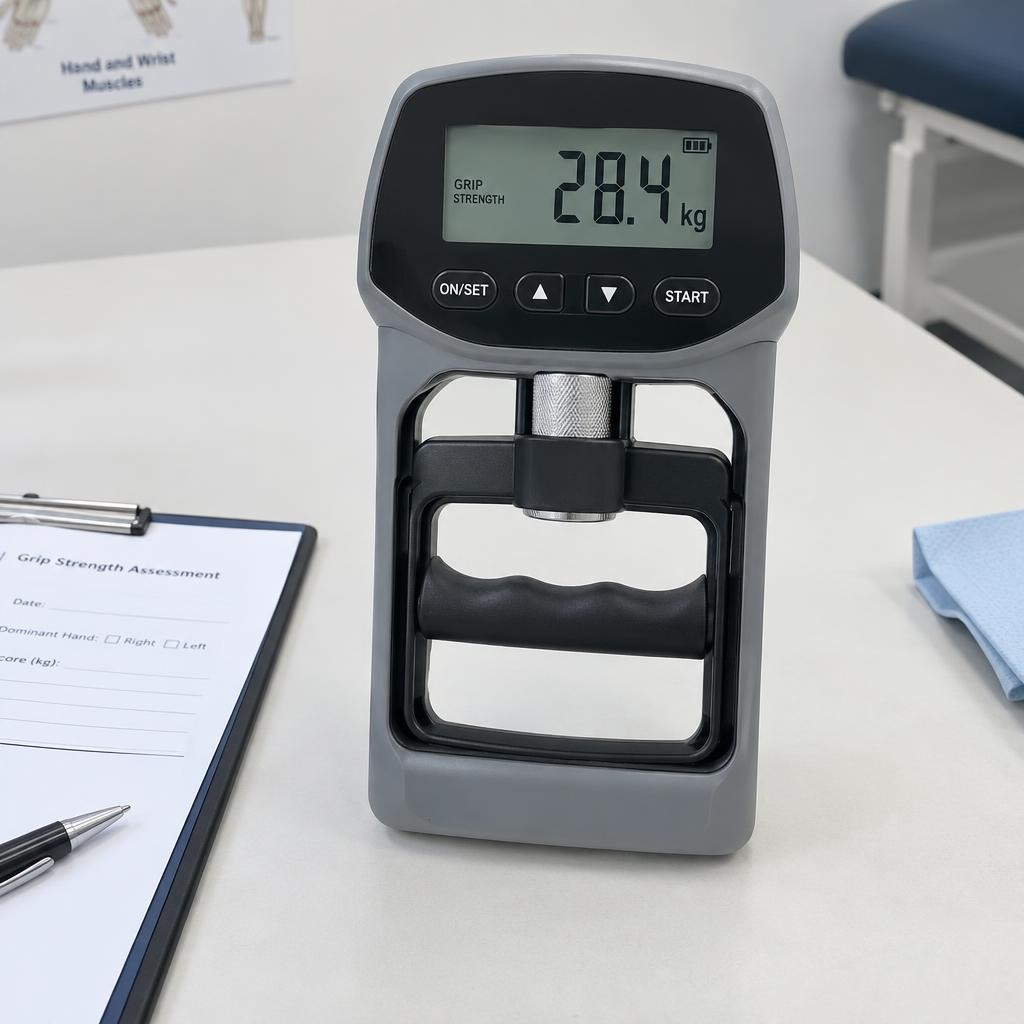
Always record the unit shown by the device.
Average grip strength varies between individuals and groups. Age, sex, hand dominance, body size, occupation, activity level and health status can all influence a result. The hand used most often may produce a different score from the other hand.
Grip strength by age is best considered as a pattern rather than a universal target. Values often change across adulthood, but the rate and meaning of change differ. Women and men also show different distributions in many studies, yet individual variation remains wide.
Pain, arthritis, stroke, nerve injury, neurological conditions, inflammation and recent surgery can reduce force. Fatigue, fear of pain, poor understanding, cold hands and an unsuitable handle setting may also affect performance.
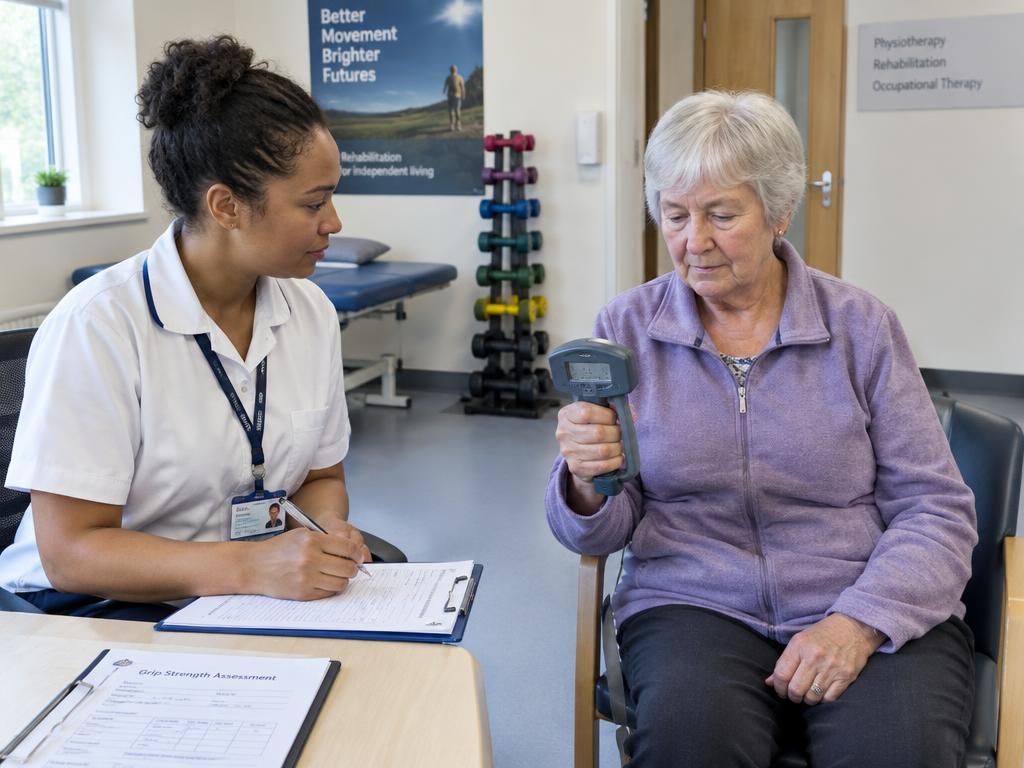
The person’s history should be recorded alongside the measurement.
A grip strength chart may show reference values for a specific population, age range, sex, device or testing protocol. It is not automatically a pass or fail tool. Reference data may not match the person being assessed.
Before using a grip strength test chart, check how the original study collected its measurements. Look for the equipment, body position, number of attempts, sample size and units. A chart based on one protocol should not be applied casually to another.
For an individual, change over time may be more useful than comparison with a population average. A gradual reduction, a large side-to-side difference or a new difficulty with daily tasks may justify further assessment, particularly when symptoms are present.
Average grip strength is a guide, not a diagnosis. A result below a chart value does not prove disease, and a result above it does not confirm good overall health.
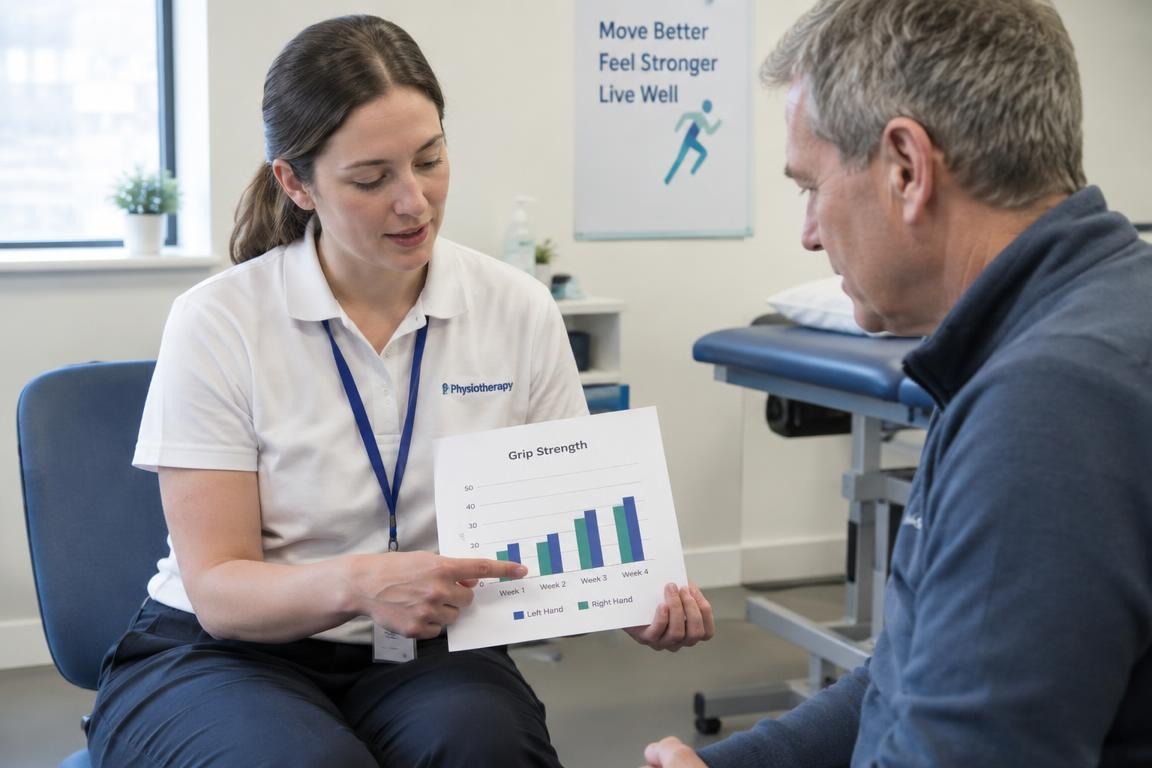
Charts support discussion; they do not replace clinical judgement.
Healthy ageing involves maintaining function, participation and independence as far as possible. Grip strength can act as a practical marker within that wider picture. It may reflect changes in muscle strength, activity, nutrition, illness or recovery.
Studies have reported relationships between grip strength and outcomes such as mobility, falls, hospital recovery and daily function. These relationships are not proof that grip strength alone causes those outcomes. A lower score should prompt a thoughtful review rather than alarm.
For older adults, the most useful question is often practical: has it become harder to stand, carry, open, hold or manage personal care? Combining a grip test with walking speed, balance, chair-rise ability and reported function gives a more complete view.
A physiotherapy assessment can link the score with mobility, balance, daily tasks and realistic rehabilitation goals.
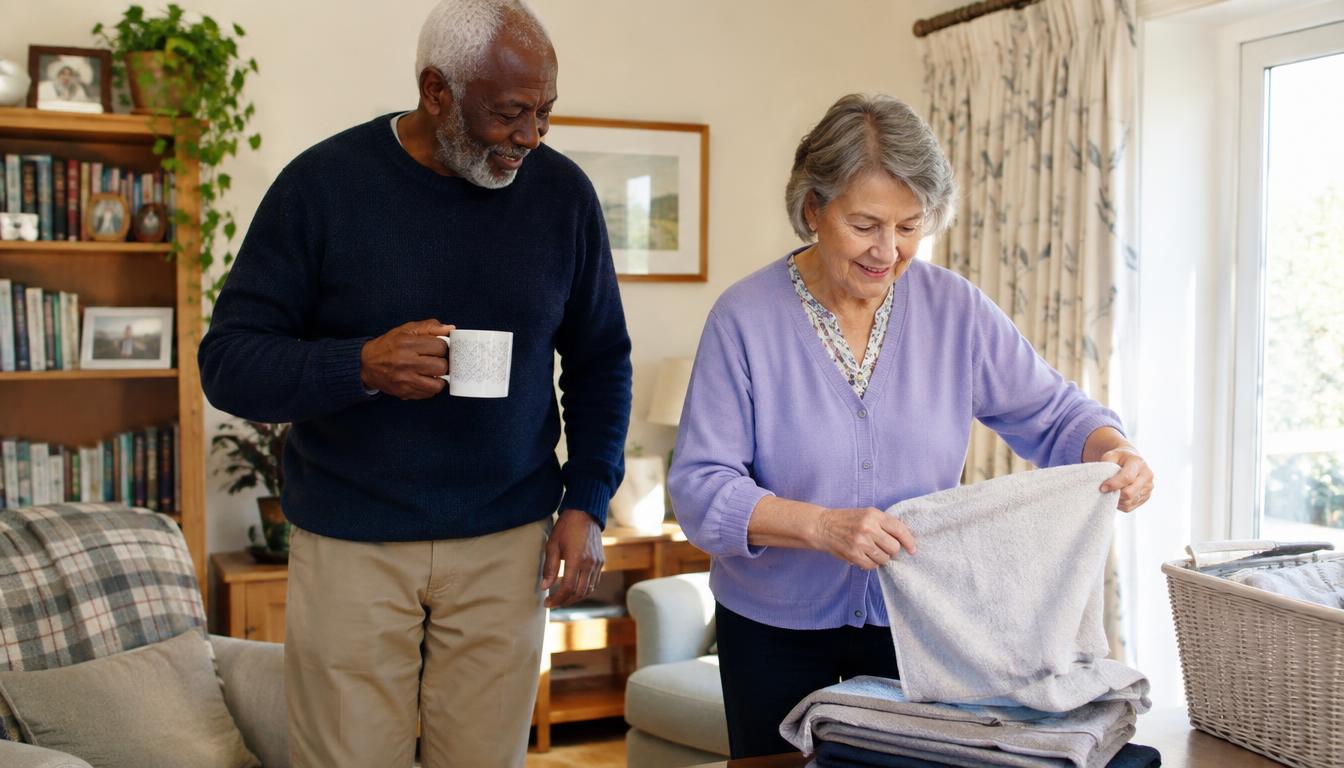
Ageing well is reflected in meaningful daily activity, not one score alone.
In rehabilitation, repeated measurements can help describe progress after stroke, upper-limb injury, orthopaedic surgery or periods of illness. The test may also help set goals for returning to work, hobbies or self-care.
Physiotherapy decisions should not be based on a single reading. Treatment may include movement practice, strengthening, pain management, task training, education and advice about pacing. The grip result helps the team decide what to explore next.
Occupational therapists may connect hand performance with dressing, cooking, writing and other activities. A rehabilitation team can also identify when a person needs a different aid, further medical review or a safer home routine.
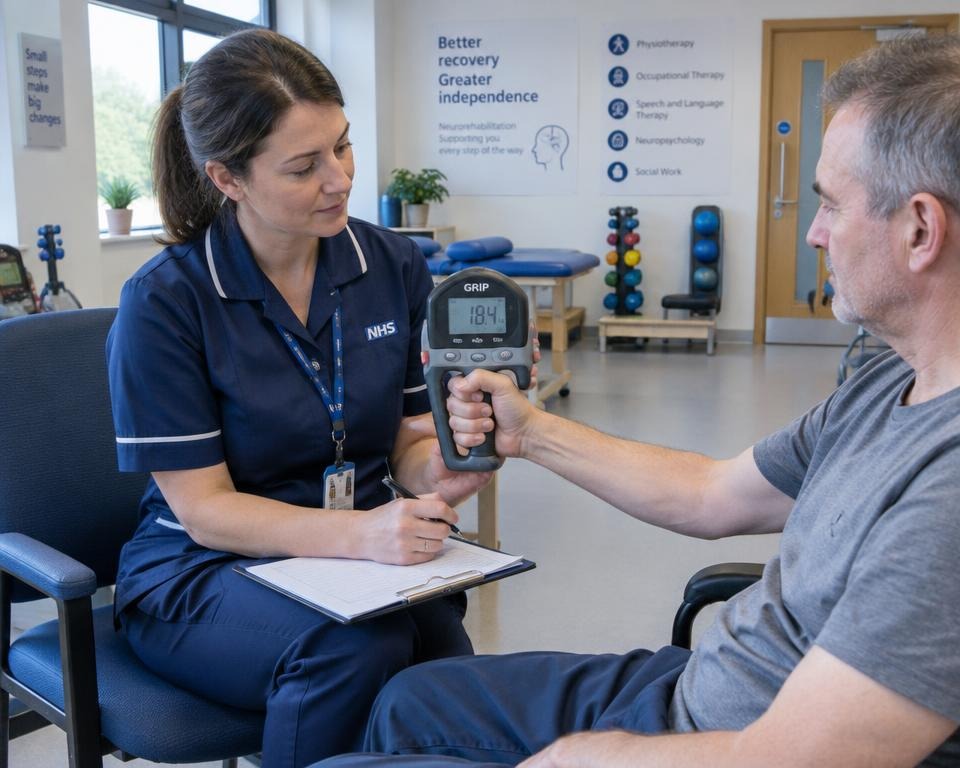
Repeated testing may help monitor progress during rehabilitation.
Grip strength may improve when the underlying cause is addressed and the hand is used safely. Depending on the person, a plan may include graded resistance, functional tasks, range-of-motion work, rest, pain management or treatment for a wider condition.
Training should be appropriate for the person’s symptoms and stage of recovery. After surgery, fracture, significant pain or neurological injury, professional advice is sensible before adding resistance.
A home hand grip test can be useful for personal tracking, but home results have limitations. Low-cost devices may differ in accuracy. Position, effort and handle setting may change from one session to another.
Arrange assessment for sudden weakness, new loss of sensation, severe pain, marked swelling or a rapid change in hand function. A grip result cannot identify the cause by itself.
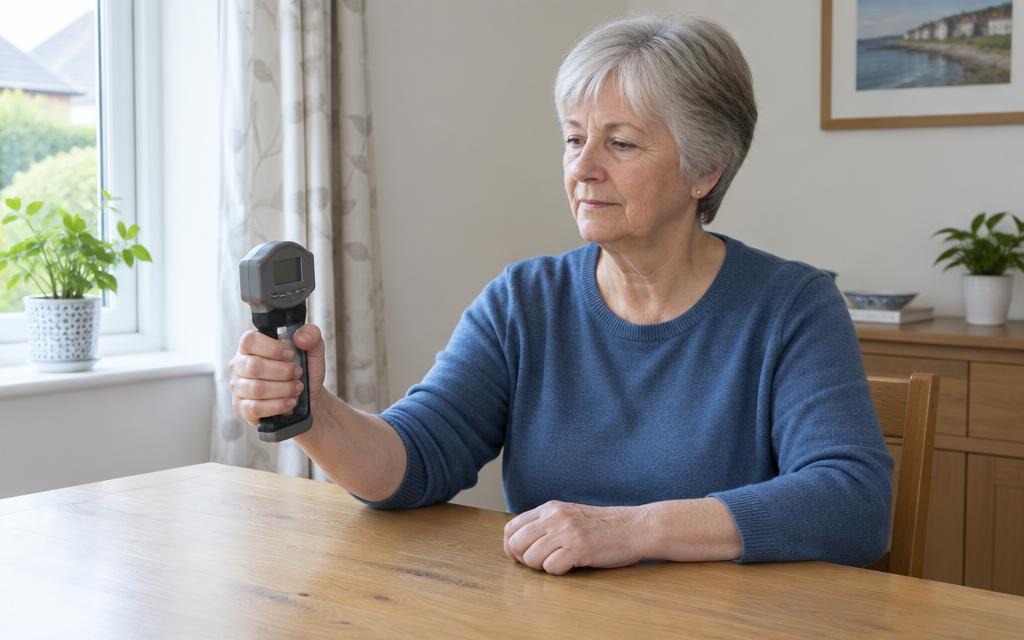
Home tracking is most useful when the method stays consistent.
It is a measurement of the force produced when a person squeezes a handle, usually on a grip dynamometer.
It measures hand and forearm force. The result is influenced by position, pain, effort, equipment and technique.
A person squeezes a dynamometer in a consistent position for a set number of attempts, with rest and accurate recording between trials.
It is a device designed to record the force produced through a hand-held handle.
There is no single average that applies to everyone. Values vary by age, sex, hand dominance, body size, health and testing method.
A score is meaningful only when compared with suitable reference data and the person’s own previous results. It is not a universal pass or fail measure.
It often changes with age, but the pattern differs between people. Activity, illness, pain and training also influence results.
It may improve with suitable rehabilitation, graded strengthening and regular functional activity, provided the plan is safe for the person.
Yes, but home testing may be less consistent. A professional assessment is preferable when symptoms, injury or major change is present.
Devices may display kilograms-force, pounds-force or newtons. Always record the unit with the result.
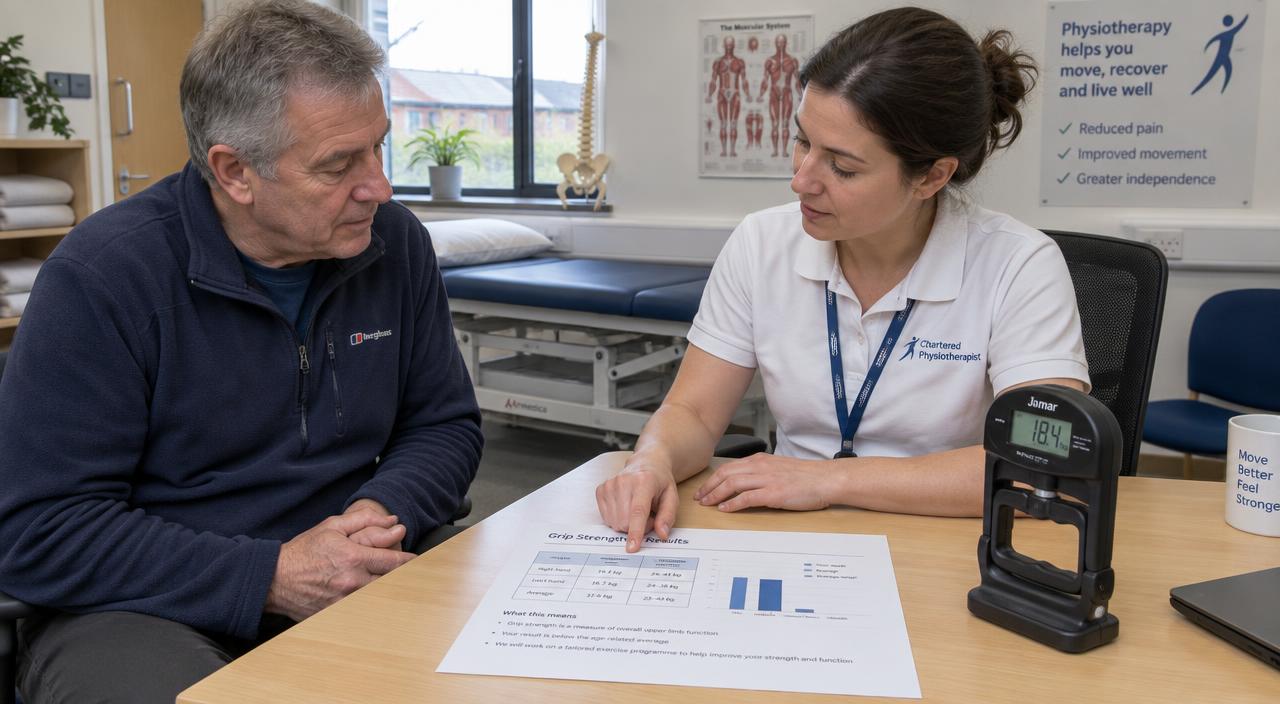
A conversation about symptoms and function gives the number meaning.
A grip strength test is quick, practical and useful when performed consistently. It can support rehabilitation, help track change and prompt a wider conversation about physical function and independence.
It cannot diagnose a condition or define healthy ageing on its own. Consider the person’s age, hand dominance, pain, medical history, equipment and daily abilities. If a new or concerning change appears, professional assessment offers safer and more meaningful guidance.
Request an assessment or discuss suitable clinical equipment with a rehabilitation specialist.

Book a personalised demonstration of the StandSure™ today by filling out our request form. Have any questions? Call us now, and our team will be happy to assist!


