GDD: Global Developmental Delay – Causes, Symptoms & Treatment
-
By: Ashley Shepherd
-
December 23, 2025
What is Global Developmental Delay?
‘Global Developmental Delay’ means that a child has not met two or more milestones in every area of development. These areas of growth include cognitive abilities, speech and language, motor skills (fine and gross), and social-emotional development. Generalised developmental disorder affects many areas of a child’s growth, but specific developmental issues only affect one area.
Children typically reach developmental milestones, such as sitting up, crawling, walking, babbling, and forming words, at similar ages. It is normal for children to learn these skills at different times. But if a child is much slower than others in several areas, it might mean they have GDD. Around 1-3% of children worldwide have this condition.
Developmental Areas Impacted by GDD
Motor Skills
Gross motor skills are movements such as crawling, walking, and jumping, while fine motor skills are smaller, more exact actions such as drawing and tying shoelaces. Children with GDD might take longer than normal to sit up, roll over, crawl, or walk. They may also struggle with tasks that require manual skill, such as using cutlery or holding a crayon.
Language and Speech
It might be challenging to babble, form words, follow directions, or express needs because of a delay in communication. Children with GDD usually learn to talk later than other children. Occasionally, they have trouble constructing sentences or have limited vocabulary. GDD can impact both receptive language, which involves understanding what others say, and active language, which involves communicating your thoughts.
Cognitive Skills
Cognitive growth means the development of thinking, learning, problem-solving, and remembering. Children may struggle with learning new skills, understanding cause and effect, remembering directions, or taking in information. It could take more time to understand new information or apply what you already know in new scenarios.
Social and Emotional Skills
Talking to other people, expressing your feelings in a suitable way, and becoming more self-aware are all parts of social-emotional growth. Children with GDD might have a challenging time with social cues, sharing, taking turns, or making friends. Additionally, they might struggle to regulate their emotions or adjust to alterations in their routine.
What Causes Global Developmental Delay?
There are many different reasons for global developmental delay, and occasionally it is difficult to understand what caused it. Doctors can find a certain cause approximately 40–60% of the time. The other cases may have started in ways that are not known or are caused by more than one factor. Understanding what might have caused the condition helps doctors decide on a treatment plan and provide families useful information about outlook.

Common Causes of Global Developmental Delay
- Genetic factors: Issues with chromosomes, like Down syndrome and Fragile X syndrome, are some of the most common known reasons for GDD. Genetic testing often identifies these conditions.
- Brain development issues: Issues with how the brain develops can cause GDD. These include microcephaly, which is a smaller-than-normal brain, and other brain growth problems.
- Prenatal factors: Toxins, alcohol, drugs, or infections can slow the growth of the foetus.
- Birth complications: Complications during birth, such as low weight, premature birth, or not getting enough oxygen during birth (birth asphyxia), may cause delays in growth.
- Infections: If they happen in early childhood, some infections that affect the brain, like meningitis or encephalitis, can cause delays in growth.
- Metabolic disorders: Undiagnosed conditions that affect how the body processes food, such as hypothyroidism or phenylketonuria (PKU), can affect a child’s growth.
- Environmental factors: Developmental delays can be caused by being exposed to lead or other harmful substances, malnutrition, or lacking social and emotional support.
Even after extensive testing, the exact cause of global developmental delay remains unknown for some children. While this may frustrate families seeking answers, it does not immediately alter the delivery of help and intervention.
Symptoms of Global Developmental Delay
The symptoms of global developmental delay change with the child’s age and how severe the condition is. Parents and carers may see that their child is not developing at the same speed as other children. For early help, it is important to identify these signs quickly.

Common Signs of Global Developmental Delay at Different Ages
Babies from birth to 12 months
- Lack of eye contact
- Less reaction to words or sounds
- Delays in rolling, sitting or crawling
- Not making any verbal sound at all until nine months of age
- Having a hard time eating or swallowing
- Less interest in trying to touch or grab objects
Toddlers (1-3 years)
- They may exhibit delayed or unusual walking patterns
- By 16 months, the child may have no words or a very limited vocabulary
- Unable to follow simple instructions
- Struggling with fine motor skills, such as block stacking
- Shows little interest in toys or playing with others
- Not pointing to objects of interest
Children ages 3 to 5 (preschoolers)
- Speech that is difficult to understand
- Limited formation of sentences
- Difficulty with concepts like colours, numbers, or shapes
- The child has difficulty drawing or cutting with scissors
- Limited social interaction with peers
- Difficulty with following directions that have more than one step
- Challenges with teaching toilet training
It is important to understand that children grow at their pace, and being behind in meeting one milestone does not automatically mean they have GDD. But if there are big delays in multiple areas of growth, you should seek professional advice.
Global Developmental Delay Diagnosis
To diagnose global cognitive delay, doctors conduct a full assessment. Early diagnosis is essential because it allows for early action, which can make a big difference with results for children with GDD.

The Process of Diagnosis
- Initial screening: Most people start the diagnosing process with developmental screening at normal health visits. Healthcare providers use standardised tests and observations to determine if a child meets the appropriate milestones for their age.
- Comprehensive evaluation: If the screening reveals potential growth issues, a more in-depth assessment follows. This step may require a team from many different fields, including paediatricians, developmental specialists, psychologists, speech therapists, occupational therapists and physiotherapists.
- Medical history: The child’s doctor obtains detailed information about the pregnancy, the birth, and the child’s development and family background.
- Physical examination: A careful physical examination helps identify any signs that might suggest there are certain problems that come with developmental delay.
- Developmental assessment: Standard tools test the child’s skills in various developmental areas and compare them to normal developmental milestones.
- Medical investigations: Medical tests may include genetic tests, metabolic screenings, neuroimaging (MRI or CT scans), and other laboratory tests to identify potential underlying causes.
Differential Diagnosis
During diagnosis, doctors try to differentiate global developmental delay from other conditions, such as:
Global Developmental Delay vs Autism
Autism spectrum disorder (ASD) and GDD are different conditions, even though they may have some symptoms in common. Children with autism often struggle to communicate with others and often engage in the same behaviours over and over. Many children with GDD do not have these traits that are particular to autism. But some children can have both at the same time.
Global Developmental Delay vs Learning Disability
Learning disabilities can make certain school-related tasks more challenging, such as reading, writing, or maths. On the other hand, GDD affects more areas of growth. As a child grows, GDD, found in early childhood, may become a learning or intellectual disability when the child reaches school age.
It is important to understand that a diagnosis of global developmental delay is not always permanent. For some children, it represents a temporary delay in development that improves with intervention. For others, it may be the early manifestation of a long-term condition that becomes more defined as the child grows.
Treatment for Global Developmental Delay
Treatment for global developmental delay focuses on supporting the child’s development across all affected domains. A multidisciplinary approach is typically most effective, with interventions tailored to the individual child’s specific needs and strengths.
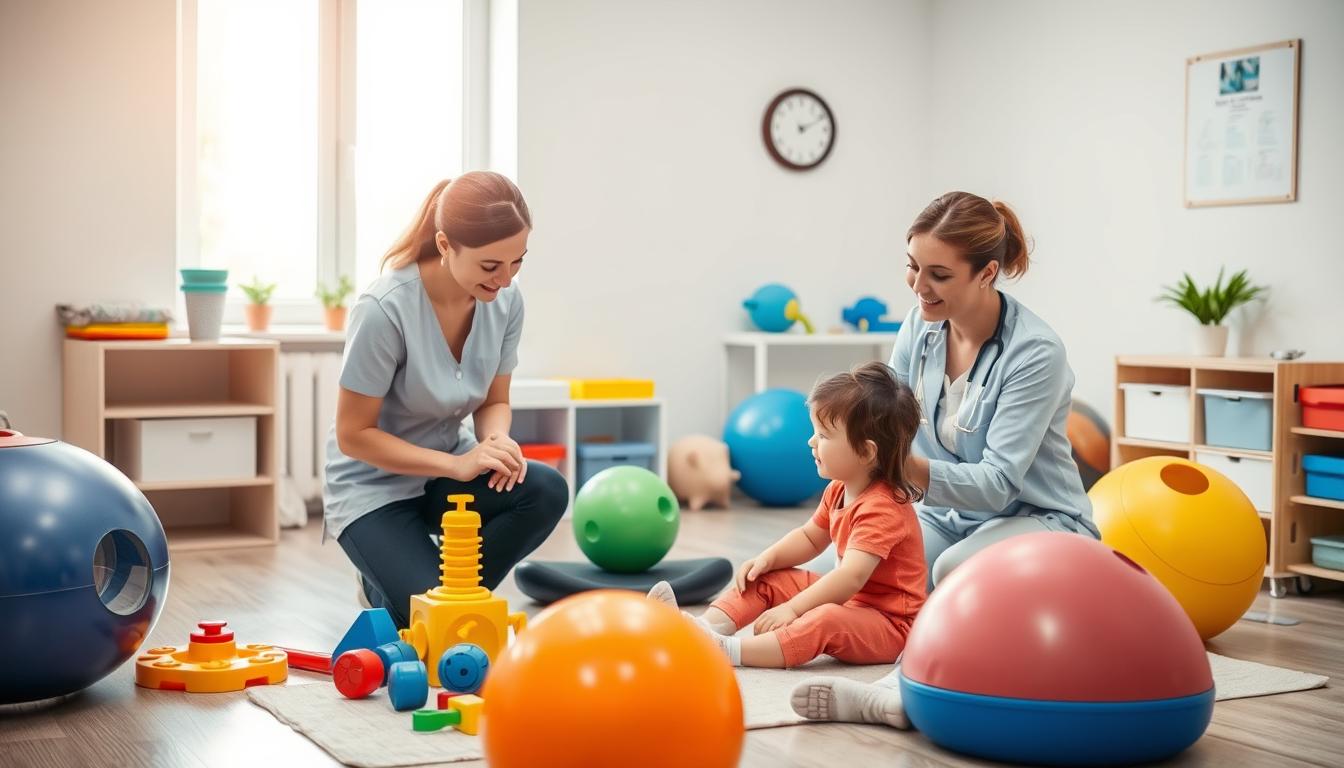
Early Intervention Services
For children with GDD, early intervention is important. Usually, these services commence as soon as developmental issues arise, even prior to an official diagnosis. Early intervention programmes help children during the important early years when their brains are most open to learning and growth.
Therapeutic Approaches
- Speech and Language Therapy: This helps children learn how to communicate by working on receptive language (understanding) and active language (speaking). When needed, therapists may use a range of methods, such as play, visual aids, and augmentative and alternative communication (AAC) methods.
- Occupational Therapy: Aims to improve daily tasks, fine motor skills, and sensory processing. Children can learn things like dressing themselves, eating, writing, and playing with the help of an occupational therapist.
- Physiotherapy: Looks at physical growth and gross motor skills. Physiotherapists help people improve their abilities to sit, stand, walk, and coordinate through specific routines and activities.
- Behavioural Therapy: May help you learn how to control your behaviour, emotions, and social skills. Some children may benefit from methods like Applied Behaviour Analysis (ABA).
- Special Education: Methods of teaching that are based on how a child learns best and what they need. Individualised education plans (IEPs) and specialised training methods may be part of this.
Innovative Physiotherapy Solutions
Physiotherapists who work with children with global developmental delays use the StandSure Therapy Aid. This helps to keep children’s feet stable and supported while they practise sitting to standing and weight-bearing activities, which are important steps in developing their gross motor skills.
Medical Management
While there is no specific medication for GDD itself, medical management may include:
- Treatment of underlying conditions (e.g., thyroid hormone replacement for hypothyroidism)
- Management of associated symptoms or comorbidities
- Regular assessments of health and growth
- Nutritional help if necessary
Family Support and Education
Families are essential for helping children with GDD. Support services might include the following:
- Educating parents in ways to help their child’s development
- Teaching therapeutic techniques to use at home
- Emotional support and counselling
- Contact with support groups
- Help with navigating healthcare and school support systems
Global Developmental Delay Physiotherapy Management
Physiotherapy is essential for helping children with global developmental issues improve their physical abilities and gross motor skills. A physiotherapy programme tailored just for the child’s needs can help them with their movement, strength, balance, and coordination.
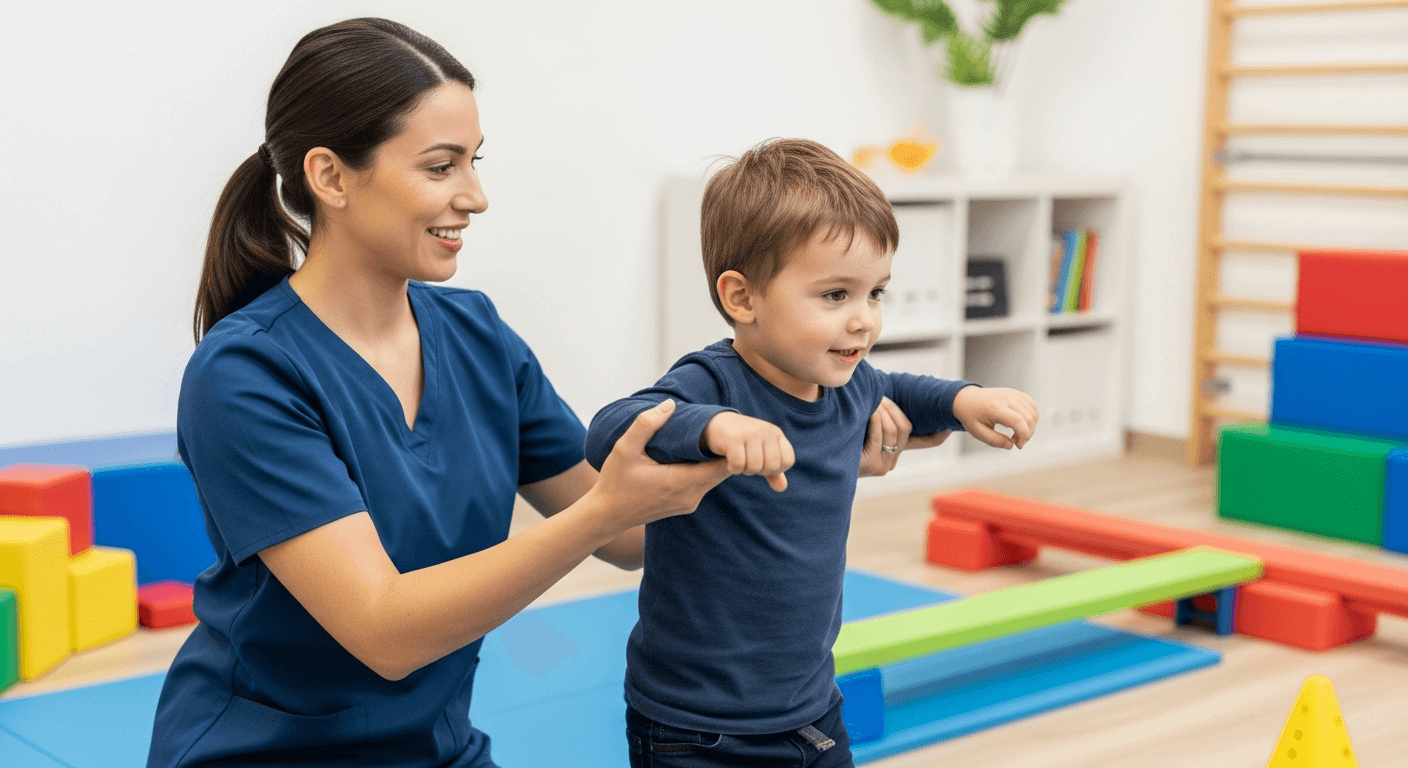
Key Components of Physiotherapy for GDD
- Assessment: A full assessment of the child’s gross motor skills, muscle tone, power, range of motion, and functional skills.
- Goal setting: Setting goals that are achievable and can be measured based on how the child presents currently and how much they can improve.
- Therapeutic exercises: These are customised tasks that help improve functions such as sitting, crawling, standing, and walking.
- Play-based therapy: A way to keep children interested in therapeutic tasks that help them strengthen their motor skills through play.
- Assistive devices: Suggesting and teaching how to use helpful tools when necessary.
- Parent/carer training: Teaching families exercises and tasks to do at home to keep skills sharp between therapy sessions.
StandSure Therapy Aid in Physiotherapy
Physiotherapists who work with children with GDD have used the StandSure Therapy Aid as part of their rehabilitation programme. Children can practise standing and weight-bearing with this therapy tool, which gives them stability and support.
Advantages of the StandSure Therapy Aid
- Offers foot and ankle support that can be changed to fit children’ needs as they learn how to stand
- Enables effective weight-bearing practise
- Encourages balance and alignment
- Allows the therapist hands-free standing for engagement in other activities
- Adjusts to grow with the child
- It can be used at home, at school, in rehab centres, and clinics
How Physiotherapists Use StandSure
- Gradual introduction to standing with appropriate support
- Learning how to shift your weight and maintain balance while standing is essential
- Doing upper body tasks while in a supported standing position
- With repeated practice patients are able to stand on their own for longer periods of time
- Teaching parents how to support their child with training goals at home
See How StandSure Works
Learn how physiotherapists use the StandSure Therapy Aid to help children with global developmental delay improve their standing and moving skills.
Global Developmental Delay NHS Support
The National Health Service (NHS) offers a variety of programmes to help children with global developmental delay and their families. It’s important to know how to use these programmes so that children get the help they need.
NHS Pathway for GDD
- Initial concerns: Parents may raise their concerns with their GP or health visitor at regular developmental checks.
- Referral: The child’s GP or health visitor may refer to a paediatrician, usually one who specialises in child development.
- Assessment: The paediatrician will conduct an initial assessment and may send the child to other experts or a Child Development Centre for a multidisciplinary evaluation.
- Diagnosis: After a thorough evaluation, a diagnosis may be made, or more tests may be suggested.
- Intervention: The right NHS treatment services are set up based on the evaluation. These services may include physiotherapy, occupational therapy, and speech and language therapy.
- Ongoing support: Regular reviews evaluate progress and change interventions where necessary.
Available NHS Services
The NHS offers a range of services for children with GDD, but their provision may depend on where they live.
Clinical Services
- Developmental paediatrics
- Community therapy programmes, like speech and language, occupational, and physiotherapy
- Services for Child and Teen Mental Health (CAMHS)
- Genetic services that are specialised
- Neurodevelopmental teams
Educational Support
- Educational Psychology services
- Special Educational Needs Coordinator (SENCO) support in schools
- Plans for Education, Health, and Care (EHC)
- Specialist educational provision when needed
NHS waiting lists can be long, so many families add private therapy to NHS care or use resources from charities.
Global Developmental Delay vs Autism
Global Developmental Delay and Autism Spectrum Disorder (ASD) are distinct conditions, although they can co-occur and share some similar features. Understanding the differences and overlaps helps ensure appropriate assessment and intervention.
| Characteristic | Global Developmental Delay | Autism Spectrum Disorder |
| Primary feature | Delays across multiple developmental domains | Social communication difficulties and restricted, repetitive behaviours |
| Social interaction | Often delayed but follows typical developmental patterns | Qualitatively different; may show limited interest in social interaction |
| Communication | Delayed but typically follows normal developmental sequence | May include unusual features (echolalia, pronoun reversal) or be absent entirely |
| Play skills | Usually delayed but varied and appropriate to developmental level | Often repetitive, lacking imagination, or focused on specific aspects of toys |
| Sensory processing | May have some sensory issues but not a defining feature | Commonly shows hyper- or hypo-sensitivity to sensory input |
| Restricted interests | Not typically present | Often shows intense focus on specific topics or objects |
Features and co-occurrence that are similar
It is important to note that GDD and autism can co-occur. Some children may have both conditions simultaneously. Additionally, some features can overlap, making diagnosis complex:
- Language delays can happen in both of these situations
- Both may have challenges when trying to connect with other people
- Both can affect how someone is playing and learning
- Some children initially diagnosed with GDD may receive an autism diagnosis when their developmental picture becomes clearer
A thorough evaluation by a team of professionals from different fields is essential for an accurate diagnosis and planning the right steps. This usually includes a comprehensive history of the person’s development, structured observations, and standardised tests that are consistent regardless of who takes them and tailored to each specific condition.
Global Developmental Delay in Adults
The term ‘global developmental delay’ is primarily used for children under the age of five. As individuals age the terminology often shifts to reflect their current functioning rather than their developmental history. Understanding how GDD manifests in adulthood helps ensure appropriate ongoing support.
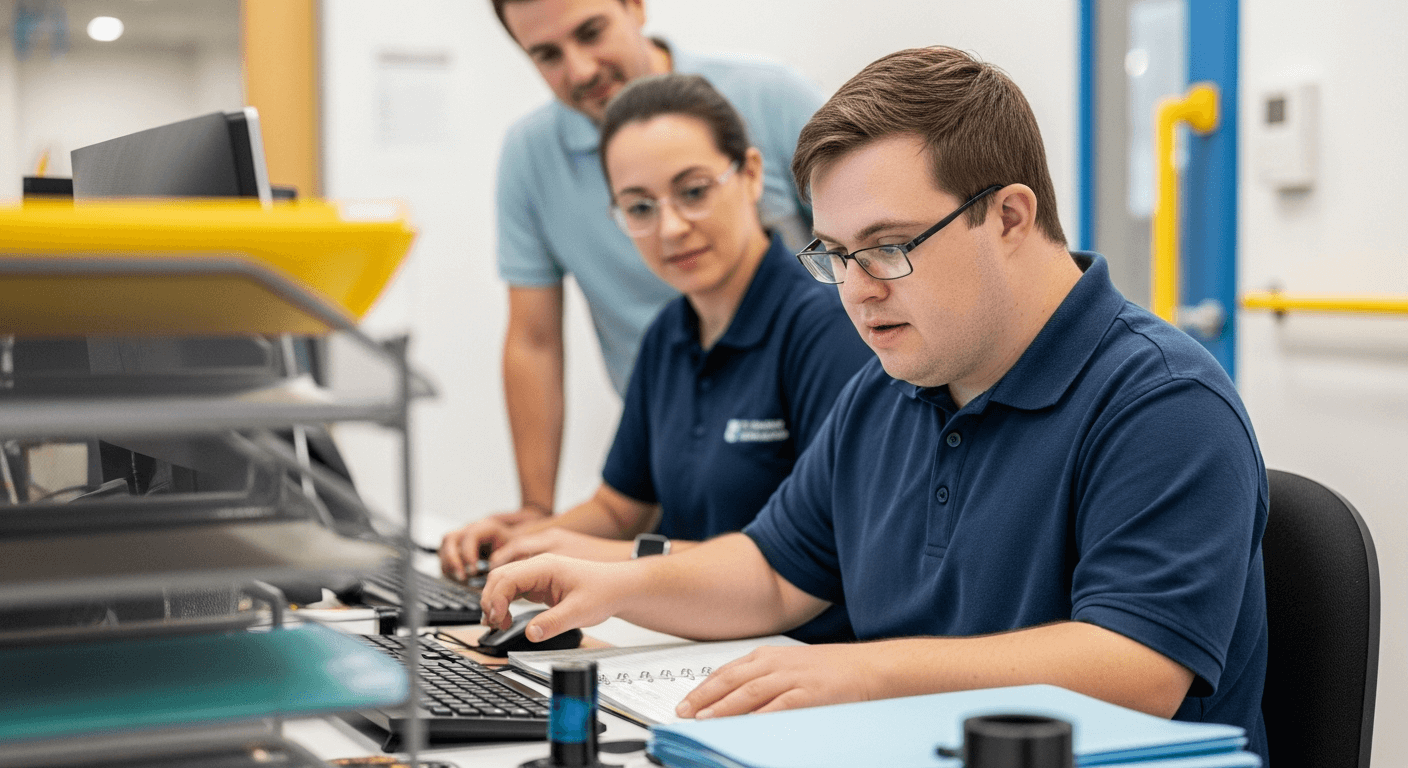
Transition from Childhood GDD to Adult Diagnosis
- Intellectual disability: Many children who have GDD may later be diagnosed with an intellectual disability, which is based on how limited their brain function and adaptive behaviour are.
- Specific learning disabilities: Some people may develop specific learning disabilities that make it challenging for them to do certain tasks in school.
- Developmental coordination disorder: If older children or adults have ongoing problems with movement, they may be diagnosed with developmental coordination disorder.
- Language disorders: If someone has ongoing problems with speech and language, they may be diagnosed with a specific language disorder.
- No diagnosis: Some people who had GDD as children may catch up to their peers and no longer need a diagnostic label as adults.
Support Needs in Adulthood
Adults who had GDD as children may need different kinds of help based on their personal situation. Some common places where help may be needed are:
Daily Living
- Self-care and household management
- Financial management
- Transportation and community navigation
- Healthcare management
Employment and Education
- Vocational training and job coaching
- Job possibilities with support
- Workplace accommodations
- Continuing education with appropriate support
Social and Community
- Learning how to interact with others
- Community inclusion activities
- Relationship building
- Leisure and recreation opportunities
Emotional Wellbeing
- Help for mental health issues
- Counselling
- Self-advocacy skills
- Stress management
Many adults who had GDD as children can live successful and happy lives if they get the help they need. The focus should be on finding strengths and giving specific help for areas of trouble, rather than just focusing on limitations.
Support Resources for Families
Families of children with global developmental delays benefit from connecting with support organisations, accessing informational resources, and building networks with other families facing similar challenges. These resources can provide emotional support, practical advice, and advocacy assistance.

UK Support Organisations
Contact
Contact is an organisation that helps disabled children and gives parents information, advice, and support. They provide a full guide to global developmental delays and help families get in touch with local services that can help.
- Helpline: 0808 808 3555
- Website: Extensive resources on GDD and related conditions
- Listening Ear Service: Emotional support for parents
- Online Community: Closed Facebook group for parents to connect
Brainwave
Brainwave works with children under 12 who have a range of problems, such as global developmental delay. Brainwave creates personalised training plans that parents can implement with their children at home.
- Telephone: 01278 429089
- Email: [email protected]
- Services: Assessment, therapy programmes, ongoing support
Mencap
Mencap supports people with learning disabilities and their families. They provide information, advice, and advocacy services.
- Helpline: 0808 808 1111
- Services: Information, advocacy, housing support, employment programmes
What You Can Do to Support a Child with Global Developmental Delay
Parents and carers play a crucial role in supporting their child’s development. Here are practical strategies that can make a difference:
- Follow professional recommendations: Use the therapeutic activities your child’s healthcare team recommend.
- Use play-based learning: Make growth goals part of fun and engaging playtime activities.
- Establish routines: Children feel safe and learn what is expected of them when they follow the same pattern every day.
- Break tasks into steps: A good way to teach someone a new task is to break it down into smaller, repeatable parts.
- Celebrate progress: Take time to recognise and enjoy every win, no matter how small.
- Take care of yourself: Maintain your own wellbeing to be able to support your child effectively.
- Connect with other families: Talk about your experiences and how you deal with things with people who understand what you’re going through.
Conclusion
Global developmental delay can be challenging for children and their families, but many children see improvements with the right help given early on and with support over time. All children with GDD are different in terms of their skills and needs. They should be helped in a way that is specific to them.
Families, healthcare workers, teachers, and support groups all work together to help people with GDD. Families can help their children reach their full potential and have happy lives if they work together and use the tools available.
Support Your Child’s Development
Find out how the StandSure Therapy Aid can help your child’s physical development as part of a full approach to global developmental delay.