No products in the cart.


Autism spectrum disorder most commonly affects two central domains: social communication and patterns of behaviour. These characteristics frequently appear in early childhood, although diagnosis may occur in adolescence or adulthood when differences become more apparent.
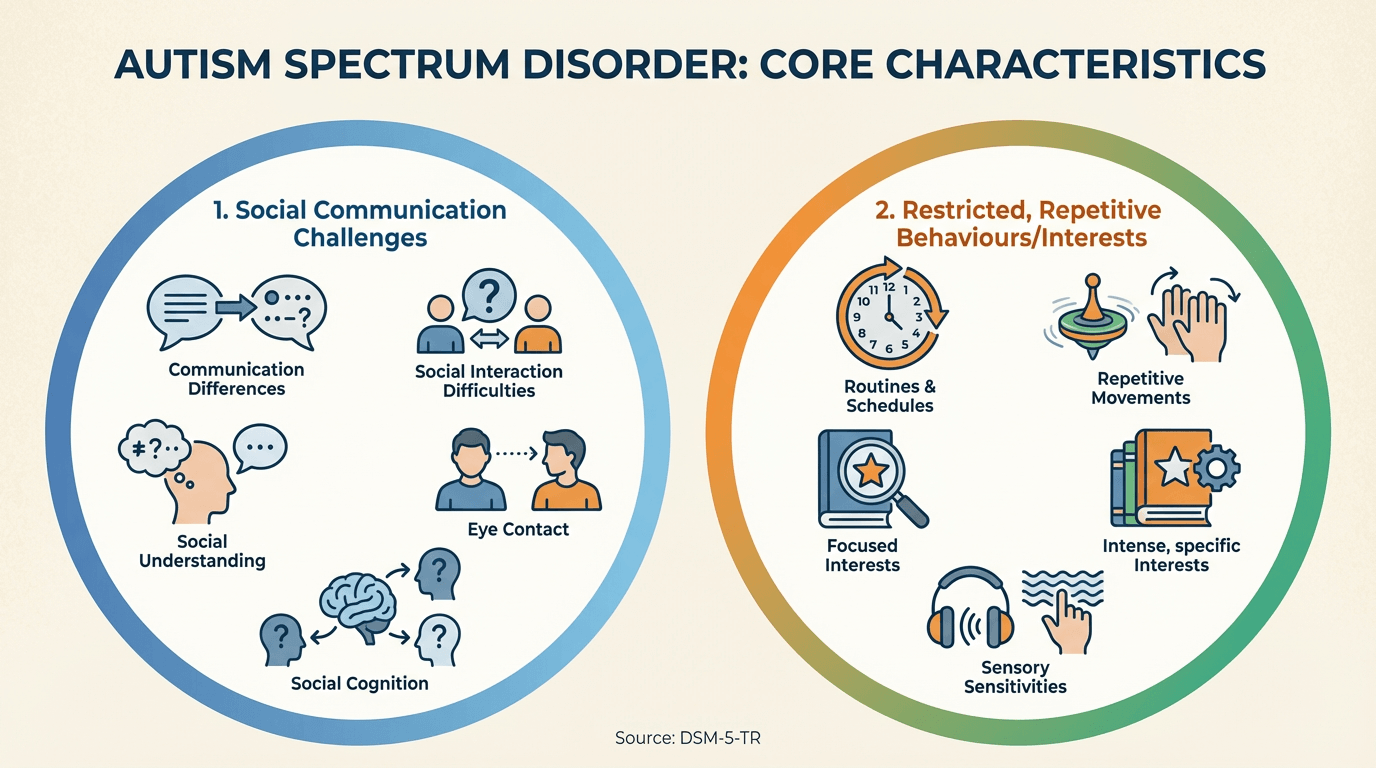
Social communication differences commonly include difficulty interpreting non‑verbal cues such as facial expressions, gestures and tone of voice. Eye contact may be atypical; some autistic people find prolonged eye contact uncomfortable or unnecessary for effective communication.
Conversations can follow different patterns: some people focus intensely on particular topics, and literal interpretation of language is common, which can make sarcasm or figurative speech hard to understand. These differences reflect an alternative communication style rather than a lack of interest in social connection.
Repetitive behaviours and restricted interests are a core characteristic of the autism spectrum. Many autistic people use repetitive movements or self‑stimulatory behaviours (“stimming”), for example hand flapping, rocking or repeating phrases; these behaviours often help to regulate sensory input and emotional state.
Strong, focused interests frequently lead to detailed knowledge and skill in particular areas. Predictable routines and familiar environments provide reassurance; sudden change can cause distress because it reduces predictability and may increase sensory overload. Sensory sensitivities can make sounds, lights, textures or smells more intense for some people than for others.
Early red flags allow families to seek assessment and support sooner. Parents or carers may notice developmental differences in infants and young children.
School‑age signs often emerge in social and learning contexts and can affect participation at school.
Some adults receive a diagnosis later in life, often after recognising persistent differences in social communication and sensory processing.
Autism can present differently in females, which contributes to underdiagnosis; many develop coping strategies that mask typical signs.
If concerns arise about development at any age, contact a GP or health visitor to discuss screening and referral for assessment. Screening tools such as the M‑CHAT can assist in identifying children who may benefit from further evaluation. Professional assessment is recommended to confirm diagnosis and plan appropriate support.
Obtaining an autism diagnosis in the United Kingdom generally involves a comprehensive, multi‑disciplinary assessment. Early diagnosis enables access to appropriate support services and helps families and professionals understand an individual’s needs and plan care.
The usual pathway begins with a consultation with a GP or health visitor, who may refer to a specialist autism assessment team. For children this commonly involves community paediatrics or child and adolescent mental health services (CAMHS); adults are referred to local adult autism diagnostic services, though availability and waiting times vary between areas.
Assessment typically comprises a detailed developmental history, structured clinical observation and standardised assessment tools. Commonly used instruments include the Autism Diagnostic Observation Schedule (ADOS) and the Autism Diagnostic Interview–Revised (ADI‑R), used alongside clinical judgement by a multi‑disciplinary team.

Because NHS waiting times can be lengthy in some areas, private assessment is an alternative for those who can afford it. Private assessments vary in cost—commonly reported ranges are approximately £1,000–£3,000—and are often completed more quickly. Where a private assessment is carried out by appropriately qualified clinicians using recognised methods and following NICE guidance, NHS services should consider the findings when planning care; local practice may differ, so confirm arrangements with the relevant NHS service.
Several factors can complicate diagnosis. Females frequently present differently and may develop effective masking strategies, contributing to later or missed diagnosis. Co‑occurring conditions such as ADHD, anxiety disorders, learning disabilities or speech and language difficulties can obscure the diagnostic picture. Adults who have learned coping mechanisms may show fewer observable traits during assessment despite significant internal difficulties.
To support referral and assessment, gather any available developmental records, school reports and examples of current challenges. Local charities such as the National Autistic Society can assist with guidance on local diagnostic pathways and preparing for assessment. If concerns persist, return to the GP or contact local specialist services for advice.
Many autistic people experience additional health conditions alongside autism spectrum disorder. Recognising these co‑occurring conditions supports comprehensive assessment and tailored care planning.
Attention deficit hyperactivity disorder (ADHD) commonly co‑occurs with autism; studies indicate a substantial overlap, often reported in the range of 30–50% among autistic children. Both conditions affect executive functioning, attention and impulse control, but they present in different ways. For example, inattention in ADHD contrasts with intense, narrow focus on particular interests often seen in autism.
The overlap can complicate diagnosis and management. Care plans may need adaptation when both conditions are present—for instance, behavioural strategies or educational adjustments should address attention regulation as well as social communication needs.
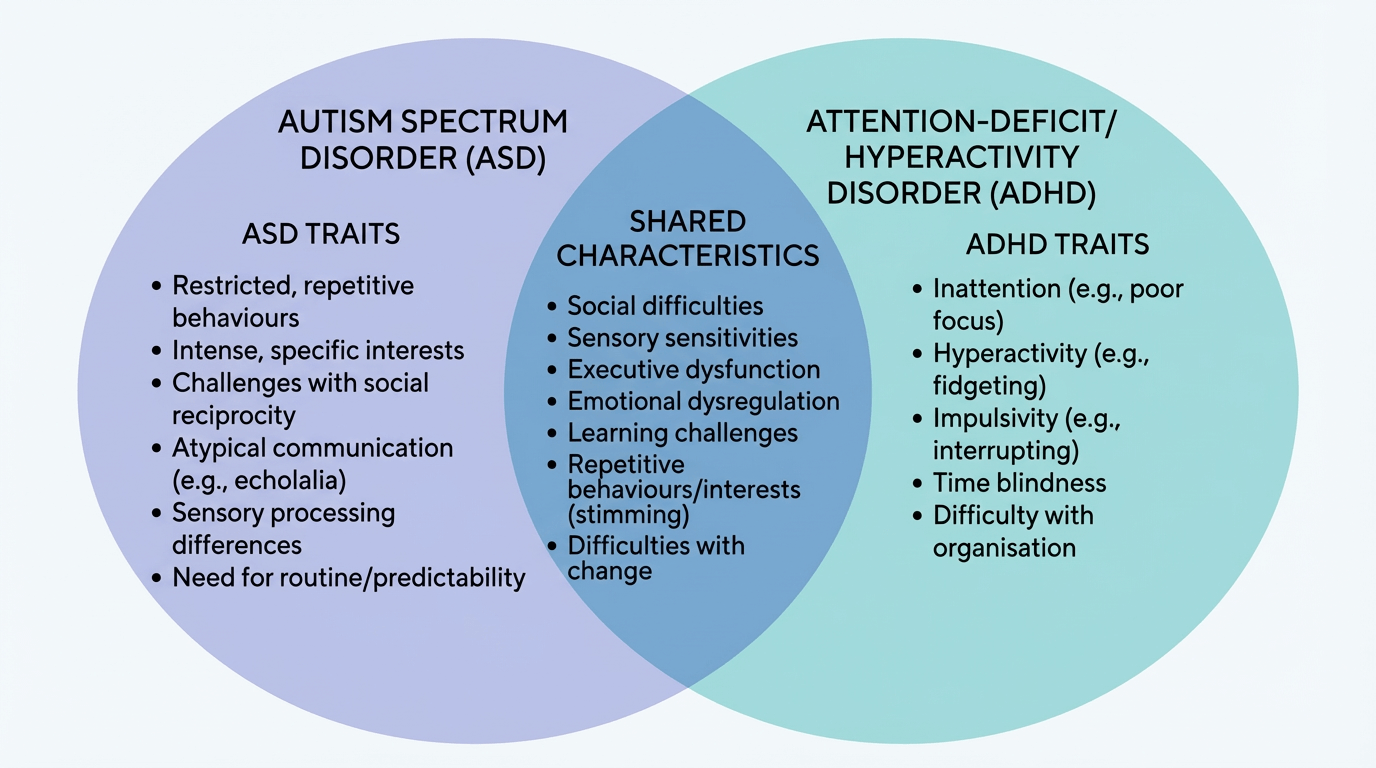
Anxiety disorders are common among autistic people; social anxiety, generalised anxiety disorder and specific phobias frequently occur. Sensory sensitivities, unpredictability in social situations and difficulties with change commonly contribute to elevated anxiety levels.
Depression also occurs at higher rates, particularly in adolescence and adulthood. Prolonged masking and sustained stress can lead to autistic burnout, which may present as withdrawal, increased anxiety or temporary loss of previously acquired skills. Where mental health risks arise, prompt referral to appropriate mental health services is important.
Other conditions that often co‑occur include epilepsy—reported in clinical studies as affecting around 20–30% of autistic people—gastrointestinal problems such as constipation and food sensitivities, sleep disorders including difficulty initiating and maintaining sleep, and joint hypermobility that can affect coordination and muscle tone. These issues may present with physical symptoms that require assessment by relevant specialists.
Where co‑occurring conditions are suspected, a coordinated, multi‑disciplinary approach improves outcomes. If concerns include severe anxiety, self‑harm or suicidal thoughts, seek urgent help from local crisis services or emergency care.
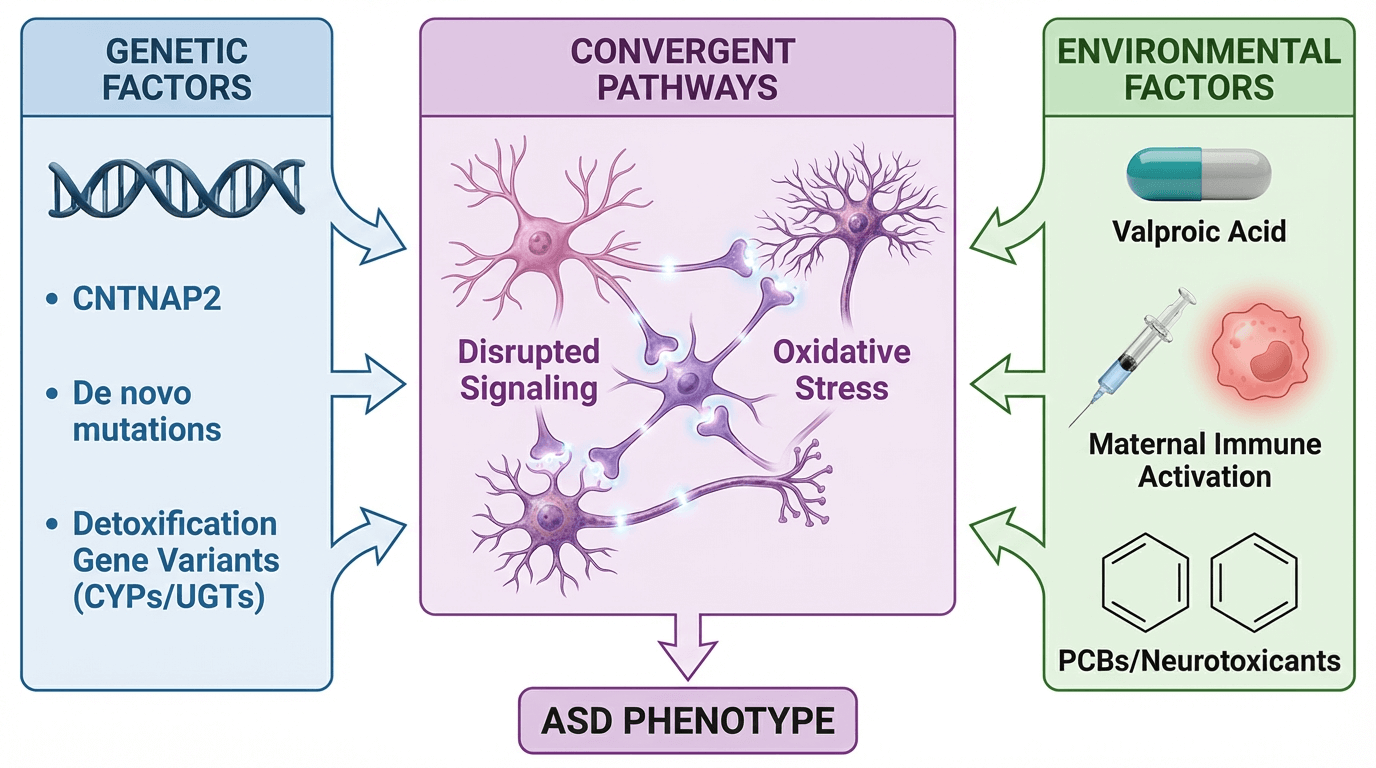
The causes of autism remain under active investigation. Current evidence indicates that autism arises from a complex interaction of genetic and environmental factors rather than a single cause. Clear information about risk factors helps dispel unhelpful myths and guide research and clinical care.
Research supports a substantial genetic contribution to autism. Family studies show elevated likelihood of autism among siblings, and genetic research has identified many genetic variants associated with increased risk. Autism is not attributable to a single gene; rather, differing combinations of genetic influences contribute to neurodevelopmental differences in different people.
Some autistic people have no known family history, which is consistent with new or rare genetic variations contributing to risk in some cases.
Certain prenatal and perinatal factors have been associated with altered likelihood of autism in epidemiological studies. Examples include advanced parental age at conception (paternal age in some studies), pregnancy complications or infections, preterm birth and low birth weight, and exposure to specific medications such as valproate during pregnancy. These factors are described as associated with increased risk rather than as direct causes.
Gene–environment interactions remain an area of ongoing research; understanding these complex relationships requires further high‑quality studies.
Extensive research has shown no causal link between routine childhood vaccinations and autism. The original study proposing such a link has been discredited and retracted; multiple large studies involving millions of children have found no association between MMR or other standard vaccines and autism.
Autism is not caused by parenting style, social circumstances or diet. Conveying this clearly is important to avoid blame and to focus care on evidence‑based support and interventions.
Research continues, and clinical advice is based on the best current evidence; families seeking information should consult reliable sources such as NICE guidance or public health bodies for updates.
Although autism is principally characterised by differences in social communication and behaviour, many autistic people also experience motor coordination and movement challenges. Physiotherapy forms a valuable part of a multidisciplinary approach, addressing physical needs that affect daily function, participation and confidence.

Research reports that a substantial proportion of autistic children experience motor coordination difficulties, with estimates varying between studies. Typical presentations include reduced balance and coordination that affect activities such as cycling or ball skills, low muscle tone (hypotonia) contributing to early fatigue, impaired motor planning and difficulties sequencing movements, and fine motor challenges that can affect handwriting and self‑care tasks.
Joint hypermobility is more commonly observed in autistic people and may contribute to joint pain, reduced endurance and altered movement patterns. Such physical challenges can limit participation in school activities, sport and other social opportunities unless addressed within a personalised care plan.
Physiotherapy assessment identifies specific motor difficulties and informs an individualised treatment plan. Interventions commonly target gross motor skills (balance, coordination and strength), postural control for improved sitting and standing, motor planning through graded, structured practice, and sensory‑motor integration to support movement in different environments.
Physiotherapists adapt methods to accommodate sensory sensitivities and communication preferences, using visual supports, clear instructions and predictable session structure. Therapy is most effective when integrated with input from occupational therapy, speech and language therapy and educational staff as part of a coordinated plan.
Appropriate therapeutic equipment can support physiotherapy goals by offering stability, sensory feedback and opportunities for repetitive, structured practice. Devices that promote correct foot positioning and weight bearing, including specialised standing aids, can assist development of postural alignment and lower‑limb strength when selected following clinical assessment.
The StandSure Therapy Aid is one example of a portable device designed to support foot placement during standing and sit‑to‑stand practice. When used under professional supervision, it may help therapists focus on trunk alignment and task‑specific training for children with motor planning difficulties or low tone. Clinical teams should verify device suitability, consider trial use where available, and discuss goals and any evidence with families before introduction.

The StandSure Therapy Aid is a portable rehabilitation tool developed by physiotherapists for use in therapeutic programmes. It features adjustable ankle retainers and toe straps to assist maintenance of foot alignment during standing tasks, reducing foot drift and instability that can affect some children with coordination difficulties.
For children who struggle to maintain foot position, the StandSure can provide external support while the therapist focuses on posture and functional activities. The device accommodates a range of foot sizes and can be used in clinical or home settings as part of a structured programme under professional guidance.
Physiotherapists may incorporate the StandSure during sit‑to‑stand practice, standing balance exercises or strengthening activities that require stable foot placement. Any equipment should be prescribed based on individual assessment and reviewed regularly for clinical benefit.
Autism spectrum disorder is a lifelong neurological difference; there is no cure. Nevertheless, a range of interventions and supports can improve quality of life, help develop skills and address co‑occurring conditions, enabling autistic people to participate more fully in daily activities.
Evidence indicates that earlier intervention is associated with better developmental outcomes, with many services targeting support during the preschool years. Early intervention may include speech and language therapy to develop communication, occupational therapy to address sensory processing and daily living skills, behavioural and developmental approaches to support learning, and parent or carer training to embed strategies at home.
Applied Behaviour Analysis (ABA) is one evidence‑based approach; views of ABA vary within the autistic community and among clinicians. Contemporary practice increasingly emphasises naturalistic, child‑centred methods that respect the child’s wellbeing and preferences. Choice of intervention should be individualised and informed by current guidance and family priorities.
Many children benefit from tailored educational support to access the curriculum. In England, Education, Health and Care Plans (EHCPs) provide statutory support for children with special educational needs. Reasonable adjustments in school may include sensory breaks, visual schedules, alternative assessment methods and structured social skills support.
Some children succeed in mainstream settings with appropriate adjustments; others require specialist provision. Decisions should be based on a child’s strengths, needs and the professional assessments available. Local authorities and charities can advise on EHCP applications and educational options.
No medication treats the core characteristics of autism. Medication may be used to manage co‑occurring conditions such as anxiety, depression, ADHD or sleep disturbance. Decisions about medication should be made jointly by families and clinicians, considering likely benefits, potential side effects and non‑pharmacological alternatives.
Examples of medications used to address specific symptoms include melatonin for sleep problems, ADHD medication when attention and hyperactivity significantly impair function, and selective serotonin reuptake inhibitors (SSRIs) for certain anxiety or obsessive‑compulsive symptoms. Medication is adjunctive to, not a substitute for, therapeutic and educational supports.
Numerous UK charities and organisations provide information, advocacy and practical support for autistic people and their families. These groups offer helplines, guidance on local services, training for professionals and peer support; check each organisation’s website for current services and opening times.
The UK’s leading autism charity offering information, support and campaigns to improve services for autistic people and families. Provides a helpline, resources and advice on education and employment.
Website: www.autism.org.uk
Email: [email protected]
Provides education services, advocacy and information for autistic children and young people, and training for families and professionals.
Website: www.ambitiousaboutautism.org.uk
Email: [email protected]
Scotland’s specialist charity providing education, care and support services for autistic people of all ages across Scotland.
Website: www.scottishautism.org
Email: [email protected]
A charity run by and for autistic people that provides peer support, advocacy and information from an autistic perspective.
Website: www.autisticuk.org
Email: [email protected]
A consortium of autism charities working together to improve services, policy and research that affect autistic people.
Website: www.autismalliance.org.uk
Email: [email protected]
Provides specialist support across England and Wales, including supported living, residential care and community services for autistic people.
Website: www.autisminitiatives.org
Email: [email protected]
Wales‑based charity offering support, training and advocacy for autistic people and their families throughout Wales.
Website: www.asdinfowales.co.uk
Email: [email protected]
Northern Ireland’s autism charity providing information, training and family support services.
Website: www.autismni.org
Email: [email protected]
A national charity offering free advice and a helpline for families of disabled children, including those with autism; provides assistance on rights, services and practical support.
Website: contact.org.uk
Email: [email protected]
Bottom line: Asperger’s syndrome is no longer a separate diagnosis; it now falls under autism spectrum disorder. Previously, Asperger’s described people with autistic traits who did not have prominent language delay or intellectual disability. Since the publication of DSM‑5 in 2013, diagnostic frameworks classify these presentations within the single spectrum of autism. Some people continue to use the term Asperger’s to describe their personal experience, particularly if that was their historical diagnosis.
Bottom line: In UK law autism is recognised as a disability under the Equality Act 2010, which offers protection against discrimination and entitles people to reasonable adjustments. Many autistic people also view autism through a neurodiversity perspective as a natural variation in neurology that includes both strengths and challenges. Whether an individual regards themselves as disabled is a personal choice; both legal protections and a strengths‑based understanding are important for access to services and inclusive practice.
Bottom line: Yes — ADHD and autism frequently co‑occur. Studies commonly report substantial overlap; estimates vary, often cited around 30–50% for co‑occurrence in clinical samples. Current diagnostic criteria permit both diagnoses concurrently. When both conditions are present, assessments and treatment plans should address the combined impact on attention, organisation, sensory processing and behaviour.
Bottom line: Start with a GP appointment to discuss concerns and request referral to local adult autism diagnostic services. Waiting times vary by area and can be lengthy; some regions report waits of a year or more. Private assessment is an alternative for those who can access it, with reported costs commonly in the range of £1,000–£3,000 and faster completion times. If a private assessment is undertaken by appropriately qualified clinicians using recognised methods and NICE‑aligned practice, the findings should be considered by NHS services, though local arrangements differ. Local charities such as the National Autistic Society can advise on pathways and preparing for assessment.
Bottom line: Early signs often appear between 12 and 18 months, though onset varies. Red flags include limited eye contact during interaction, not responding to name by about 12 months, absence of pointing or showing objects by around 14 months, delayed babbling or language, loss of previously acquired speech or social skills, repetitive movements (for example hand flapping), intense focus on parts of toys rather than functional play, resistance to routine change, and limited interest in other children. Screening tools such as the M‑CHAT may help identify children who need further assessment; contact a health visitor or GP if concerned.
Bottom line: Autism is a lifelong neurological difference; it does not progressively worsen as a condition. Manifestations change over time as people learn skills, develop coping strategies and face different life demands. Some individuals make substantial developmental gains with appropriate support. Others experience new challenges at different stages of life; for example, adolescence and adulthood can introduce greater social and occupational demands. Prolonged masking and stress may lead to autistic burnout, and co‑occurring mental health conditions can emerge or worsen without support.
Bottom line: A range of therapeutic tools can support motor skills when recommended following individual assessment by occupational or physiotherapy services. Examples include weighted blankets or vests for proprioceptive input, swings and balance equipment for vestibular work, therapy putty and pencil grips for fine motor development, and visual supports such as schedules and timers to aid organisation. For standing and postural practice, devices that aid foot positioning (for example the StandSure Therapy Aid) may assist therapy when used under professional supervision. Any equipment should be selected and monitored by qualified clinicians within a structured programme.

Autism Spectrum Disorder is a complex neurodevelopmental difference affecting communication, social interaction and behaviour. While challenges may occur, autistic people also bring strengths, perspectives and abilities that enrich families, schools and communities.
Understanding autism requires more than recognising diagnostic characteristics; it involves appreciating the diversity of autistic experience, respecting different communication styles and creating inclusive environments that accommodate sensory and social needs. Early identification and appropriate intervention often improve outcomes, and ongoing support should adapt as needs change across life.
A multidisciplinary approach ensures comprehensive care: speech and language therapy, occupational therapy, physiotherapy, educational support and mental health services each contribute to skill development and wellbeing. Families and carers remain central to planning and benefit from clear information, respite and practical support.
For autistic people who have motor coordination challenges, physiotherapy and suitable therapeutic equipment—when prescribed and monitored within a structured programme—can support physical functioning, confidence and daily participation.
UK charities and specialist organisations provide information, advocacy and practical assistance to help navigate local services. If concerns arise about a child or adult, contact a GP or health visitor to discuss screening and referral options; national organisations such as the National Autistic Society can offer further guidance.
Acceptance and better understanding continue to grow, supported by autistic voices and advocacy. By listening, adapting environments and providing appropriate care and services, autistic people can be supported to live fulfilling lives.

Book a personalised demonstration of the StandSure™ today by filling out our request form. Have any questions? Call us now, and our team will be happy to assist!


