No products in the cart.
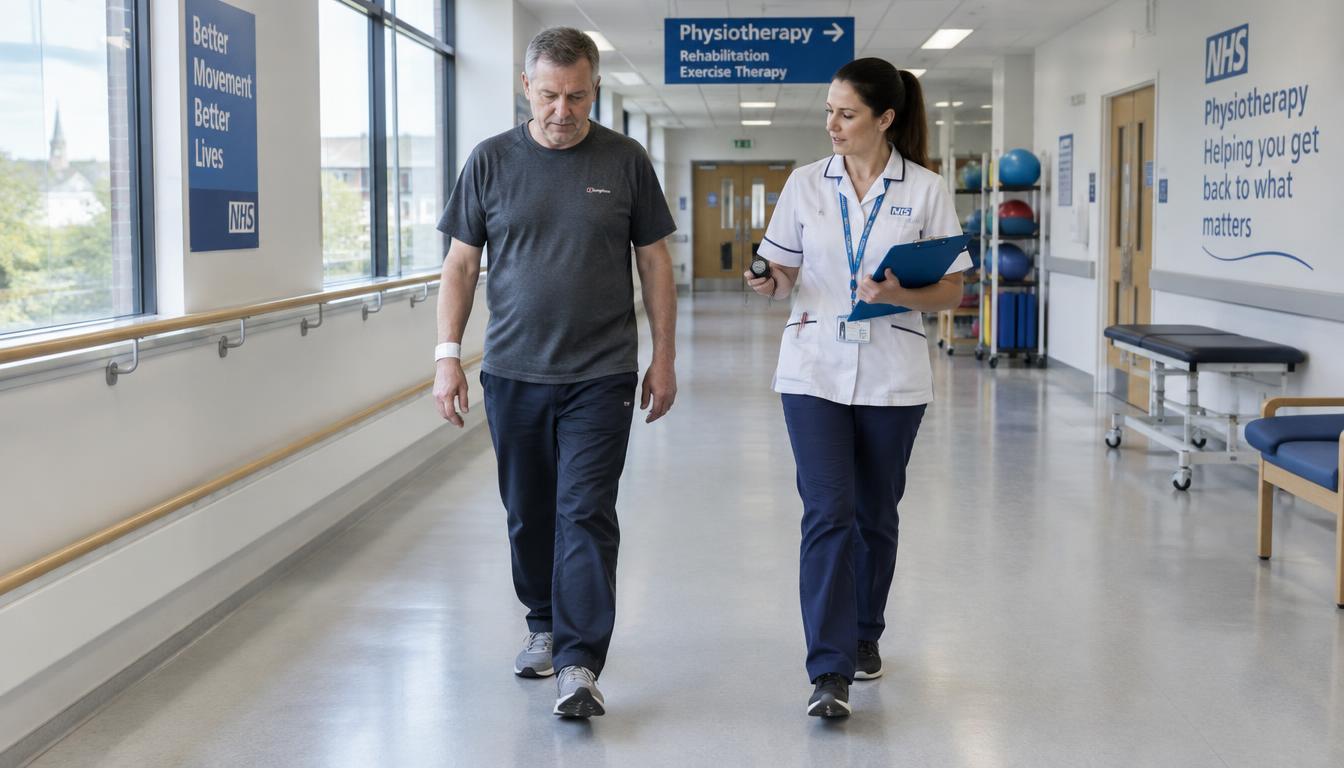

The Six-Minute Walk Test, also known as the six-minute walk test or 6MWT, is a submaximal exercise test. Unlike treadmill tests that continue to exhaustion, this walk test assesses endurance at an effort level closer to everyday activity. The point is to understand functional walking capacity, not to measure maximum performance.
Over six minutes of walking, several body systems work together. The lungs take in oxygen, the heart and circulation carry it through the body, and the leg muscles use it to sustain movement. The nervous system supports balance and gait, while joints and soft tissues absorb the forces of each step.
Because the test reflects everyday walking, changes in performance can relate to a person’s independence. Someone who walks a greater distance with fewer rests often finds routine activities, such as going to local shops, moving between rooms or climbing stairs, less breathless.
The primary outcome of the 6MWT is the total distance walked, but the body’s response during the walk also provides valuable information for therapy teams.
Teams observe symptoms throughout the test. Changes in breathlessness, tiredness, heart rate and gait provide a fuller picture of stamina than brief standing or transfer tests. This minute walk test therefore records more than distance: it shows how the patient responds over time and towards the end of sustained exercise.
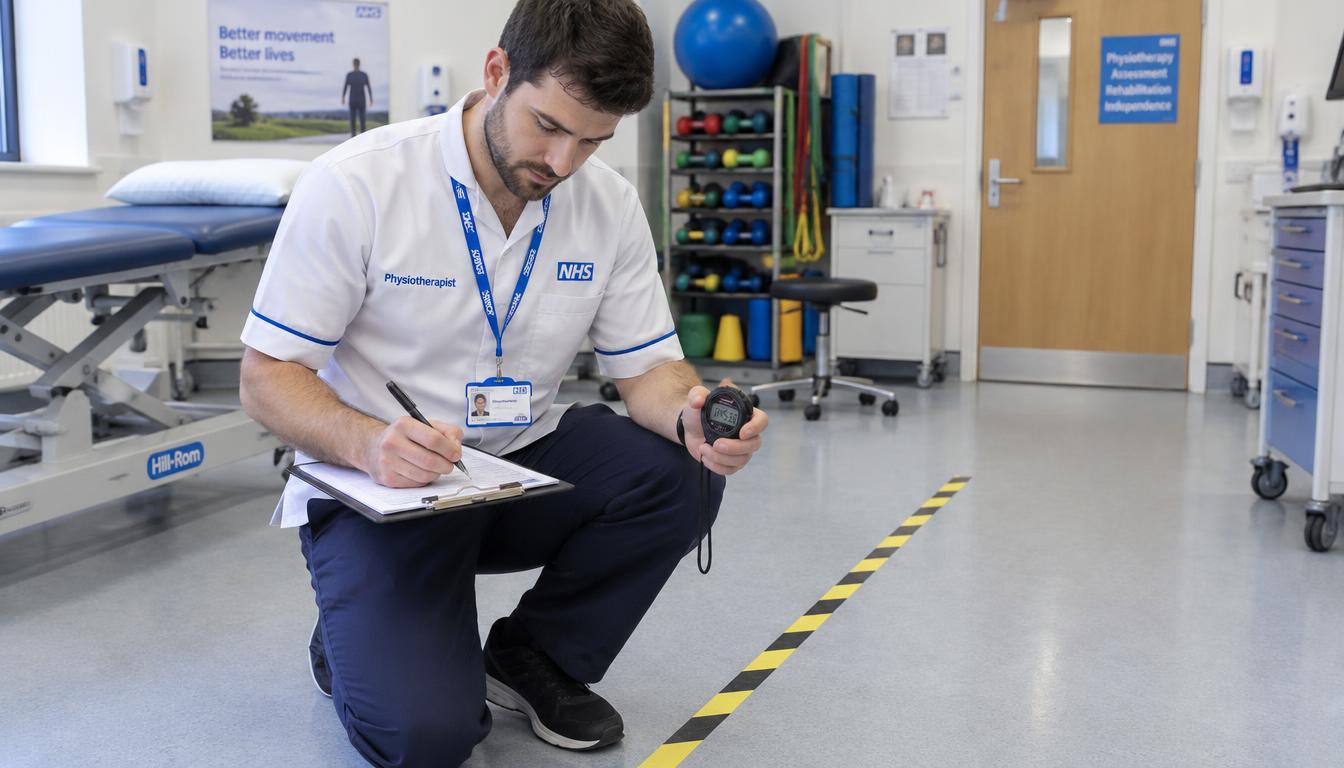
Standardised conditions help make the Six-Minute Walk Test reliable. Guidelines set out how to prepare the walking corridor, time the test and give instructions, so repeat tests reflect changes in a patient’s physical ability rather than differences in how the assessment was conducted.
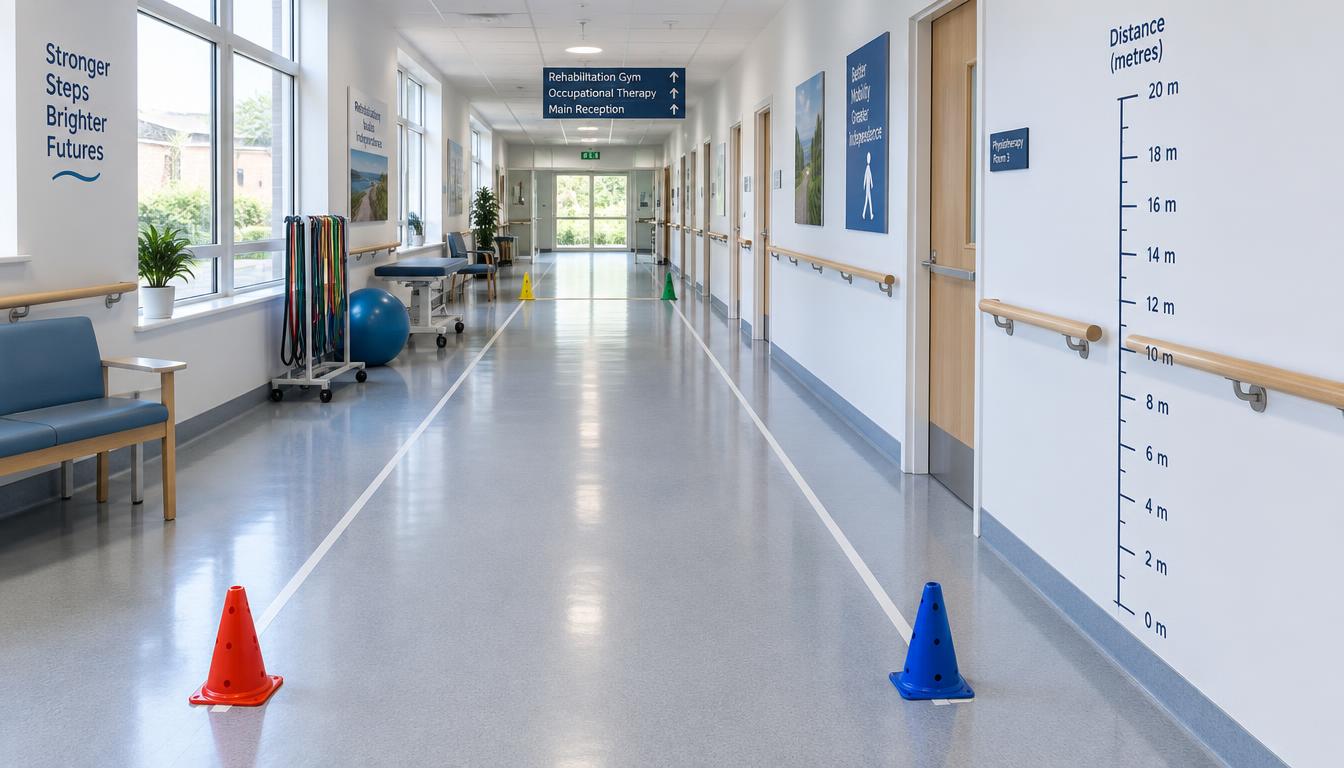
The course is a straight, enclosed corridor with a flat, non-slip surface, typically thirty metres long. Cones or floor markers identify each turning point. Metre intervals along the wall or skirting board help the clinician measure the final partial lap and calculate the total distance walked.
Before the test, the patient sits quietly for ten minutes while resting heart rate, blood pressure and oxygen saturation are recorded. The clinician then gives neutral, scripted instructions: walk as far as possible for six minutes, choosing a comfortable pace and not jogging or running. This walk test measures performance during a set time, not how quickly someone can walk.
Encouragement follows standardised phrases given at exact one-minute intervals. The clinician might tell the patient when four minutes remain or say, “You are doing well; keep up the good work.” Unscripted coaching, cheering or walking beside the patient at an artificial speed can affect their pace and make it harder to compare results between sessions. Patients can rest if needed; the aim is to complete the minute walk test safely, walking as far as possible over the allotted minutes.
Several physical and environmental factors affect how far a person walks during the test. Their effects vary, so patients with the same diagnosis can achieve different distances and walking capacity.
Age, height and biological sex are among the factors that influence baseline measures. Height affects stride length, while ageing can be associated with changes in muscle mass and cardiovascular reserve. These are general patterns, not predictions of an individual’s result.
| Influencing Factor | Primary Impact | Clinical Consideration |
| Biological Attributes | Stride and Aerobic Capacity | Age, biological sex, and height directly influence stride length and baseline respiratory volume. |
| Cardiorespiratory Health | Oxygen Delivery | Conditions affecting airway flow or heart function limit physical stamina during prolonged exertion. |
| Neurological Control | Motor Coordination | Impaired balance, spasticity, or sensory loss increases energy expenditure and alters gait rhythm. |
| Musculoskeletal Symptoms | Mechanical Efficiency | Joint pain, arthritis, and postural muscle weakness cause early fatigue or require pacing adjustments. |
| Walking Aids | Stability vs Pace | Canes or rollators enhance safety but alter upper body biomechanics and overall forward speed. |
| Testing Setting | Consistency | Corridor length, flooring type, ambient temperature, and patient motivation shift recorded distances. |
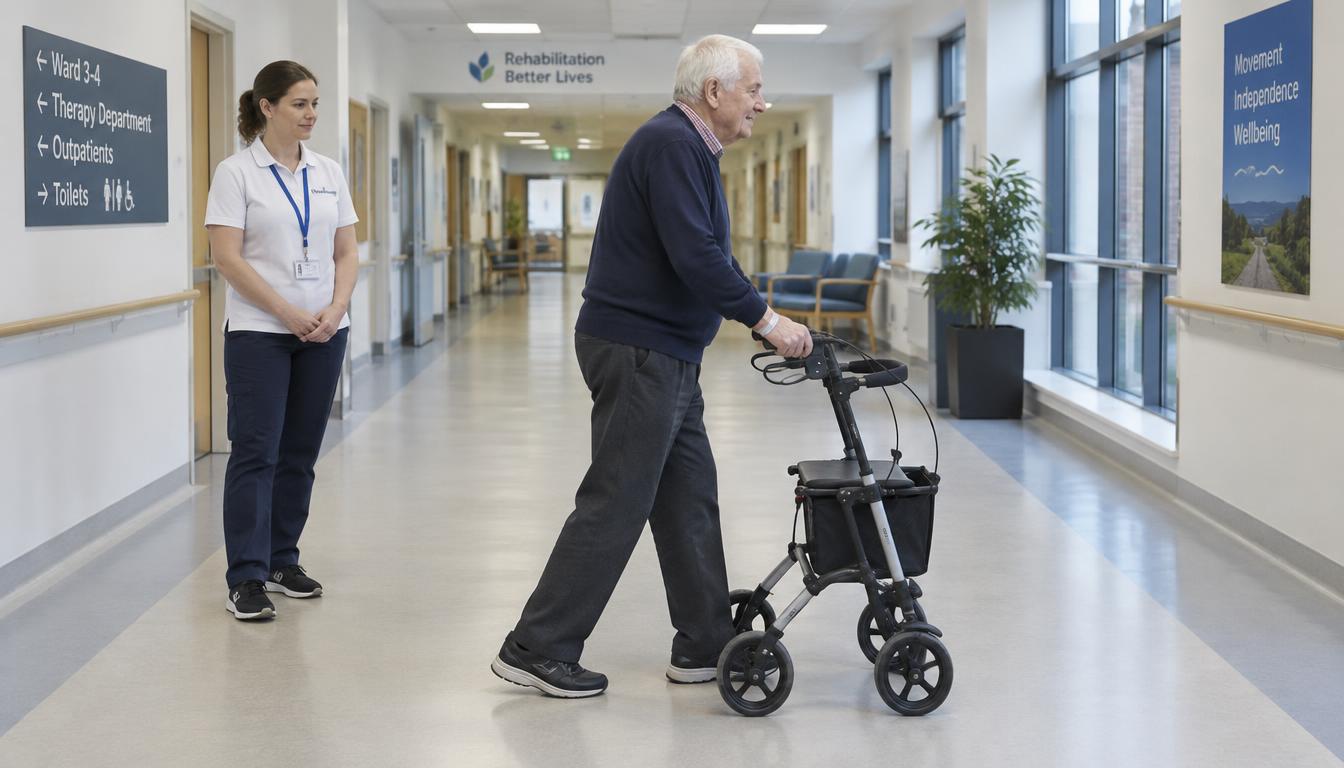
Mobility aids, including rollators, walking frames and sticks, support stability and reduce fall risk. However, using them can affect arm swing and require additional effort. Clinicians record each patient’s aid so that repeat tests, including the MWT, use consistent conditions. A pulse oximeter may also be used to monitor oxygen saturation when required.
Confidence and motivation can influence pace, too. Someone concerned about stumbling may walk cautiously, while a person who understands the procedure and feels supported may pace themselves more comfortably over the full six minutes. Together, these personal and environmental factors help clinicians interpret the distance walked in the context of the individual’s health and daily needs.
There is no universal pass-or-fail result for the Six-Minute Walk Test (6MWT). Physiotherapists consider published reference equations alongside a person’s progress over time, rather than relying on a single standard.
Reference equations use age, height, weight and sex to estimate an expected distance. These figures mainly reflect healthy populations. For patients with complex conditions, clinicians also consider whether a change exceeds the Minimal Clinically Important Difference (MCID), which indicates a meaningful change in functional ability.
Clinical interpretation considers distance walked alongside symptoms, rest pauses and heart rate recovery. The distance is not treated as an isolated result.
In cardiopulmonary rehabilitation, the test helps clinicians assess how heart failure, chronic obstructive pulmonary disease or pulmonary fibrosis affects everyday exercise capacity. A marked fall in oxygen saturation or a rapid rise in breathlessness on the Borg scale can prompt review of a patient’s aerobic capacity and care needs.
In neurological rehabilitation, the test shows how sustained movement affects coordination, muscle tone and fatigue. People with stroke, Parkinson’s disease or multiple sclerosis can experience increasing fatigue during several minutes of walking. Repeated assessments help clinicians evaluate functional progress alongside interventions such as tailored physiotherapy for multiple sclerosis, gait re-education and fatigue management. MWT results are considered as part of the wider clinical picture, not as a diagnosis on their own.
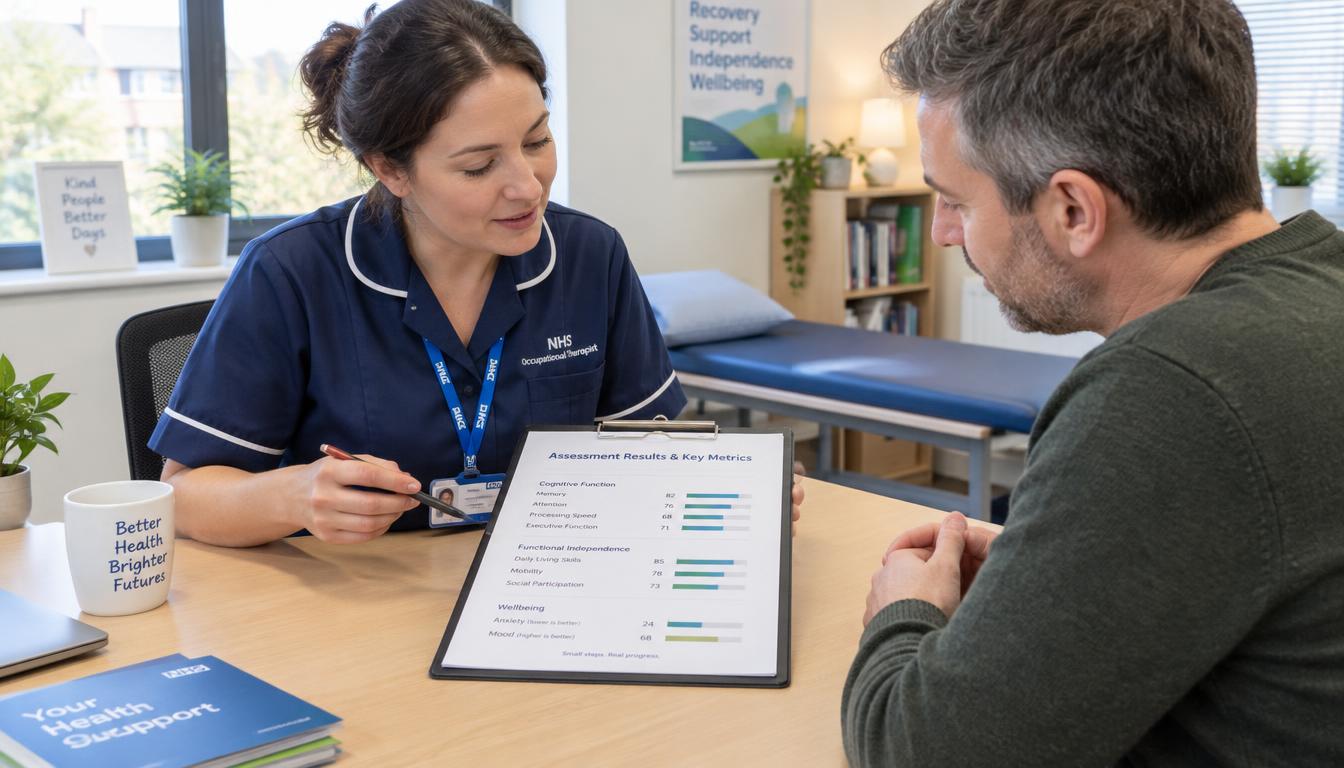
Rehabilitation teams choose assessments to match the movement or function they need to evaluate. The Six-Minute Walk Test measures sustained walking capacity, while other tests focus on balance, agility and safe transfers.
The Timed Up and Go Test offers a useful comparison. The patient stands from a chair, walks three metres, turns, walks back and sits down. Taking only seconds, it assesses dynamic balance, transfer control and immediate fall risk rather than stamina over time.
Together, the tests give a broader picture of mobility. A patient may perform steadily in a brief balance assessment yet find longer walking difficult because of breathing problems or fatigue.
Conversely, someone recovering from joint replacement may have good stamina but feel unsteady when turning or rising from a chair. Choosing the right test helps direct rehabilitation work to the areas needing support. The MWT and shorter assessments each provide different information.
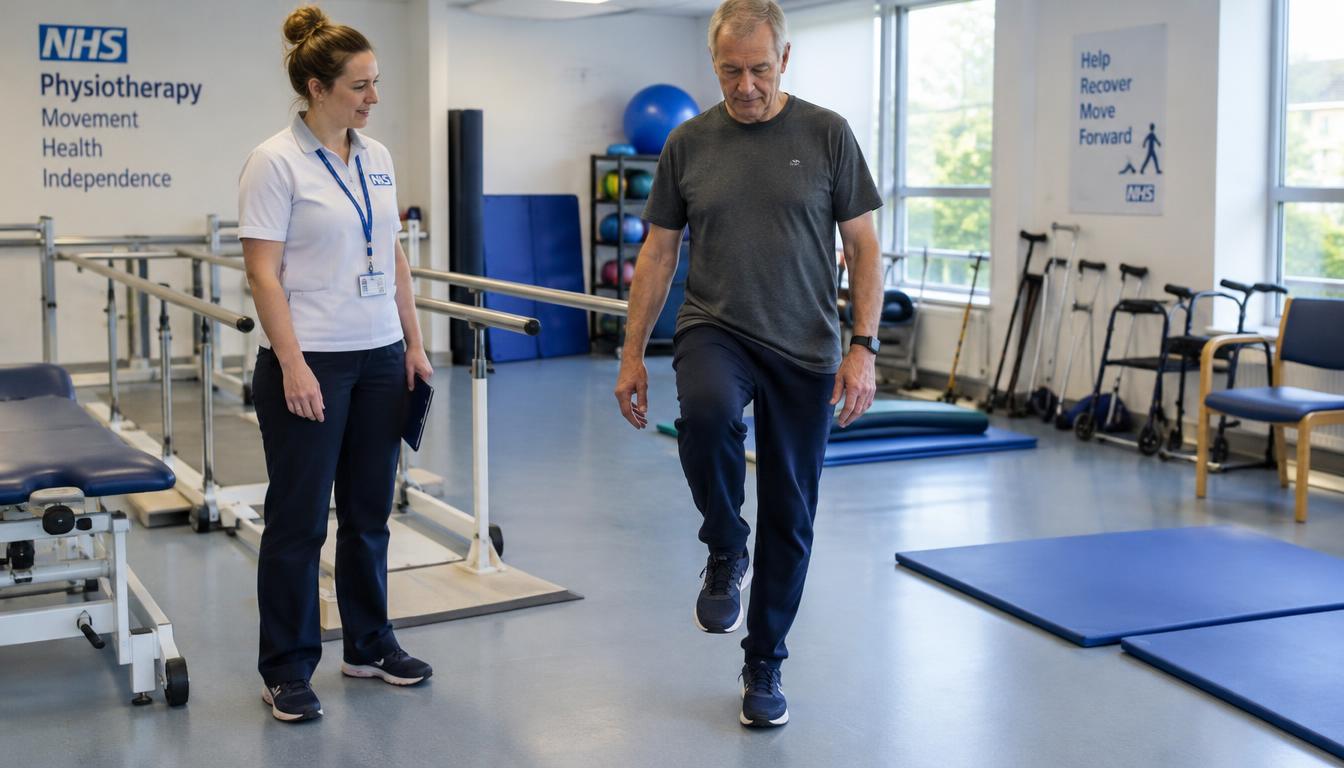
A supervised Six-Minute Walk Test prioritises safety throughout. Healthcare professionals monitor the patient’s physical responses before, during and after the test. They watch for signs that it should be paused or stopped, including severe chest pain, unexpected dizziness, pallor, intense leg cramps, sudden unsteadiness or a significant fall in blood oxygen saturation.
Pause or stop the test if someone experiences acute chest discomfort, unexpected breathlessness, faintness or significant joint pain.
Patients can slow down, pause or rest against a wall during the six minutes. The stopwatch continues, so the final distance reflects any effect of fatigue and rest. When they feel able, they can resume walking; the aim is to walk as far as possible at a safe pace, not to push through concerning symptoms. The MWT is used under clinical supervision, and standard encouragement such as “keep up the good work” helps maintain consistency.
Repeating the test at planned points in a rehabilitation programme helps clinicians review progress and adjust exercise plans safely. If walking endurance changes, or you are managing chronic fatigue or recovering from surgery, a clinician can assess your mobility and guide your next steps.
If you or a family member experience walking fatigue or breathlessness during daily routines, a professional assessment can help identify possible causes and inform a tailored recovery plan. If you would like support, use the directory to find a physiotherapist.
The Six-Minute Walk Test is a standardised walk test that measures the distance a person walks indoors on a flat course in six minutes. It gives clinicians an objective measure of everyday walking ability and stamina.
The test measures functional exercise capacity and walking endurance. It reflects how the heart, lungs, circulation and leg muscles work together during sustained activity and how this relates to everyday movement.
The patient walks back and forth along an unobstructed indoor corridor, usually thirty metres long, for six minutes at a self-selected pace. A clinician records the time, laps and symptoms, using standardised encouragement.
There is no single expected distance for everyone. Age, height, biological sex, mobility and medical history affect results, so clinicians consider reference values and personal progress rather than a universal pass-or-fail score. The distance walked is interpreted in context.
Yes. Patients can use their usual walking aid, such as a stick, crutches or rollator. The clinician records the device used so repeat tests can be compared under consistent conditions.
Yes. A person can slow down, stop and rest if fatigue, breathlessness or pain occurs. The stopwatch continues during rests, and they can resume walking when they feel able. The aim is to walk as far as possible safely during the test.
Pain, breathing or heart problems, neurological conditions, fatigue, age and height can affect walking distance. The corridor, floor surface, temperature, walking aids and motivation also influence results.
Clinicians use the test in cardiopulmonary rehabilitation for conditions such as heart failure and chronic obstructive pulmonary disease, and in neurological rehabilitation for stroke and multiple sclerosis. It is also used in orthopaedics, elderly care and recovery after surgery.
No. The six-minute walk test (6MWT) assesses endurance over prolonged walking. The Timed Up and Go Test assesses balance, chair transfers and fall risk during a brief sequence of movements. These tests measure different aspects of mobility.
Yes. The MWT is often repeated at planned points during rehabilitation to review functional progress and treatment. Comparing results helps therapy teams adjust exercise plans and track changes in daily mobility.
The Six-Minute Walk Test offers a practical way to assess functional stamina during health and recovery. Clinicians consider distance alongside physical responses and everyday movement goals, using the results with other assessments to guide realistic rehabilitation and support mobility and confidence.

Book a personalised demonstration of the StandSure™ today by filling out our request form. Have any questions? Call us now, and our team will be happy to assist!


