Understanding Idiopathic Toe Walking: Causes and Effective Treatment Approaches

If you’ve noticed your child walking on their tiptoes consistently, you might be dealing with idiopathic toe walking. This common condition affects approximately 12% of children, with 9% experiencing restricted ankle movement alongside toe walking. While most children naturally outgrow toe walking by age 3, persistent toe walking—particularly without an identifiable medical cause—requires attention. As a parent or caregiver, understanding this condition and exploring effective treatment options can make a significant difference in your child’s development and mobility.

What Is Idiopathic Toe Walking?

Idiopathic toe walking (ITW), also known as habitual toe walking, is a pattern where children walk on the balls of their feet with their heels consistently raised off the ground. The term “idiopathic” indicates that there’s no known medical cause for this walking pattern. It’s important to distinguish this from toe walking associated with neurological conditions like cerebral palsy or muscular dystrophy.

Most children naturally walk on their toes when first learning to walk, but typically develop a heel-to-toe walking pattern by age 3. When toe walking persists beyond this age without an identifiable medical cause, it’s classified as idiopathic toe walking. Research suggests that approximately 7-24% of children experience this condition, with boys and girls affected equally.

The hallmark of idiopathic toe walking is the ability to walk flat-footed when reminded or asked to do so, though this becomes more difficult as children grow older. By age 5-6, many children with persistent toe walking develop tightness in their calf muscles and Achilles tendons, making it physically challenging to place their heels on the ground.

Causes of Idiopathic Toe Walking

While the exact cause of idiopathic toe walking remains unknown, several factors may contribute to this walking pattern:

Physical Factors

  • Shortened Achilles tendon or calf muscles (gastrocnemius and soleus)
  • Decreased range of motion in the ankle joint
  • Habit – becomes the norm
  • Possible genetic predisposition (family history of toe walking)

Sensory and Developmental Factors

  • Sensory processing differences
  • Vestibular system irregularities affecting balance
  • Habitual pattern that becomes ingrained
  • Developmental coordination variations

Research has shown that children who toe walk often have tighter calf muscles and Achilles tendons, which can restrict the range of motion in their ankle joints. This physical limitation makes it difficult to achieve a normal heel-to-toe walking pattern. However, it’s not always clear whether the toe walking causes the muscle tightness or if the muscle tightness leads to toe walking.
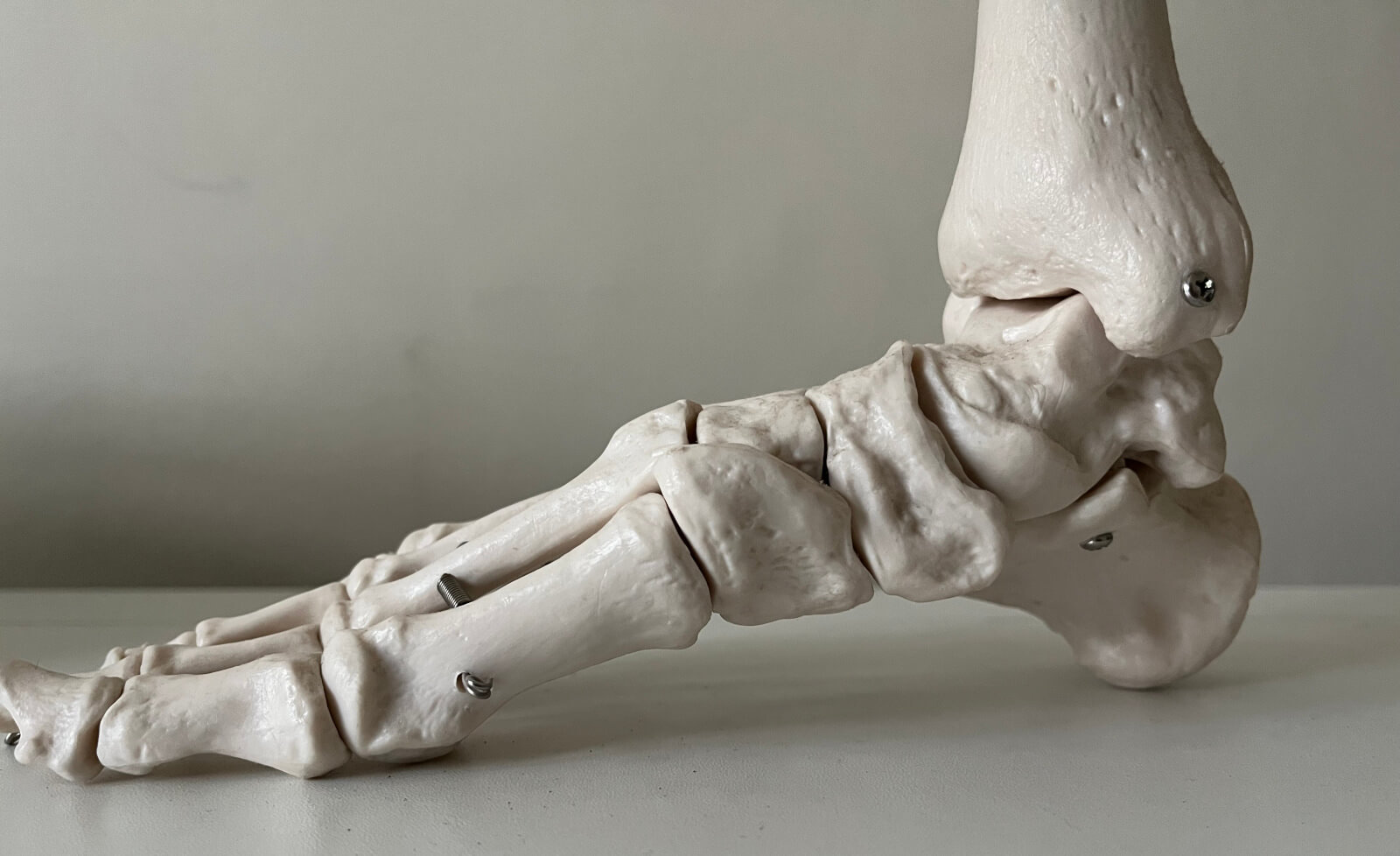
Skeleton Foot

The gastrocnemius and soleus muscles connect to the Achilles tendon, which can become tight in children who toe walk

It’s worth noting that while toe walking is more common in children with autism spectrum disorder (approximately 9% compared to 0.5% in neurotypical children), most children with idiopathic toe walking do not have autism. The relationship between sensory processing and toe walking continues to be an area of active research.

Diagnosing Idiopathic Toe Walking

If your child continues to toe walk beyond age 3, it’s advisable to consult with a healthcare professional such as a paediatric physiotherapist. The diagnostic process typically involves:

A physiotherapist will undertake a thorough subjective and objective assessment of your child.

  • Medical history assessment: They will ask about your child’s developmental milestones, when toe walking began, and whether there’s a family history of toe walking.
  • Physical examination: This includes observing your child’s walking pattern, assessing range of motion in the ankles and other joints, and checking muscle strength.
  • Neurological evaluation: Simple tests to rule out neurological causes for toe walking.
  • Gait analysis: In some cases, a detailed analysis of your child’s walking pattern may be recommended.

The diagnosis of idiopathic toe walking is typically made after ruling out other potential causes, such as cerebral palsy, muscular dystrophy, or spinal cord abnormalities. Your healthcare provider may refer you to a paediatric orthopaedic specialist, or neurologist, or physiotherapist for further assessment.

The Role of Physiotherapy in Treating Toe Walking

Physiotherapy plays a crucial role in the comprehensive management of idiopathic toe walking. A skilled physiotherapist can undertake a thorough subjective and objective assessment of your child.

  • Assess the severity of toe walking and ankle range of motion
  • Develop a personalised treatment plan
  • Teach proper massage and stretching techniques to parents and caregivers
  • Implement strengthening exercises for foot and ankle muscles
  • Provide gait training to encourage heel-toe walking
  • Monitor progress and adjust treatment as needed
  • Know when to refer on to other professionals including orthotists

Physiotherapy sessions typically incorporate a variety of exercises and activities designed to improve muscle flexibility, strength, balance, and coordination. These might include:

  • Balance exercises on different surfaces
  • Heel-walking practice
  • Proprioceptive training (body awareness)
  • Functional activities that encourage proper foot positioning

Grounding Strategies to Encourage Flat-Foot Contact

In addition to formal treatments, there are several practical strategies you can implement at home to encourage your child to walk with their heels down:

Sensory Strategies

  • Textured surfaces: Walking on different textures (grass, sand, pebbles) can provide sensory input that encourages flat-foot walking
  • Weighted backpacks: A lightly weighted backpack can help ground the child and promote heel contact
  • Deep pressure: Activities that provide deep pressure to the feet can increase awareness
  • Sensory brushing: Brushing the soles of the feet before walking activities

Movement Strategies

  • Heel-walking games: Make a game of walking on heels only
  • Animal walks: Imitating how bears or elephants walk (flat-footed)
  • Marching: Exaggerated marching emphasizes heel contact
  • Balance activities: Using balance boards or beams to improve foot awareness, standing on one leg, standing with feet together, walking backwards.

Consistency is key with these strategies. Incorporating them into daily routines and making them fun can increase your child’s engagement and the effectiveness of these approaches.

Practical Strategies to Reduce Toe Walking

Implementing a comprehensive approach to managing idiopathic toe walking involves combining multiple strategies:

Daily Routine Strategies

  • Schedule regular stretching sessions (morning, after school, before bed)
  • Implement “heel-down time” for specific activities like watching television, gaming, brushing teeth, mealtimes, waiting in line.
  • Use visual reminders around the house (footprint stickers, posters) as a prompt to walk with heels down. Masking tape on the floor from the front door to the kitchen can be a useful strategy to prompt heels down
  • Create a progress chart to track and reward consistent practice
  • Give praise when you see the heels come down rather than ‘nagging’ when you see the heels come up. Make verbal reminders gentle.

Environmental Modifications

  • Create sensory pathways with different textures
  • Use furniture arrangements that encourage proper foot positioning
  • Provide appropriate seating that supports good posture
  • Ensure proper desk and chair height for activities and ensure the feet are grounded with a footrest.

Combining these strategies with professional interventions like physiotherapy creates a comprehensive approach to managing toe walking. The key is consistency and positive reinforcement, celebrating progress rather than criticising toe walking when it occurs.

Other Treatment Options for Idiopathic Toe Walking

Orthotics

An orthotist can assess the gait pattern to determine if insoles, wedges in the shoes or a UFO (universal foot orthosis) or an AFO (ankle foot orthosis) is needed.

  • Wedges sit inside the shoe underneath the heel and are useful for getting some heel contact when the Achilles is tight. They are inexpensive and can be used in multiple footwear
  • Insoles can be prescribed off the shelf or custom made where there is a rolling in of the ankles (over pronation) to help correct this foot posture
  • UFOs are removable splints that are typically slept in to get a sustained stretch overnight
  • AFOs are worn during the day and removed at night to keep a sustained stretch on the calf and Achilles
  • They can provide advice on footwear

Orthotics are typically worn for several months and may be used in combination with other treatments like physiotherapy and stretching exercises. They will need to be replaced when the child outgrows them.

Serial Casting

For children with significant tightness in the calf muscles and Achilles tendon, serial casting may be recommended. This treatment involves:

  • Application of a series of below-knee walking casts
  • Gradual stretching of the calf muscles and Achilles tendon
  • Changing casts every 1-2 weeks over a period of 4-6 weeks
  • Follow-up with ankle-foot orthoses (AFOs) or continued stretching

Surgery

Surgery is a last resort for patients who have not responded positively to conservative treatment. Here the Achilles tendon is lengthened to allow greater movement and function of the foot and ankle. Following surgery the patient will be in a fixed cast for a few weeks, then progress onto a removable walking boot and will require regular therapy afterwards to restore movement and function.

Toe Walking and Growth Spurts

Many parents notice that toe walking becomes more pronounced during growth spurts. This is because during growth spurts, the long bones grow faster than muscles are able to stretch and therefore become like tight elastic bands, leading to an increase in toe walking. It can take a few weeks to settle and during these spurts it is recommended to do intensive massage and stretching a couple of times a day.Long-term

Outlook for Children with Idiopathic Toe Walking

The prognosis for children with idiopathic toe walking is generally positive, especially when intervention begins early. Research indicates that:

  • Most children respond well to conservative treatments like stretching, physiotherapy, and orthotics
  • Early intervention (before age 5-6) typically yields better outcomes
  • Some children may require more intensive interventions like serial casting or surgery
  • A small percentage may continue to toe walk into adolescence despite treatment

Long-term follow-up studies show that with appropriate intervention, the majority of children with idiopathic toe walking develop normal gait patterns and experience no significant long-term complications. However, untreated persistent toe walking can lead to:

  • Permanent tightening of the calf muscles and Achilles tendon
  • Abnormal gait patterns that persist into adulthood
  • Increased risk of foot, ankle, knee, and hip problems
  • Limitations in sports and physical activities

This underscores the importance of addressing toe walking proactively rather than assuming children will simply “grow out of it.”

Conclusion: A Comprehensive Approach to Managing Idiopathic Toe Walking

Idiopathic toe walking is a common condition that, with proper intervention, can be effectively managed. The key to success lies in a comprehensive approach that combines professional treatment with consistent home strategies.

Early identification and intervention are crucial, as addressing toe walking before the development of significant muscle tightness yields the best outcomes. Working closely with healthcare professionals—including paediatricians, orthopaedic specialists, and physiotherapists—ensures that your child receives appropriate assessment and treatment.

Remember that managing idiopathic toe walking is a journey that requires patience and consistency. Celebrate small improvements and focus on making the necessary exercises and activities enjoyable for your child. With the right combination of professional guidance, home strategies, and supportive tools like the StandSure balance board, you can help your child develop a healthy, natural walking pattern that will serve them well throughout life.

standsure board

Use StandSure for Your Child’s Journey

The StandSure balance board is designed to work alongside professional physiotherapy, providing an engaging way for children to improve foot posture and reduce toe walking. Developed with input from physiotherapists, it’s a valuable tool in your comprehensive approach to managing idiopathic toe walking.

Explore StandSure Today

Product was successfully added to your cart!